Listen to ArticlePress play to hear this storyListen to ArticleDownload audio
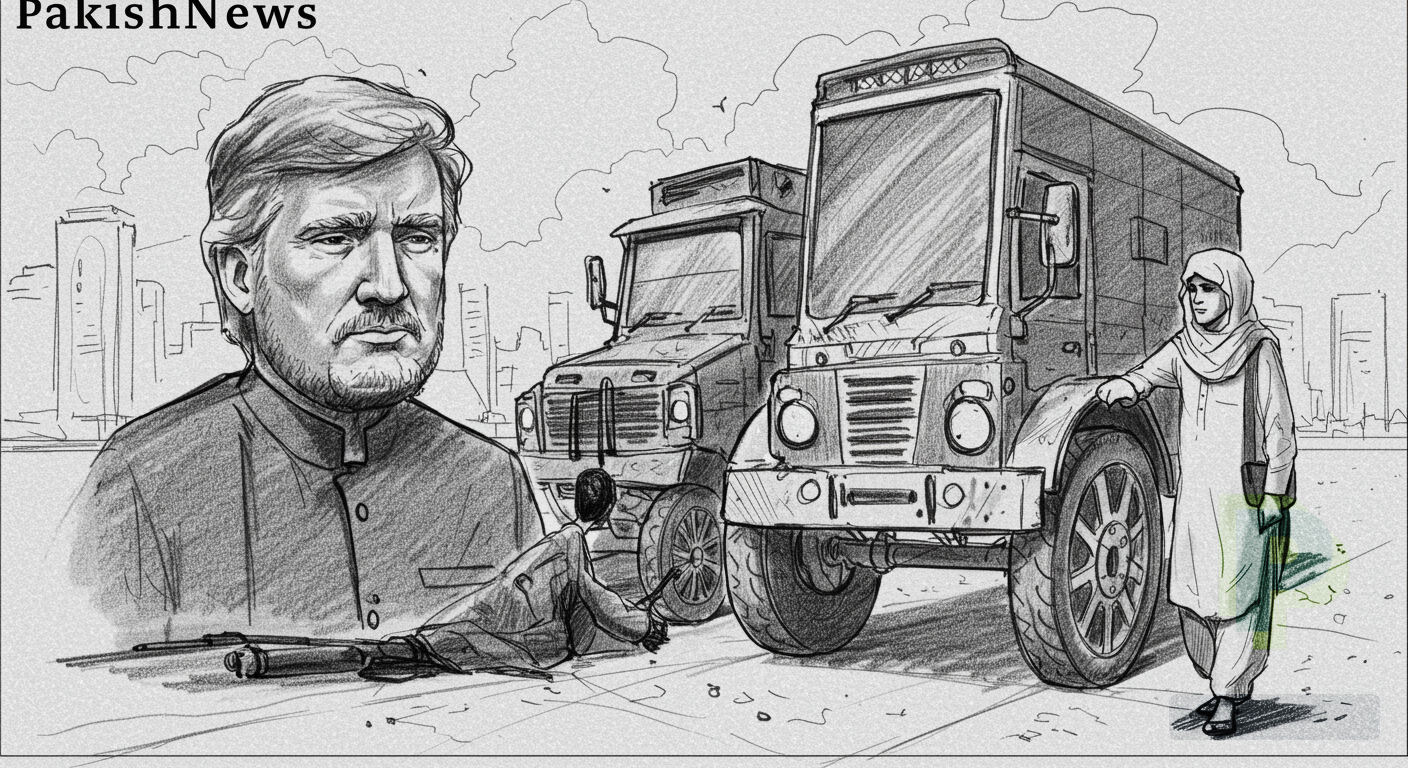
Former U.S. President Donald Trump has reignited debate over NATO defence spending, while Israel claims to have eliminated a senior Iranian security official, creating a complex geopolitical landscape. This dual development demands immediate attention from policymakers and business leaders across the globe, with particular implications for the strategic stability of the Gulf region and Pakistan's intricate foreign policy calculus. These simultaneous international flashpoints underscore a period of heightened uncertainty, compelling nations to re-evaluate alliances and regional security postures as of March 2026.
Quick Answer
Trump reignites NATO funding row, while Israel claims killing an Iran security chief. These dual crises trigger global uncertainty, impacting Gulf stability and Pakistan's strategic diplomatic balancing act.
- How might increased NATO defence spending affect global military alliances? Increased NATO defence spending, particularly if driven by U.S. pressure, could lead to a stronger, more unified European defence capability, potentially reducing reliance on the U.S. However, it could also exacerbate internal divisions if some members struggle to meet targets, or if a U.S. retreat leads to fragmentation. For non-NATO allies like Pakistan, this might prompt a re-evaluation of existing security partnerships and an exploration of diversified military cooperation, potentially with powers like China, as global military spending reached a record USD 2.2 trillion in 2023, according to SIPRI.
- What are the primary concerns for Gulf states regarding escalating Israel-Iran tensions? Gulf states are primarily concerned about the potential for direct military confrontation disrupting vital shipping lanes like the Strait of Hormuz, impacting global energy markets and their economies. They also fear an increase in regional proxy conflicts, which could destabilize their borders and internal security. The humanitarian impact on expatriate populations, including millions of Pakistanis working in the UAE and Saudi Arabia, is also a significant concern, alongside the broader implications for foreign investment and regional development projects.
- How could Pakistan's economic stability be influenced by renewed U.S. pressure on NATO allies and Middle East conflicts? Pakistan's economic stability could be significantly impacted. Renewed U.S. pressure on NATO and potential shifts in global alliances might lead to a re-prioritisation of U.S. foreign aid and investment, potentially affecting Pakistan. More critically, escalating conflicts in the Middle East could disrupt global oil prices, increasing Pakistan's import bill, and lead to reduced remittances from Pakistani expatriates in the Gulf, which are a crucial source of foreign exchange. For example, remittances from the GCC region constitute over 60% of Pakistan's total annual remittances, making the region's stability vital for Pakistan's economy.
- Former U.S. President Donald Trump has criticised NATO allies for insufficient defence spending, reiterating his long-standing demand for members to meet the 2% GDP target.
- Separately, Israel has claimed responsibility for killing a senior Iranian security chief, escalating an already tense shadow war in the Middle East.
- These events unfold against a backdrop of global geopolitical shifts, impacting traditional alliances and regional power dynamics.
- The developments raise critical questions about the future of transatlantic security, the trajectory of the Israel-Iran conflict, and their broader ramifications for Gulf stability and Pakistan's foreign policy.
- Policymakers in Islamabad and GCC capitals are closely monitoring these situations for potential economic, security, and diplomatic fallout.
The convergence of these two high-stakes geopolitical developments – a renewed challenge to transatlantic security architecture and a significant escalation in the Middle East's perennial shadow conflict – is not coincidental. It reflects a broader trend of fracturing global consensus and a return to more assertive, unilateral foreign policy postures by key international actors. Historically, the United States has been the lynchpin of both NATO's collective defence and a primary guarantor of security in the Gulf. Any perceived weakening of its commitment to either sphere, or a shift in its strategic priorities, sends ripples across the international system. The NATO alliance, established in 1949, has been the cornerstone of European security, fostering stability through collective defence. However, debates over burden-sharing have persisted for decades, intensifying significantly during former President Trump's previous term. Similarly, the deep-seated animosity between Israel and Iran, rooted in ideological, regional, and security concerns, has manifested in a protracted, often covert, struggle for influence, frequently spilling over into proxy conflicts and targeted operations across the Middle East. Understanding these historical currents is crucial to grasping the magnitude of the current events.
As PakishNews previously reported, Trump Delays China Trip Amid Iran War Focus, but How Will Gulf Energy Markets….
According to reporting by NBC News, Mr. Trump, during recent public remarks, reiterated his long-held stance that many NATO member states are failing to meet their financial obligations, specifically the target of allocating 2% of their Gross Domestic Product (GDP) to defence. This target was formally agreed upon by alliance members at the Wales Summit in 2014, following Russia's annexation of Crimea. While NATO's Secretary General Jens Stoltenberg has consistently highlighted improvements in defence spending among allies, with more members projected to reach the 2% threshold, Mr. Trump's comments suggest a potential re-evaluation of U.S. commitment to the alliance if these increases are deemed insufficient. This stance, if translated into policy, could significantly alter the strategic landscape of Europe, potentially prompting individual member states to bolster their own defence capabilities or seek alternative security arrangements, thereby fragmenting the collective defence posture that has defined NATO for over seven decades.
Trump's NATO Rebuke: A Familiar Strain on Transatlantic Ties
Former President Trump's criticisms of NATO allies are not new, yet their timing, amidst ongoing global instability, amplifies concerns regarding the future of transatlantic security. His rhetoric often questions the fundamental premise of Article 5 – the collective defence clause – raising anxieties among European partners about the reliability of the U.S. commitment. Dr. Eleanor Vance, a Senior Fellow at the Royal United Services Institute (RUSI) in London, told PakishNews World Desk, “The persistent questioning of NATO’s foundational principles by a leading U.S. political figure, especially one who could potentially return to power, introduces an unprecedented level of strategic uncertainty. It compels European nations to confront the prospect of a more autonomous defence posture, potentially leading to increased military integration within the European Union but also risking a fragmentation of resources.” Data from NATO indicates that while defence spending has increased, only a minority of member states consistently meet the 2% GDP target, with figures varying significantly across the 32-member alliance as of late 2025. This disparity fuels the debate and provides ammunition for critics of the current burden-sharing model.
The implications extend beyond mere financial contributions. A perceived weakening of U.S. resolve within NATO could embolden adversaries, particularly Russia, to test the alliance's cohesion. Furthermore, it could divert attention and resources from other critical global challenges, including those in the Middle East and South Asia. For countries like Pakistan, which has historically maintained complex relations with both the U.S. and various European powers, the stability of the transatlantic alliance indirectly influences the broader geopolitical environment. A strong, unified NATO, for instance, often frees up U.S. diplomatic and military bandwidth to engage more robustly in other regions, including South Asia, where Pakistan plays a pivotal role in regional security and counter-terrorism efforts. Conversely, a U.S. preoccupied with internal NATO disputes might lead to reduced engagement elsewhere.
Escalating Shadows in the Middle East: Israel's Claim and Iran's Response
Concurrently, the Middle East is witnessing another significant escalation following Israel's claim of killing a senior Iranian security chief. While specific details about the identity of the official and the circumstances of the operation remain limited in initial reports, such an action, if confirmed, marks a substantial development in the ongoing covert conflict between the two regional adversaries. Israel has long pursued a strategy of interdicting Iranian influence and capabilities, particularly those related to its nuclear programme and regional proxy networks. This alleged strike would be consistent with a pattern of targeted actions aimed at degrading Iran's operational capacity and leadership, as observed in previous incidents reported by various international media outlets and intelligence agencies over the past decade.
The immediate aftermath of such an event often involves heightened alert levels across the region. Iran has historically vowed retaliation for similar actions, though the nature and timing of any response can vary significantly, often occurring through proxy forces or cyberattacks. Dr. Hassan Al-Hajri, a geopolitical analyst based in Dubai, explained to PakishNews World Desk, “An Israeli operation of this magnitude against a senior Iranian official carries immense risks of direct or indirect retaliation, potentially destabilising the entire Gulf region. The immediate concern for GCC states is the security of vital shipping lanes, energy infrastructure, and the potential for a wider regional conflict that could disrupt global oil markets and trade.” The Strait of Hormuz, a critical chokepoint for global oil supplies, remains particularly vulnerable to any escalation. In 2019, for instance, a series of attacks on oil tankers and infrastructure in the Gulf prompted a significant increase in international naval presence, underscoring the fragility of maritime security in the region.
Regional Repercussions: Gulf States, Pakistan, and the Shifting Geopolitical Sands
The dual developments – the renewed U.S. pressure on NATO and the escalating Israel-Iran confrontation – converge to create a complex and potentially volatile environment for the Gulf Cooperation Council (GCC) states and Pakistan. The GCC nations, heavily reliant on secure energy exports and regional stability for their economic prosperity, view any increase in Middle East tensions with profound concern. A direct military confrontation between Israel and Iran, or even sustained proxy warfare, could severely disrupt energy supplies, impacting global prices and the revenues of oil-exporting Gulf states. Furthermore, the presence of millions of Pakistani expatriates in the UAE and Saudi Arabia means that any significant regional instability could have direct humanitarian and economic consequences for Pakistan, potentially leading to repatriation challenges and a reduction in vital remittances, which stood at approximately USD 31 billion in 2024-25, according to the State Bank of Pakistan.
Why does this matter for Pakistan and the Gulf? These developments are crucial because they directly influence the regional security architecture, trade routes vital for energy supply, and the delicate diplomatic balances maintained by countries like Pakistan and the UAE. Escalations could disrupt economic stability, impact foreign investment, and necessitate a re-evaluation of defence postures, especially in a region already grappling with complex geopolitical challenges. For Pakistan, which shares a border with Iran and maintains significant strategic and economic ties with Saudi Arabia and the UAE, the stability of the Gulf is paramount. Dr. Aisha Sarwari, a foreign policy expert at the National University of Sciences & Technology (NUST) in Islamabad, highlighted, “Pakistan’s foreign policy is meticulously balanced between its strategic partnership with China, its historic ties with the U.S., and its deep religious and economic connections with the Gulf states and Iran. Any major escalation in the Middle East forces Islamabad into a difficult position, requiring careful diplomatic navigation to safeguard its national interests, ensure the welfare of its diaspora, and maintain regional peace.” Pakistan has historically played a role in de-escalation efforts in the Middle East, leveraging its diplomatic channels with various regional players.
Moreover, a potentially inward-looking or less committed U.S. in Europe could signal a broader shift in its global strategic priorities. This might lead to Gulf states and Pakistan exploring diversified security partnerships, possibly strengthening ties with China or other emerging powers, further complicating the global balance of power. The UAE, for instance, has actively pursued a strategy of diplomatic de-escalation and economic diversification in recent years, seeking to reduce regional tensions and foster greater economic integration. However, renewed instability poses a significant challenge to these efforts. The potential for a U.S. administration to link security guarantees to increased defence spending, as hinted by Mr. Trump, could also prompt a re-evaluation of security cooperation agreements with countries outside NATO, including those in the Gulf and South Asia. Read more on evolving US foreign policy at PakishNews.
What Happens Next
The immediate future will likely see intense diplomatic activity. NATO allies will be closely watching U.S. political developments, particularly in the lead-up to any potential presidential elections, to gauge the long-term trajectory of American commitment to the alliance. European defence initiatives, such as the EU's Permanent Structured Cooperation (PESCO) and the European Defence Fund, may gain renewed impetus as nations seek to bolster their autonomous capabilities. Concurrently, in the Middle East, the focus will be on Iran's response to the alleged Israeli strike. Any retaliatory action, whether direct or through proxies, will dictate the immediate risk of further escalation. The international community, including the United Nations and major powers, will likely urge restraint and de-escalation, though the effectiveness of such calls remains to be seen given the deeply entrenched nature of the conflict. In a related development covered by PakishNews, regional security dialogues are intensifying.
For Pakistan and the Gulf states, the period ahead demands enhanced vigilance and strategic foresight. Governments will need to prepare for potential economic shocks, including fluctuations in oil prices and impacts on trade routes. Diplomatic efforts will be critical to maintaining dialogue with all parties involved, advocating for peace, and safeguarding national interests. The shifting geopolitical sands necessitate a dynamic and adaptable foreign policy, capable of navigating complex alliances and mitigating regional instability. The emphasis will be on protecting economic lifelines, ensuring the safety of expatriate communities, and contributing to a stable regional environment through multilateral engagements and bilateral diplomacy.
The convergence of a potential shake-up in transatlantic defence alliances and a significant escalation in the Israel-Iran shadow war represents a critical juncture in global affairs. For Pakistan and the Gulf, these developments are not distant news items but direct challenges to their security, economic stability, and diplomatic standing. Stakeholders should watch for any shifts in U.S. foreign policy rhetoric, the nature of Iran's response to the alleged Israeli strike, and the evolving defence cooperation among NATO members. The ability of regional and international actors to manage these interconnected crises will determine the trajectory of global stability in the coming months and years. As PakishNews previously reported, Pakistan's strategic partnerships are continually evolving in response to global events.
Related: More World News | Geopolitics
Related Coverage
- Trump Delays China Trip Amid Iran War Focus, but How Will Gulf Energy Markets Respond?
- Morocco's National Squad Announced for Friendlies, but What Tactical Shifts Will Shape Their 2026…
- Trump Challenges NATO's Iran Stance, But What Are the Implications for Gulf Security?
Archive Discovery
- How To Extra Make Money Working From Home
- "Embrace Change: How Small Steps Lead to Big Life Transformations"
- A Skin Cream That’s Proven to Work: Your Secret to Flawless Skin
Quick Answers (AI Overview)
- What happened in this story?
Former U.S. President Donald Trump has reignited debate over NATO defence spending, while Israel claims to have eliminated a senior Iranian security official, creating a complex geopolitical landscape. This dual developm - Why does this matter right now?
It matters because trump renews nato funding scrutiny amidst middle east tensions, but what are the implications for gulf security and pakistan's strategic stance? can impact public discussion, policy, or regional stability depending on follow-up events. - What should readers watch next?
Watch for official statements, verified facts, and timeline updates from credible sources including NBC News.
Frequently Asked Questions
How might increased NATO defence spending affect global military alliances?
Increased NATO defence spending, particularly if driven by U.S. pressure, could lead to a stronger, more unified European defence capability, potentially reducing reliance on the U.S. However, it could also exacerbate internal divisions if some members struggle to meet targets, or if a U.S. retreat leads to fragmentation. For non-NATO allies like Pakistan, this might prompt a re-evaluation of existing security partnerships and an exploration of diversified military cooperation, potentially with powers like China, as global military spending reached a record USD 2.2 trillion in 2023, according to SIPRI.
What are the primary concerns for Gulf states regarding escalating Israel-Iran tensions?
Gulf states are primarily concerned about the potential for direct military confrontation disrupting vital shipping lanes like the Strait of Hormuz, impacting global energy markets and their economies. They also fear an increase in regional proxy conflicts, which could destabilize their borders and internal security. The humanitarian impact on expatriate populations, including millions of Pakistanis working in the UAE and Saudi Arabia, is also a significant concern, alongside the broader implications for foreign investment and regional development projects.
How could Pakistan's economic stability be influenced by renewed U.S. pressure on NATO allies and Middle East conflicts?
Pakistan's economic stability could be significantly impacted. Renewed U.S. pressure on NATO and potential shifts in global alliances might lead to a re-prioritisation of U.S. foreign aid and investment, potentially affecting Pakistan. More critically, escalating conflicts in the Middle East could disrupt global oil prices, increasing Pakistan's import bill, and lead to reduced remittances from Pakistani expatriates in the Gulf, which are a crucial source of foreign exchange. For example, remittances from the GCC region constitute over 60% of Pakistan's total annual remittances, making the region's stability vital for Pakistan's economy.