Listen to ArticlePress play to hear this storyListen to ArticleDownload audio
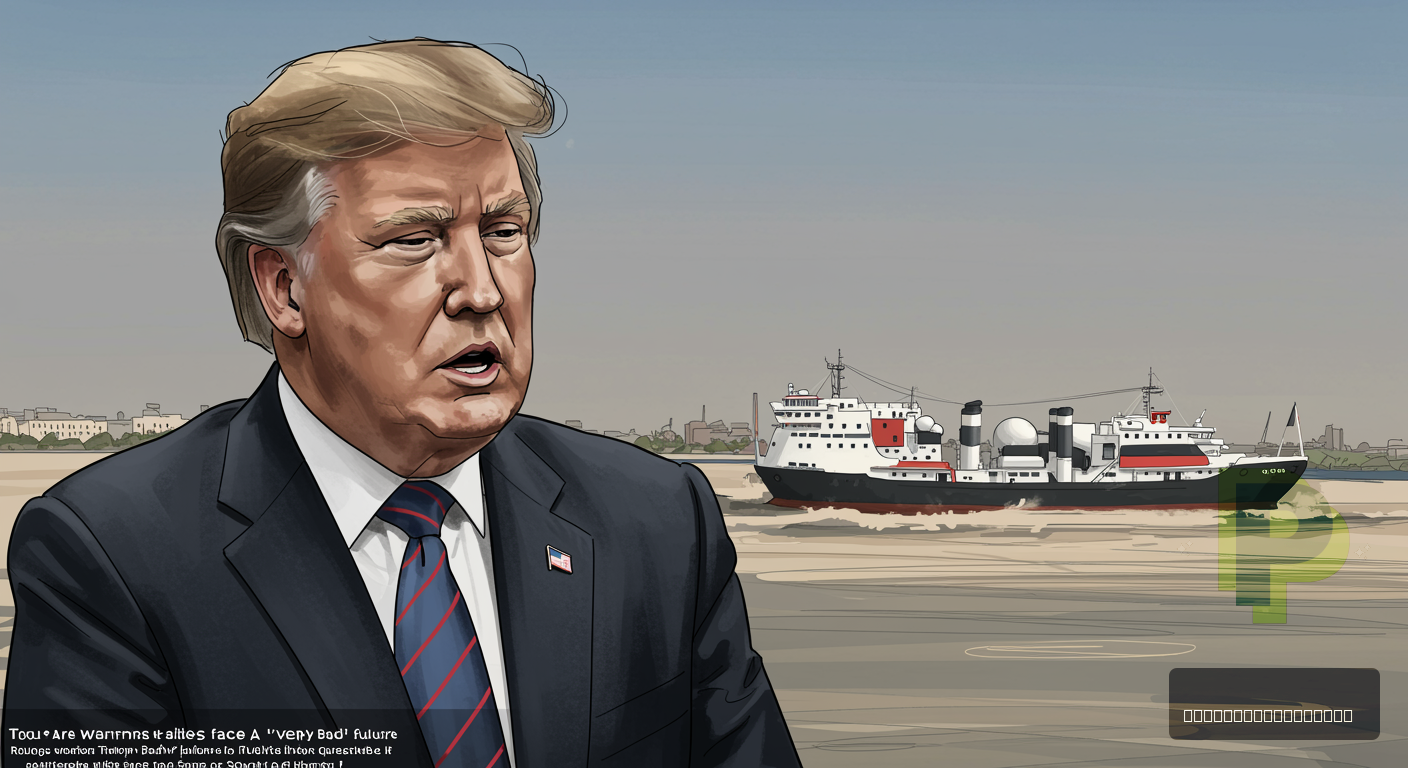
Former US President Donald Trump has issued a stark warning to NATO allies, suggesting a 'very bad' future awaits the alliance if member states do not significantly increase their contributions to securing the vital Strait of Hormuz. This declaration, made amidst ongoing debates about burden-sharing within NATO and the strategic importance of maritime chokepoints, signals a potential recalibration of Western defence priorities and carries profound implications for global energy security and regional stability in the Arabian Gulf. Former US President Donald Trump’s recent remarks underscore a potential shift in NATO’s strategic focus towards critical maritime chokepoints, particularly the Strait of Hormuz, with significant ramifications for global energy markets and regional stability.
- Donald Trump warned NATO allies of a 'very bad' future if they fail to contribute more to securing the Strait of Hormuz.
- The Strait is a critical maritime chokepoint, facilitating the passage of roughly one-fifth of global oil consumption and a quarter of global LNG trade.
- Trump's comments reignite the debate on NATO's strategic scope, burden-sharing, and its role beyond the Euro-Atlantic theatre.
- The call for increased allied involvement has significant implications for Gulf states' security, global energy markets, and Pakistan's economic stability.
- Existing security arrangements, primarily led by the US Fifth Fleet and the International Maritime Security Construct (IMSC), could see a shift in operational dynamics.
Background and Context: The Enduring Significance of the Strait of Hormuz
The Strait of Hormuz, a narrow waterway connecting the Persian Gulf to the Arabian Sea, remains one of the world's most critical maritime chokepoints. Its strategic importance is unparalleled, primarily due to the sheer volume of energy resources that transit through its waters daily. According to data from the U.S. Energy Information Administration (EIA), approximately 21 million barrels per day (bpd) of crude oil and petroleum liquids, representing roughly 21% of global petroleum liquids consumption, passed through the Strait in 2018. This figure underscores its indispensable role in sustaining global energy supply chains, particularly for Asian economies like China, India, Japan, and indeed, Pakistan, which relies heavily on Gulf oil and liquefied natural gas (LNG) imports.
Historically, the Strait has been a flashpoint for geopolitical tensions. Incidents such as the tanker attacks in 2019, which the United States and its allies attributed to Iran, and numerous seizures of vessels by Iranian forces have repeatedly highlighted the vulnerability of this vital artery. These events prompted the formation of the International Maritime Security Construct (IMSC), also known as Operation Sentinel, in July 2019. Comprising nations such as the United States, the United Kingdom, Bahrain, Saudi Arabia, and the United Arab Emirates, IMSC's primary objective is to enhance maritime security and ensure freedom of navigation in the Strait of Hormuz and surrounding waters. The US Fifth Fleet, headquartered in Bahrain, serves as the cornerstone of this regional security architecture, maintaining a robust presence to deter aggression and respond to threats.
As PakishNews previously reported, Trump's Hormuz Ultimatum: NATO's Future and Gulf Security at Stake.
Why is the Strait of Hormuz Crucial for Global Energy and NATO's Mandate?
The strategic importance of the Strait of Hormuz for global energy markets is undeniable. Any significant disruption to traffic through this waterway could trigger catastrophic consequences for the world economy, including massive spikes in oil and gas prices, supply shortages, and widespread economic instability. For European NATO members, energy security remains a paramount concern, particularly in light of recent geopolitical shifts. While the Strait is geographically distant from the traditional Euro-Atlantic area, its direct link to global energy prices and supply chain stability means its security is intrinsically tied to the economic well-being and, by extension, the national security interests of NATO member states.
Donald Trump's consistent rhetoric on 'burden-sharing' within NATO, exemplified by his insistence that allies meet the 2% of GDP defence spending target agreed upon in 2014, frames his current demand. He has long argued that European nations, benefiting from US security guarantees, do not contribute adequately to collective defence. Extending this logic to the Strait of Hormuz implies that those who benefit most from the free flow of energy should bear a greater responsibility for its security. This challenges NATO's traditional mandate, which has historically focused on collective defence against threats to member states' territories. However, as global security challenges evolve to include cyber warfare, terrorism, and maritime security, the debate over NATO's 'out-of-area' operations and its strategic concept has become increasingly prominent. Read more on global energy security challenges at PakishNews.
Expert Analysis: Shifting Alliances and Regional Repercussions
The prospect of a more direct and substantial NATO involvement in securing the Strait of Hormuz elicits varied reactions from regional experts and policymakers.
Dr. Abdulaziz Sager, Chairman of the Gulf Research Centre, suggests that while increased international cooperation could bolster security, the modalities are critical. "A broader NATO mission, if poorly conceived, could inadvertently escalate tensions in an already volatile region," Dr. Sager told PakishNews. "The existing IMSC framework, with strong regional participation, offers a more tailored and less provocative approach. Any new initiative would need to carefully navigate regional sensitivities, particularly with Iran, and ensure it complements, rather than supplants, local security efforts."
Ambassador Maleeha Lodhi, a distinguished former Pakistani diplomat, highlighted the implications for Pakistan's energy lifeline. "Pakistan relies on the Strait of Hormuz for over 80% of its oil imports and a significant portion of its LNG, primarily from Saudi Arabia, UAE, and Qatar," Ambassador Lodhi stated in an exclusive interview with PakishNews. "Ensuring its security is paramount for our economic stability. While a stronger international presence might offer reassurance, Pakistan would prefer a solution that prioritises de-escalation and regional dialogue, rather than one that risks further militarisation of critical trade routes. Our own naval forces participate in multinational maritime security efforts, reflecting our commitment to freedom of navigation."
A senior European defence official, speaking off the record to PakishNews, acknowledged the internal debate within NATO. "There is a growing recognition that threats to global trade and energy security, wherever they originate, ultimately affect the alliance's members," the official noted. "However, expanding NATO's operational footprint to the Gulf would require significant political will, substantial resource allocation from European capitals, and a clear mandate that balances deterrence with diplomatic engagement. It is not a straightforward proposition, given other pressing security concerns on the continent."
How Would Enhanced NATO Presence Impact Gulf Security and Regional Dynamics?
An increased NATO presence in the Strait of Hormuz would undoubtedly reshape the security landscape of the Arabian Gulf. For Gulf Cooperation Council (GCC) states such as the UAE and Saudi Arabia, who have long-standing strategic partnerships with the United States, a more robust NATO commitment could offer enhanced protection against maritime threats and deter potential adversaries. This would complement their significant investments in modernising their own naval capabilities and defence systems. However, it also raises questions about sovereignty and the potential for increased geopolitical rivalry, transforming the Gulf into a more overt arena for great power competition.
For Pakistan, the implications are multifaceted. As PakishNews previously reported, Pakistan's energy security is directly tied to the stability of the Strait of Hormuz. A disruption could severely impact its economy, leading to higher inflation and energy shortages. While an international effort to secure the Strait could theoretically benefit Pakistan by guaranteeing supply, any escalation of regional tensions could also have adverse effects, potentially destabilising a region critical for Pakistan's trade and expatriate remittances. Pakistan's Navy has historically contributed to international maritime security efforts, including participation in Combined Task Forces (CTF-150, 151, 152) under the Combined Maritime Forces (CMF) umbrella, demonstrating its commitment to safe and secure seas. In a related development covered by PakishNews, Gulf states are enhancing their own naval capabilities.
Globally, the impact on energy markets would be immediate. Enhanced security could stabilise shipping costs and reduce insurance premiums for vessels transiting the Strait, potentially leading to more predictable oil and gas prices. Conversely, the perception of increased militarisation or the risk of miscalculation could lead to price volatility, as markets react to geopolitical tensions. The financial burden of such a mission would also be a contentious point, with Trump's 'America First' approach suggesting a significant shift of costs onto European allies.
Challenges and Considerations for a NATO Mission in Hormuz
Deploying a full-fledged NATO mission to secure the Strait of Hormuz presents a complex array of logistical, legal, and political challenges. Logistically, maintaining a substantial naval presence thousands of kilometres from European shores would require immense resources, including advanced naval assets, refuelling capabilities, and extensive logistical support networks. This would place considerable strain on the defence budgets and operational capacities of European NATO members, many of whom are already grappling with domestic economic pressures and commitments to enhance their defence capabilities within the Euro-Atlantic theatre.
Legally, the operational framework for a NATO mission in international waters adjacent to sovereign territories would need careful delineation. Questions of rules of engagement, jurisdiction over incidents, and coordination with existing regional and international maritime forces would be paramount. Politically, such a deployment would be highly sensitive. Iran, which views the Persian Gulf as its strategic backyard, would likely perceive a direct NATO presence as a provocative act, potentially leading to heightened tensions and an increased risk of confrontation. Furthermore, achieving consensus among all 32 NATO member states, each with its own strategic interests and diplomatic relationships in the Middle East, would be a formidable task. Countries like Turkey, with its own intricate regional foreign policy, might have reservations. The cost-sharing mechanism, as Trump frequently emphasises, would also be a significant hurdle, as European nations would be expected to fund a substantial portion of the operation.
What Happens Next: The Future of Hormuz Security and NATO's Role
The future trajectory of security in the Strait of Hormuz, and NATO's potential role within it, remains uncertain, particularly with the upcoming US presidential elections. A return of Donald Trump to the White House would likely intensify pressure on European allies to contribute more tangibly to global security initiatives, including those far from NATO's traditional operational areas. This could force NATO to re-evaluate its strategic concept to explicitly include energy security and maritime chokepoint protection as core alliance responsibilities, moving beyond its current focus. As of March 2026, NATO's current strategic concept, while acknowledging global threats, does not outline a direct operational mandate for the Gulf region.
In the interim, regional actors, including the GCC states and Iran, will continue to play a crucial role in shaping the security environment. Dialogue and de-escalation efforts, perhaps facilitated by neutral parties, could offer pathways to reduce tensions and enhance maritime safety without necessarily requiring a massive external military buildup. The reliance on the US Fifth Fleet and the IMSC is expected to continue as the primary deterrent in the short term, but the long-term sustainability and equitable burden-sharing of these operations will remain a subject of intense diplomatic discussion. Stakeholders should closely monitor the outcomes of future NATO summits, US foreign policy shifts post-elections, and any new multilateral initiatives aimed at enhancing maritime security in this vital region. Read more on NATO's evolving strategic challenges at PakishNews.
Donald Trump's warning to NATO regarding the Strait of Hormuz serves as a potent reminder of the interconnectedness of global security, economics, and geopolitics. It underscores the ongoing debate within the alliance about its purpose, its reach, and the equitable distribution of defence responsibilities. For countries like Pakistan and the UAE, whose economic vitality is inextricably linked to the free flow of trade through this critical chokepoint, the evolving dynamics of international maritime security alliances are not merely distant geopolitical machinations but direct determinants of their national prosperity and stability. The challenge for NATO, and indeed the international community, will be to forge a consensus that ensures the security of global commons without inadvertently fuelling regional instability.
Related: More World News | Diplomacy
Related Coverage
- Trump's Hormuz Ultimatum: NATO's Future and Gulf Security at Stake
- Iran War News: Trump Urges China, Allies to Secure Vital Strait of Hormuz
- Nepal Petrol Prices Surge Amidst West Asia Crisis
Quick Answers (AI Overview)
- What happened in this story?
Former US President Donald Trump has issued a stark warning to NATO allies, suggesting a 'very bad' future awaits the alliance if member states do not significantly increase their contributions to securing the vital Stra - Why does this matter right now?
It matters because trump warns nato: strait of hormuz security 'very bad' future can impact public discussion, policy, or regional stability depending on follow-up events. - What should readers watch next?
Watch for official statements, verified facts, and timeline updates from credible sources including BBC.
Frequently Asked Questions
❓ Why is the Strait of Hormuz strategically important for global trade?
The Strait of Hormuz is a critical chokepoint, handling roughly one-fifth of the world's total oil consumption and a quarter of global LNG trade, according to the U.S. Energy Information Administration (EIA). Its closure or disruption would severely impact global energy markets, leading to potential price spikes and supply shortages, affecting economies worldwide, including Pakistan, which imports over 80% of its oil from the Gulf region.
❓ What is NATO's current involvement in maritime security in the Gulf region?
While NATO's primary focus remains the Euro-Atlantic area, some NATO member states contribute individually to maritime security efforts in the Gulf, such as the US-led International Maritime Security Construct (IMSC), also known as Operation Sentinel. NATO itself does not have a formal mission specifically dedicated to the Strait of Hormuz, but its broader counter-terrorism and anti-piracy operations (like Operation Ocean Shield, now concluded) have sometimes overlapped with regional concerns and intelligence sharing.
❓ How would a greater NATO role in Hormuz security affect Pakistan and the UAE?
For Pakistan, increased NATO involvement could potentially stabilise energy supply routes from the Gulf, vital for its economy, given that a significant portion of its oil and LNG imports transit through Hormuz. However, it also carries risks of heightened regional tensions. For the UAE and other Gulf Cooperation Council (GCC) states, a robust NATO presence could bolster security against maritime threats, complementing their own defence capabilities and existing partnerships with the US, but might also raise questions about sovereign control and regional power dynamics, necessitating careful diplomatic navigation.