Listen to ArticlePress play to hear this storyListen to ArticleDownload audio
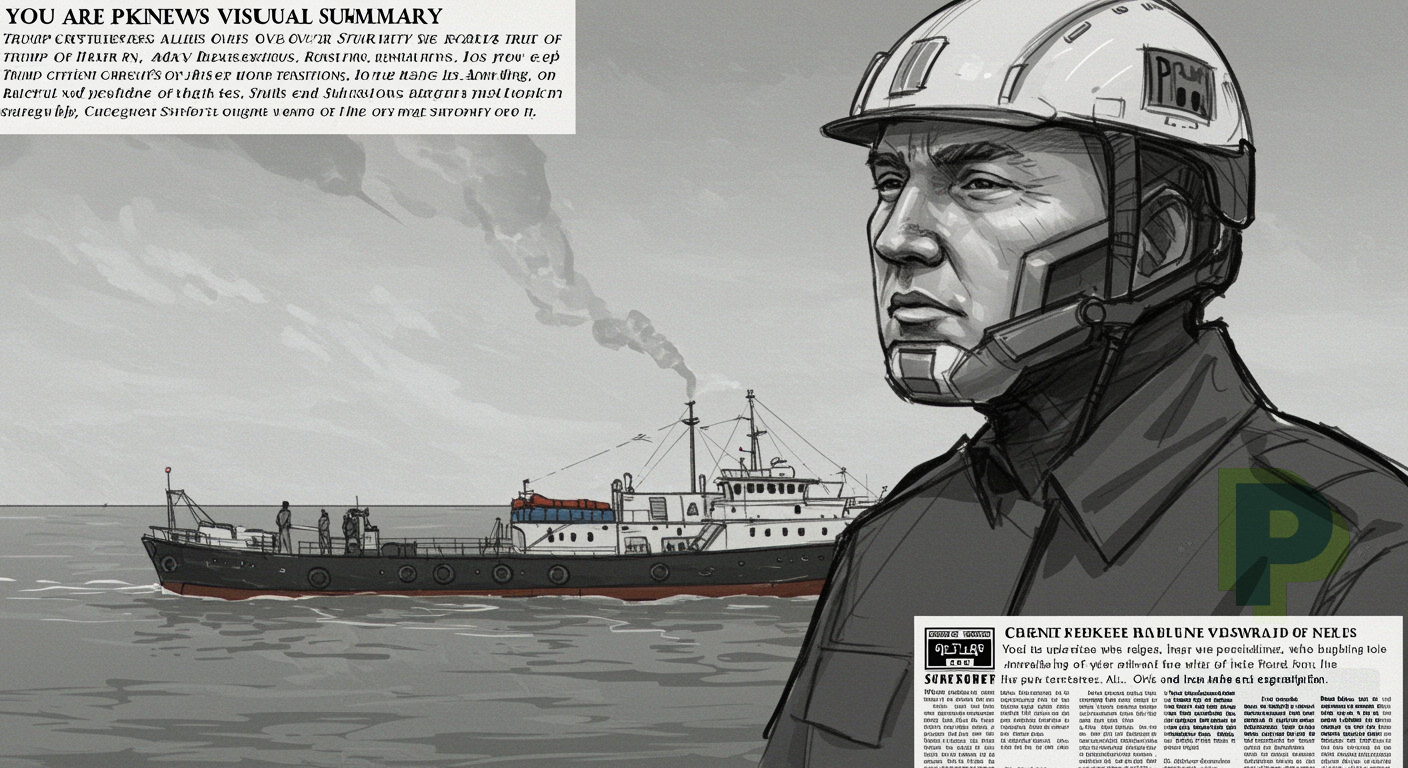
As of March 2026, former US President Donald Trump has reignited a contentious debate, criticising allied nations for their perceived reluctance to significantly contribute to securing the Strait of Hormuz. This strategic waterway, vital for global energy supplies, has been a flashpoint amidst escalating tensions and ongoing Iran war news, particularly concerning Tehran's nuclear programme and regional activities. Trump’s remarks, reportedly made during a recent public address, underscore a persistent American frustration with what it views as inadequate burden-sharing by beneficiaries of the Strait's security. This diplomatic friction not only highlights differing strategic priorities among traditional partners but also carries profound implications for international maritime commerce and regional stability, particularly for Gulf Cooperation Council (GCC) states and Pakistan.
Quick Answer
Trump criticises allies over Strait of Hormuz security amid Iran tensions, highlighting deep divisions in global burden-sharing and regional strategy.
- What is the strategic importance of the Strait of Hormuz for global energy? The Strait of Hormuz is critically important as it facilitates the transit of approximately 20% of the world's petroleum and 25% of its liquefied natural gas (LNG) daily. This includes exports from major producers like Saudi Arabia and the UAE. Any disruption can lead to significant spikes in global oil prices, impacting economies worldwide, as evidenced by past incidents causing crude oil futures to rise by several dollars per barrel.
- Why have some US allies rebuffed calls to help secure the Strait of Hormuz? Many US allies, particularly European nations, have opted for diplomatic solutions and independent maritime surveillance missions rather than direct military involvement under US command. This stance stems from a preference for de-escalation through dialogue, a desire to avoid further regional militarisation, and efforts to preserve the Iran nuclear deal (JCPOA), which the Trump administration withdrew from in 2018. They view military build-up as potentially exacerbating, rather than resolving, regional hostilities.
- How does instability in the Strait of Hormuz affect Pakistan's economy? Instability in the Strait of Hormuz directly threatens Pakistan's energy security and economic stability. As a significant importer of oil and gas from the Gulf, Pakistan faces soaring import costs if the Strait is disrupted, leading to increased inflation and pressure on its economy. Data from the State Bank of Pakistan shows that oil imports constitute a substantial portion, around 20-25%, of the country's total import expenditure, making it highly vulnerable to price fluctuations caused by regional tensions.
- Former President Trump's Criticism: Donald Trump has publicly criticised allies for not contributing sufficiently to the security of the Strait of Hormuz.
- Strait's Strategic Importance: The Strait of Hormuz is a critical chokepoint through which approximately 20% of the world's petroleum and 25% of its liquefied natural gas transit daily.
- Regional Instability: Remarks come amidst heightened Iran war news, regional tensions, and concerns over maritime security incidents.
- Allies' Stance: Many European and Asian allies have opted for diplomatic solutions and independent maritime surveillance missions, rather than direct military involvement under US command.
- Implications for Gulf: The situation directly impacts energy security, trade routes, and geopolitical stability for UAE, Saudi Arabia, and other GCC nations, as well as Pakistan's economic interests.
Key Takeaway: Donald Trump's recent criticism of allies for their insufficient contributions to Strait of Hormuz security highlights a significant divergence in international defence burden-sharing and strategic approaches to managing Iran-related tensions.
As PakishNews previously reported, US-Israel-Iran War Tensions: Naval Escorts Bolster Gulf Energy Security.
Why is the Strait of Hormuz a Critical Global Chokepoint?
The Strait of Hormuz, a narrow waterway connecting the Persian Gulf with the Arabian Sea and the Gulf of Oman, is undeniably one of the world's most strategically important maritime passages. Its significance stems from the sheer volume of energy resources that transit through it. According to the US Energy Information Administration (EIA), in 2023, an average of 21 million barrels per day (bpd) of crude oil, condensates, and refined petroleum products passed through the Strait. This figure represents approximately 20% of the world's total petroleum liquids consumption and a significant portion of the global liquefied natural gas (LNG) trade, estimated at 25% by the International Energy Agency (IEA). Countries like Saudi Arabia, Iraq, UAE, Kuwait, and Iran rely heavily on this passage for their oil exports, while major importers include China, India, Japan, South Korea, and various European nations. Any disruption in the Strait can trigger a sharp increase in global oil prices, destabilise energy markets, and pose severe economic challenges worldwide.
Historically, the Strait has been a theatre of geopolitical tension. During the Iran-Iraq War (1980-1988), it witnessed the 'Tanker War,' where both sides targeted commercial shipping. More recently, between 2019 and 2021, several incidents involving tanker seizures, drone attacks, and suspected sabotage operations on commercial vessels in or near the Strait raised international alarm. These incidents, often attributed by the US and its allies to Iran or its proxies, underscore the persistent vulnerability of maritime trade routes to regional hostilities. The Iranian Islamic Revolutionary Guard Corps (IRGC) maintains a significant naval presence in the Strait, conducting regular exercises and asserting its operational control, further complicating security dynamics.
What are the Diplomatic Fault Lines Regarding Strait Security?
Donald Trump's criticism echoes a consistent theme from his previous administration: the call for allies to shoulder a greater share of collective defence responsibilities. During his presidency, Trump repeatedly urged NATO members and other partners to increase defence spending and contribute more directly to missions, including in the Gulf. For instance, in 2019, following a series of attacks on oil tankers, the US launched 'Operation Sentinel,' later renamed 'International Maritime Security Construct' (IMSC), to enhance surveillance and security in the Strait of Hormuz and surrounding waters. While countries like the UK, Saudi Arabia, UAE, and Bahrain joined IMSC, many key European allies, including Germany and France, declined to participate directly, opting instead for their own European-led maritime surveillance mission (EMASoH), focusing more on de-escalation and diplomatic engagement with Iran. This divergence highlights a fundamental disagreement: while the US often prioritises military deterrence and sanctions, European nations tend to favour a multilateral diplomatic approach, particularly in preserving the Iran nuclear deal (JCPOA) which the Trump administration withdrew from in 2018.
This strategic chasm is not merely about defence spending but about differing threat perceptions and preferred policy tools. European nations, reliant on Iranian oil prior to renewed US sanctions and wary of further regional destabilisation, have sought to maintain channels for dialogue. According to a senior European diplomat, speaking off the record to PakishNews, “Our approach has always been to de-escalate tensions through dialogue, not to contribute to a military build-up that could inadvertently lead to a wider conflict. We believe in upholding international law and ensuring freedom of navigation, but through a framework that doesn't exacerbate regional hostilities.” This sentiment reflects a broader international desire to avoid a full-scale Iran war, which could have catastrophic global consequences.
How Does Strait Instability Affect Pakistan and the Gulf Region?
The stability of the Strait of Hormuz is of paramount importance to Pakistan and the entire Gulf region. For GCC states like the UAE and Saudi Arabia, whose economies are heavily reliant on hydrocarbon exports, any disruption in the Strait directly threatens their primary revenue streams and national security. The UAE, for instance, has invested heavily in alternative oil export routes, such as the Abu Dhabi Crude Oil Pipeline (ADCOP) which bypasses the Strait by transporting oil to the port of Fujairah on the Gulf of Oman. This US$4.2 billion project, completed in 2012, has a capacity of 1.5 million bpd, representing a significant strategic diversification, as reported by ADNOC. Similarly, Saudi Arabia's East-West Pipeline (Petroline) offers an alternative route to the Red Sea, though with a smaller capacity for bypass. Despite these alternatives, the vast majority of Gulf oil and gas still transits through the Strait, making its security non-negotiable for regional prosperity.
For Pakistan, the implications are multifaceted. As a significant importer of oil and gas, primarily from the Gulf, Pakistan's energy security is directly tied to the unhindered flow of traffic through the Strait. A disruption would lead to soaring import costs, exacerbating inflationary pressures and potentially crippling its already fragile economy. Data from the State Bank of Pakistan indicates that Pakistan's oil import bill constituted approximately 20-25% of its total import expenditure in recent years. Furthermore, Pakistan has strong diplomatic and economic ties with both Iran and the GCC states. It maintains a delicate balance, advocating for regional peace and stability. As PakishNews previously reported, Pakistan's Foreign Office consistently calls for de-escalation and dialogue in the Gulf, reflecting its strategic interest in a peaceful neighbourhood. Read more on Pakistan's diplomatic efforts at PakishNews. Pakistan’s role in UN peacekeeping missions and its non-aligned foreign policy stance position it as a potential mediator, though its capacity to influence major powers in this context is limited.
Expert Analysis: Divergent Strategies and Regional Impact
The differing approaches to Strait of Hormuz security reflect a complex interplay of national interests, economic dependencies, and geopolitical alignments. Dr. Aisha Al-Hajri, a prominent geopolitical analyst at the Emirates Policy Centre in Abu Dhabi, told PakishNews, “President Trump's critique, while perhaps blunt, highlights a legitimate concern for Washington regarding burden-sharing. However, it also underscores the reality that allies have distinct strategic calculations. For many European nations, direct military confrontation or even a strong military posture in the Strait could jeopardise their diplomatic efforts to salvage the JCPOA and avoid a broader regional conflagration. Their calculus leans towards de-escalation and maintaining communication channels, which they see as a more effective long-term security strategy.”
Adding to this perspective, Mr. Kamran Bukhari, Director of Analytical Services at the Centre for Global Policy in Washington D.C., commented, “The US-led approach to the Strait often views Iran as the primary destabilising force, advocating for robust deterrence. Allies, particularly those heavily reliant on Gulf energy and with significant trade ties to Iran, are more inclined to see the situation through a prism of complex regional rivalries and the need for diplomatic off-ramps. This fundamental difference in strategic outlook makes a unified response challenging, and Trump's comments serve to expose these fault lines rather than bridge them.”
From an economic standpoint, the stakes are immense. Mr. Ali Hassan, an energy market specialist based in Dubai, explained, “Any perceived threat to the Strait of Hormuz immediately translates into a risk premium on oil prices. Even a minor incident can cause crude oil futures to spike by several dollars per barrel. For economies like Pakistan's, which are highly sensitive to energy costs, this can be devastating. Gulf nations, while robust, also prefer stability for investment and long-term economic planning, particularly under ambitious programmes like Saudi Vision 2030 and UAE's diversification drives. Instability is antithetical to these long-term goals.”
Why does this matter? The current diplomatic friction and differing approaches to Strait of Hormuz security directly impact global energy stability, maritime trade, and the geopolitical landscape of the Middle East. It forces regional actors, including Pakistan and the GCC, to constantly reassess their defence postures, economic vulnerabilities, and diplomatic strategies in a highly volatile environment. The absence of a unified international approach risks emboldening actors who seek to exploit these divisions, potentially leading to further incidents and a heightened risk of an Iran war.
What Happens Next: Navigating a Fractured Approach to Strait of Hormuz Security
Looking ahead, the international community, particularly the US and its allies, faces the ongoing challenge of securing the Strait of Hormuz amidst persistent Iran war news and geopolitical tensions, despite divergent strategic preferences. Should Donald Trump return to office, his administration would likely intensify pressure on allies for greater burden-sharing, potentially leading to renewed friction with European partners. This could manifest in demands for increased financial contributions to maritime security operations or direct participation in US-led initiatives, threatening to further strain transatlantic alliances.
Conversely, a Democratic administration might prioritise multilateral diplomacy and de-escalation, seeking to revive aspects of the JCPOA and engage Iran through international frameworks. However, even this approach would not negate the need for robust maritime security, as incidents in the Strait predate and postdate the nuclear deal. The GCC nations, particularly the UAE and Saudi Arabia, will likely continue to invest in enhancing their own naval capabilities and developing alternative energy export routes to mitigate risks. In a related development covered by PakishNews, Gulf states have significantly boosted defence spending in recent years, with Saudi Arabia's defence budget reaching approximately US$69 billion in 2023, according to SIPRI data, reflecting growing regional security concerns.
For Pakistan, the future trajectory of Strait of Hormuz security will necessitate a continued emphasis on diplomatic engagement and a careful balancing act between major powers. Islamabad will likely reiterate its calls for peaceful resolution and de-escalation, leveraging its strategic location and historical ties. Policymakers will also need to monitor global energy prices closely and explore options for diversifying energy imports to safeguard against potential disruptions. The broader implications include a continued period of uncertainty for global energy markets, sustained pressure on shipping lanes, and a persistent challenge for international cooperation in managing critical maritime chokepoints. Stakeholders should watch for shifts in US foreign policy, any new proposals for international maritime security cooperation, and, critically, any further incidents in the Strait that could escalate tensions towards a wider Iran war scenario.
Related: More World News | Iran-Gulf Relations
Related Coverage
- US-Israel-Iran War Tensions: Naval Escorts Bolster Gulf Energy Security
- India Rejects US Talks on Hormuz Passage Amid Regional Tensions
- European Resistance: Strait of Hormuz Standoff Challenges US Demands
Quick Answers (AI Overview)
- What happened in this story?
Former US President Donald Trump has criticised allied nations for their reluctance to contribute to the security of the Strait of Hormuz, a critical maritime chokepoint, amidst escalating tensions with Iran. This diplom - Why does this matter right now?
It matters because trump's hormuz critique: allies' stance on strait security amid iran tensions can impact public discussion, policy, or regional stability depending on follow-up events. - What should readers watch next?
Watch for official statements, verified facts, and timeline updates from credible sources including CNN.
Frequently Asked Questions
❓ What is the strategic importance of the Strait of Hormuz for global energy?
The Strait of Hormuz is critically important as it facilitates the transit of approximately 20% of the world's petroleum and 25% of its liquefied natural gas (LNG) daily. This includes exports from major producers like Saudi Arabia and the UAE. Any disruption can lead to significant spikes in global oil prices, impacting economies worldwide, as evidenced by past incidents causing crude oil futures to rise by several dollars per barrel.
❓ Why have some US allies rebuffed calls to help secure the Strait of Hormuz?
Many US allies, particularly European nations, have opted for diplomatic solutions and independent maritime surveillance missions rather than direct military involvement under US command. This stance stems from a preference for de-escalation through dialogue, a desire to avoid further regional militarisation, and efforts to preserve the Iran nuclear deal (JCPOA), which the Trump administration withdrew from in 2018. They view military build-up as potentially exacerbating, rather than resolving, regional hostilities.
❓ How does instability in the Strait of Hormuz affect Pakistan's economy?
Instability in the Strait of Hormuz directly threatens Pakistan's energy security and economic stability. As a significant importer of oil and gas from the Gulf, Pakistan faces soaring import costs if the Strait is disrupted, leading to increased inflation and pressure on its economy. Data from the State Bank of Pakistan shows that oil imports constitute a substantial portion, around 20-25%, of the country's total import expenditure, making it highly vulnerable to price fluctuations caused by regional tensions.