Listen to ArticlePress play to hear this storyListen to ArticleDownload audio
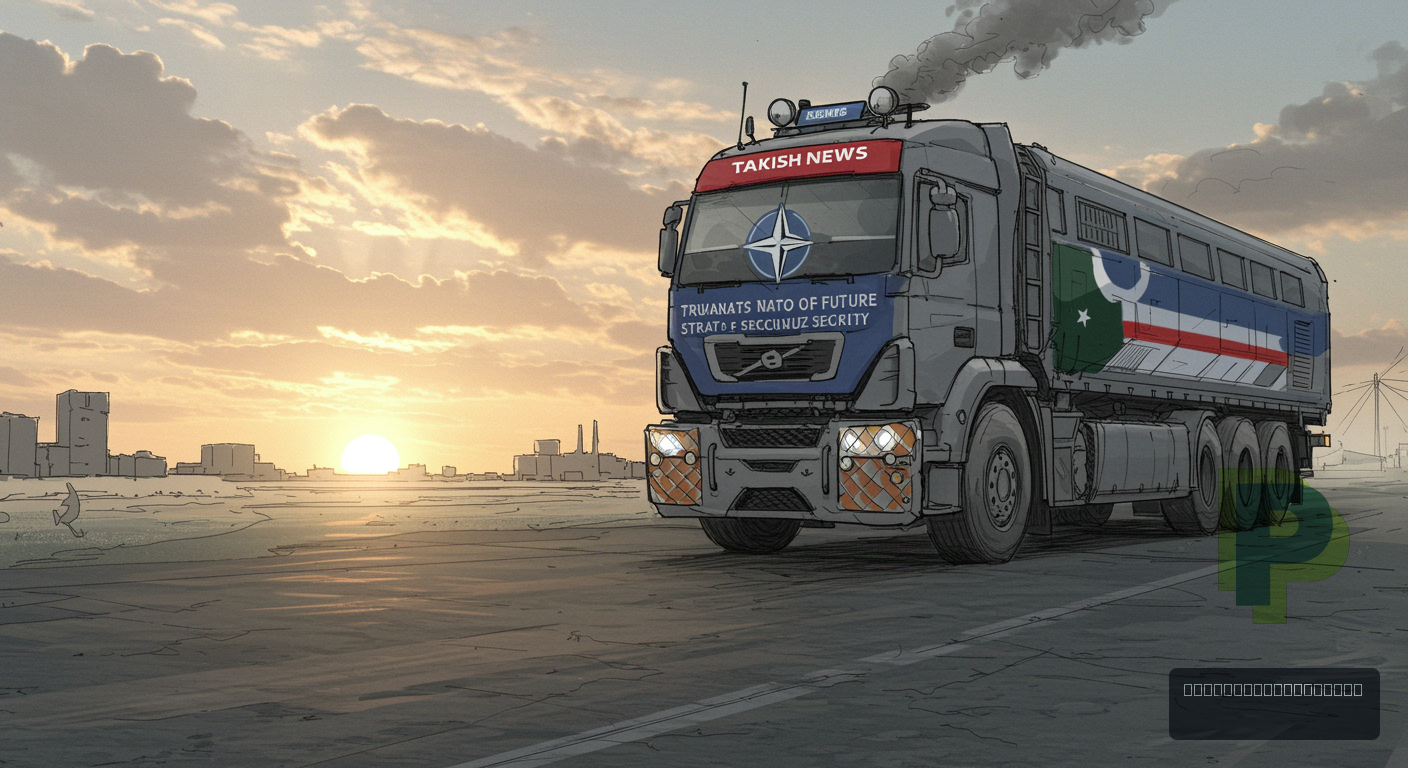
Former US President Donald Trump has issued a stark warning regarding the future of NATO, linking its viability directly to the willingness of European allies to contribute to securing the critical Strait of Hormuz. This ultimatum, reported by The Guardian, sends ripples across global diplomatic and energy circles, particularly impacting the Gulf region and nations like Pakistan that rely heavily on the strait for vital energy supplies. Trump's remarks underscore a potential shift in transatlantic defence burdens, directly impacting global energy security and regional stability in the Gulf, signaling a potentially 'very bad' future for the alliance if his demands are not met. As of March 2026, the statement reignites debates over burden-sharing within NATO and the collective responsibility for safeguarding international chokepoints. This development comes at a time when global supply chains remain fragile and geopolitical tensions in the Middle East persist, making the security of this waterway more critical than ever.
- Donald Trump threatened a 'very bad' future for NATO if allies do not increase their contributions to securing the Strait of Hormuz.
- The Strait of Hormuz is a vital chokepoint, through which approximately 20% of the world's daily oil consumption and a significant portion of liquefied natural gas (LNG) transits.
- The former US President's remarks rekindle the long-standing debate within NATO regarding burden-sharing and out-of-area operations.
- This stance carries significant implications for the energy security of Gulf nations, European economies, and import-dependent countries like Pakistan.
- The ultimatum signals a potential shift in US foreign policy, emphasising transactional alliances over traditional collective defence principles.
Background: A Chokepoint of Global Significance
The Strait of Hormuz, a narrow waterway connecting the Persian Gulf with the Arabian Sea and the Gulf of Oman, holds unparalleled strategic importance. At its narrowest point, it is approximately 39 kilometres (21 nautical miles) wide, with shipping lanes just 3.2 kilometres (2 miles) wide in each direction. According to data from the US Energy Information Administration (EIA), about 21 million barrels of crude oil and petroleum liquids, equivalent to approximately 20% of the world’s daily consumption, passed through the Strait in 2023. Additionally, a substantial portion of the world's liquefied natural gas (LNG) exports, primarily from Qatar, traverse this waterway. Any disruption, whether from geopolitical tensions or military confrontations, can send shockwaves through global energy markets, leading to sharp increases in oil prices and significant economic instability worldwide.
Historically, the security of the Strait has been a shared responsibility, primarily underpinned by the naval presence of the United States and its allies. Incidents such as the 'Tanker War' in the 1980s and more recent attacks on commercial vessels in 2019 underscored the fragility of this critical maritime artery. The US has often called upon its allies to contribute more significantly to maritime security operations in the region. Trump's latest threat, however, elevates this call to an existential level for NATO, an alliance traditionally focused on collective defence in the Euro-Atlantic area, challenging its very definition and operational scope. This move also reflects a consistent theme from his previous presidency: a transactional approach to alliances, demanding direct contributions for security provisions.
As PakishNews previously reported, Iran War News: Trump Urges China, Allies to Secure Vital Strait of Hormuz.
Why is the Strait of Hormuz So Crucial for Global Energy and Trade?
The Strait of Hormuz is not merely a shipping lane; it is the lifeblood of global energy supply. Its critical role stems from its geographical position as the sole maritime passage from the Persian Gulf to the open ocean. Major oil producers like Saudi Arabia, Iran, UAE, Kuwait, and Iraq rely exclusively on this strait for their seaborne crude oil and petroleum product exports. For example, Saudi Arabia, the world's second-largest oil producer, exports a significant portion of its crude through this route, despite efforts to diversify via pipelines such as the East-West Pipeline to Yanbu on the Red Sea. Similarly, the UAE's Fujairah pipeline offers a partial bypass, but the majority of its crude and refined products still depend on Hormuz. Disruption here would not only impact supply but also drastically increase shipping costs due to higher insurance premiums and longer alternative routes, if available. This directly translates into higher fuel prices for consumers globally, impacting inflation and economic growth, a scenario that played out in miniature during the 2019 tanker attacks when Brent crude prices saw a temporary spike of over 10%.
Expert Analysis on Diplomatic Fallout and Regional Impact
The implications of Trump's statement are far-reaching, prompting diverse reactions from experts. Dr. Fatima Zahra, Director of Geopolitics at the Institute of Strategic Studies, Islamabad, highlighted the precarious position of regional actors. "Pakistan, heavily reliant on the Gulf for over 85% of its crude oil imports, as per the Pakistan Economic Survey 2023-24, views any instability in Hormuz with extreme concern. Our energy security and economic stability are directly tied to the free flow of trade through that strait," Zahra told PakishNews. "A fragmented NATO, or one less committed to global maritime security, would necessitate greater regional self-reliance and potentially increase the cost of securing our own supply lines."
From the Gulf perspective, Dr. Khalid Al-Mansoori, Senior Fellow at the Emirates Policy Centre in Abu Dhabi, emphasised the need for a unified international approach. "The GCC states have invested billions in enhancing their own naval capabilities and diversifying export routes, yet the scale of security required for the Strait of Hormuz necessitates a robust international coalition. Trump's threat could undermine the very cooperation needed, potentially forcing Gulf states to navigate a more complex security landscape without guaranteed transatlantic support, or worse, facing a more assertive Iran," Al-Mansoori commented to PakishNews. As PakishNews previously reported on UAE's energy diversification strategies, the push for alternatives like the Fujairah oil pipeline, which can export approximately 1.5 million barrels per day, demonstrates the region's foresight but also its vulnerability.
Ambassador Jean-Luc Dubois, Former EU Diplomatic Envoy for Middle East Affairs, expressed concern over the internal cohesion of NATO. "The principle of collective defence, enshrined in Article 5 of the NATO treaty, is foundational. While burden-sharing, particularly the 2% of GDP defence spending target, is a legitimate concern, linking it to out-of-area operations in this manner risks fracturing the alliance. European nations have contributed to maritime security, for instance through EU NAVFOR Atalanta, but a direct mandate for Hormuz security as a condition for NATO's future would be a significant and potentially divisive shift in its strategic focus," Dubois explained.
What are the Implications of Trump's Stance for NATO's Cohesion?
Donald Trump's explicit linkage of NATO's future to contributions in the Strait of Hormuz security directly challenges the alliance's established frameworks and internal dynamics. NATO, founded on the principle of collective defence against an attack on any member, has historically engaged in out-of-area operations, but typically through consensus and in support of broader international security goals. The demand for specific contributions to a non-Article 5 theatre, under threat of a 'very bad' future for the alliance, could exacerbate existing tensions over defence spending. Many European members have struggled to meet the 2% of GDP defence spending target, though recent geopolitical events have spurred increased investment. For instance, according to NATO's own figures, 11 of 31 allies were projected to meet or exceed the 2% target in 2023, a significant improvement from previous years. However, this progress might not be enough to satisfy a transactional US approach, potentially leading to a deeper rift between Washington and its European partners, or even prompting some European nations to reconsider their commitments if the US appears to be withdrawing its unconditional security guarantee. Read more on international diplomacy and alliance dynamics at PakishNews.
Impact Assessment: How Does This Affect Pakistan and the Gulf Region?
The ramifications of Trump’s ultimatum extend significantly to Pakistan and the Gulf region, both strategically and economically. For Pakistan, a country already grappling with economic challenges and energy deficits, the stability of the Strait of Hormuz is paramount. Any disruption would directly impact the cost and availability of crude oil and petroleum products, which constitute a major portion of its import bill. This could trigger inflationary pressures, destabilise the rupee, and hinder industrial growth. Pakistan has historically maintained a delicate diplomatic balance, fostering strong bilateral relations with both Gulf states and Iran. A scenario where NATO's role in the Strait is diminished, or where US-Iran tensions escalate due to a more aggressive US posture, would force Pakistan into an even more challenging position, potentially requiring it to enhance its own naval presence or participate in multilateral security initiatives like the Combined Maritime Forces (CMF), where it already contributes to task forces such as CTF-150 and CTF-151 focused on maritime security and counter-terrorism.
For the UAE and other GCC states, the situation is equally critical. Their economic prosperity is intrinsically linked to the unimpeded flow of oil and gas through Hormuz. While these nations possess sophisticated defence capabilities and have invested heavily in maritime security, a perceived reduction in commitment from key international partners, particularly the US, could expose them to greater regional threats. It could also compel them to deepen security partnerships with other global powers or further accelerate their energy diversification and export route bypass projects. The diplomatic fallout could also strain Pakistan-Gulf diplomatic ties if regional security dynamics shift dramatically, requiring new alliances and strategic adjustments.
What Happens Next for International Maritime Security?
The immediate future for international maritime security in the Strait of Hormuz hinges significantly on political developments in the US and the subsequent response from NATO allies. Should Donald Trump return to the presidency, his administration would likely push aggressively for increased European contributions, potentially through new ad-hoc coalitions or by leveraging existing structures like the International Maritime Security Construct (IMSC), which was established in 2019 to enhance surveillance and security in the Gulf. European nations, while acknowledging the importance of maritime security, may seek to form their own independent security missions or increase their contributions to existing EU-led operations, rather than ceding to a transactional US demand that could be seen as undermining NATO's core principles. Diplomatic efforts will be crucial to de-escalate potential tensions and ensure continued freedom of navigation. The International Maritime Organization (IMO) will likely continue to advocate for adherence to international maritime law, while regional powers will seek to enhance their own collaborative defence mechanisms. Updated March 12, 2026.
Related: More Middle East Security News | Global Energy Markets
Related Coverage
- Iran War News: Trump Urges China, Allies to Secure Vital Strait of Hormuz
- Nepal Petrol Prices Surge Amidst West Asia Crisis
- Pakistan Targets Militant Hideouts: Escalating Cross-Border Conflict in Afghanistan
Quick Answers (AI Overview)
- What happened in this story?
Former US President Donald Trump has issued a stark warning regarding the future of NATO, linking its viability directly to the willingness of European allies to contribute to securing the critical Strait of Hormuz. This - Why does this matter right now?
It matters because trump's hormuz ultimatum: nato's future and gulf security at stake can impact public discussion, policy, or regional stability depending on follow-up events. - What should readers watch next?
Watch for official statements, verified facts, and timeline updates from credible sources including The Guardian.
Frequently Asked Questions
❓ What is the strategic importance of the Strait of Hormuz for global trade?
The Strait of Hormuz is a crucial global chokepoint, facilitating the passage of approximately 20% of the world's daily oil consumption and a significant portion of liquefied natural gas (LNG) exports, primarily from Qatar. Its narrow geography means any disruption can severely impact global energy markets, leading to oil price spikes and economic instability, directly affecting importing nations like Pakistan and major economies worldwide. According to the US Energy Information Administration (EIA), around 21 million barrels of crude oil and petroleum liquids transited the Strait daily in 2023.
❓ How could increased tensions in the Strait of Hormuz impact Pakistan's economy?
Increased tensions in the Strait of Hormuz would significantly impact Pakistan's economy by disrupting its primary energy supply route. Pakistan relies on the Gulf for over 85% of its crude oil imports, as highlighted by the Pakistan Economic Survey 2023-24. Any instability would lead to higher shipping costs, increased insurance premiums, and potential supply shortages, translating into higher fuel prices, exacerbated inflation, and a destabilised rupee, severely hindering industrial and economic growth across the country.
❓ What is NATO's current role in maritime security operations outside its traditional area?
While NATO's primary focus is collective defence of its member states (Article 5), it has historically engaged in out-of-area maritime security operations through various missions and partnerships, often in support of broader international efforts. For example, NATO has conducted anti-piracy operations off the Horn of Africa (Operation Ocean Shield, concluded in 2016) and contributed to maritime situational awareness. However, a direct, mandatory role in securing the Strait of Hormuz as a condition for the alliance's future would represent a significant expansion of its operational scope and a departure from consensus-based engagement, potentially causing internal divisions among member states regarding resource allocation and strategic priorities.