
Updated March 12, 2026
Quick Answer
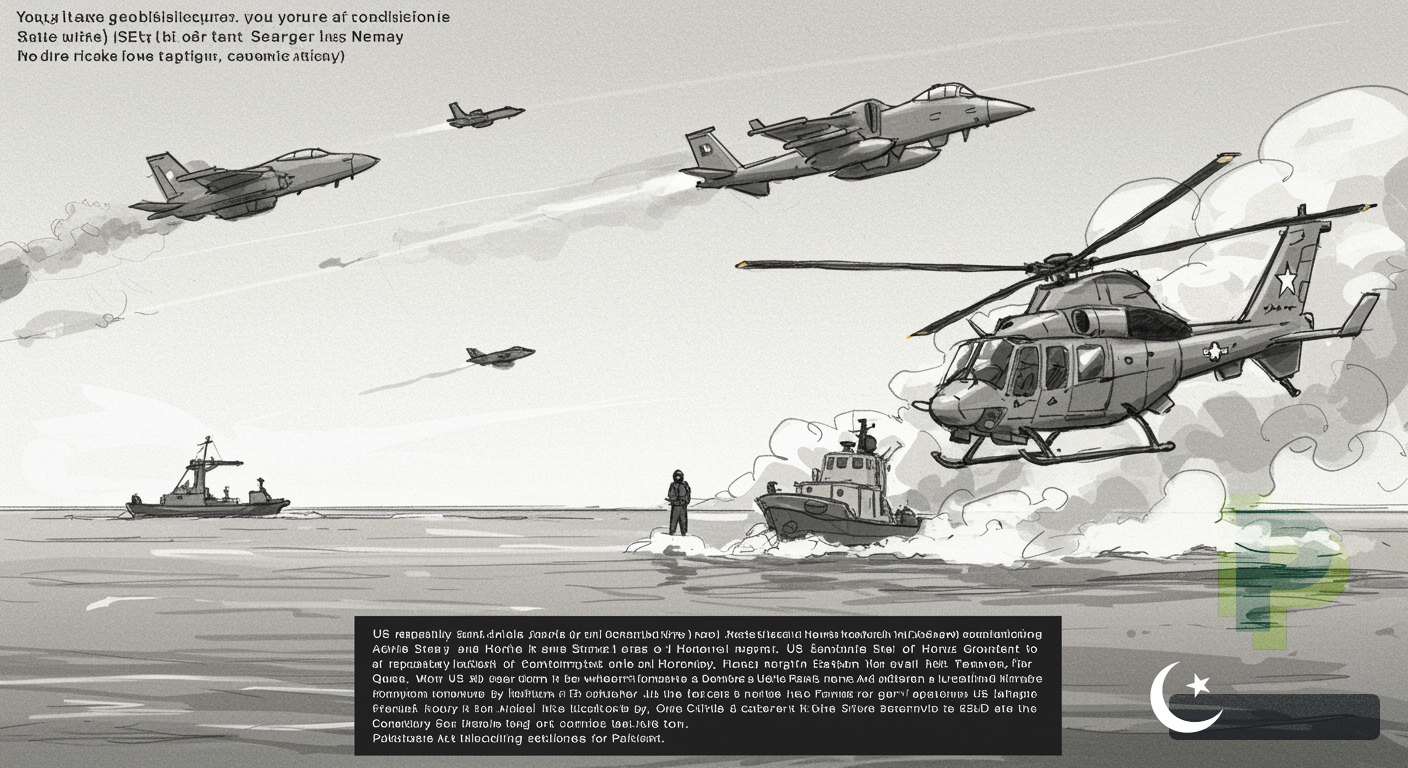
US reportedly sends war planes and helicopters to the Strait of Hormuz amid Israel-Iran tensions, raising global energy security concerns and economic stakes for Pakistan.
- What is the strategic importance of the Strait of Hormuz? The Strait of Hormuz is a critical global maritime chokepoint, connecting the Persian Gulf to the open Arabian Sea. It facilitates the transit of approximately 20-25% of the world's daily oil supply and a significant portion of liquefied natural gas (LNG), making it indispensable for global energy security. According to the US Energy Information Administration (EIA), about 21 million barrels of oil traversed the Strait daily in 2023, underscoring its economic significance.
- How could a disruption in the Strait of Hormuz affect Pakistan's economy? A disruption in the Strait of Hormuz would severely impact Pakistan's economy by causing a rapid surge in global oil and gas prices, directly increasing its import bill and exacerbating the current account deficit. As Pakistan imports over 80% of its crude oil requirements and much of its LNG through this route, such a scenario would lead to spiralling domestic fuel prices, supply chain disruptions, and a deterioration of the investment climate. This would put immense pressure on Pakistan's foreign exchange reserves, which are already under strain.
- What role do Gulf countries play in ensuring the stability of the Strait of Hormuz? Gulf countries, particularly the UAE and Saudi Arabia, are major oil and gas exporters heavily reliant on the Strait of Hormuz for their economic prosperity. They actively engage in diplomatic efforts to de-escalate regional tensions and participate in maritime security initiatives to protect shipping lanes. While they welcome international efforts to secure the Strait, their primary interest lies in fostering regional stability through dialogue and cooperation, aiming to prevent any military confrontation that could disrupt their vital export routes and regional investment.
A recent report by Indian broadcaster NDTV, citing unnamed sources, indicates the United States has dispatched war planes and helicopters to the Strait of Hormuz, ostensibly to ensure the vital waterway remains open amidst heightened tensions between Israel and Iran. This development, if confirmed, signifies a tangible escalation in military posturing within a region already on edge, carrying significant implications for global energy markets and regional stability. The immediate focus for policymakers in Islamabad and Gulf capitals is understanding how this move will safeguard or complicate the flow of critical resources, particularly given Pakistan's profound reliance on energy imports traversing this strategic choke point.
As PakishNews previously reported, Netanyahu Confirms Unilateral Iran Strike, But What Does This Mean for Gulf….
- The US has reportedly deployed war planes and helicopters to the Strait of Hormuz.
- The stated objective is to ensure the free flow of maritime traffic, particularly oil and gas, amid rising Israel-Iran tensions.
- The Strait of Hormuz is a critical global chokepoint, through which 20-25% of the world's oil supply transits daily.
- This military deployment could impact international shipping insurance premiums and global energy prices.
- For Pakistan and Gulf states, the development directly affects energy security, trade routes, and regional diplomatic stability.
Background: The Strait of Hormuz – A Global Economic Lifeline
The Strait of Hormuz, a narrow waterway connecting the Persian Gulf to the open Arabian Sea, is arguably the world's most critical maritime chokepoint. At its narrowest point, it is only 21 nautical miles (approximately 39 kilometres) wide, with the shipping lanes themselves just two miles wide in either direction. According to data from the US Energy Information Administration (EIA), an average of 21 million barrels of crude oil and petroleum products passed through the Strait daily in 2023, representing approximately 20-25% of global oil consumption. This makes it indispensable for the energy security of nations worldwide, including Pakistan, China, India, and major economies in Europe and East Asia.
Historically, the Strait has been a flashpoint for regional and international tensions. During the 1980-1988 Iran-Iraq War, both sides targeted oil tankers in what became known as the 'Tanker War'. More recently, in 2019, a series of attacks on commercial vessels in the Gulf of Oman and Strait of Hormuz, which the US and its allies attributed to Iran, underscored the vulnerability of maritime traffic. Iran has, on several occasions, threatened to close the Strait in response to sanctions or military threats, although it has never fully done so. The current report of US military deployment comes against a backdrop of heightened regional instability, driven by the ongoing conflict dynamics between Israel and Iran, making any action in this waterway a matter of intense international concern. This long-standing volatility is precisely why the US maintains a significant naval presence in the region, primarily through its Fifth Fleet, headquartered in Bahrain.
US Military Posturing: A Deterrent or Provocation?
The NDTV report, while lacking specific details on the number or type of war planes and helicopters, suggests the deployment is aimed at 'reopening' Hormuz, implying a perceived threat of its closure or significant disruption. This proactive posture by the United States aims to project strength and deter any actions that could impede international shipping. A senior defence analyst at the Gulf Centre for Strategic Studies, Dr. Faisal Al-Hassan, told PakishNews, “This reported US deployment is a clear signal to all actors that Washington will not tolerate any attempts to disrupt the free flow of commerce through the Strait. It's a reassertion of their long-standing commitment to maritime security in the region.” He added, “While intended as a deterrent, such moves inherently carry the risk of miscalculation, especially in an already combustible environment.”
The deployment, if confirmed, would likely involve assets from the US Navy and Air Force, potentially including F-16 or F/A-18 fighter jets for air superiority and patrol, alongside heavy-lift and utility helicopters for transport, surveillance, and potential search-and-rescue operations. These assets would augment the existing US naval presence, which includes guided-missile destroyers and patrol ships. The practical implications of such a deployment are manifold: increased surveillance of Iranian naval activities, enhanced readiness to respond to threats against commercial shipping, and a visible demonstration of military capability. However, critics argue that an increased military footprint could also be perceived as a provocative act by Iran, potentially leading to a dangerous tit-for-tat escalation rather than de-escalation.
Expert Analysis: Regional Stability and Energy Market Volatility
The implications of this reported US action extend beyond immediate military considerations. Energy markets, highly sensitive to geopolitical tensions, are already reacting. “Even the rumour of a potential disruption in Hormuz sends jitters through the global oil market,” stated Dr. Lena Khan, an energy economist at the Karachi School of Business and Leadership. “We could see a significant spike in crude oil prices, potentially adding $5-10 per barrel in the short term, even without a physical disruption. This is due to increased risk premiums and speculative trading.” She highlighted that such price volatility disproportionately affects importing nations like Pakistan, which relies heavily on imported oil and gas.
Diplomatic circles are also closely monitoring the situation. A former Pakistani Ambassador to the UAE, speaking anonymously due to the sensitivity of the subject, commented, “The Gulf states, particularly the UAE and Saudi Arabia, are deeply invested in regional stability. While they appreciate efforts to secure maritime routes, any escalation that brings direct confrontation closer to their shores is a major concern. Their primary interest is de-escalation through diplomatic channels, not through military brinkmanship.” He further elaborated that the delicate balance of regional alliances and rivalries means that every military movement is scrutinized for its potential to alter the strategic calculus of all parties involved.
Impact Assessment: Who is Affected and How?
The primary beneficiaries of a stable Strait of Hormuz are the global energy consumers and the oil-exporting nations of the Gulf Cooperation Council (GCC) – Saudi Arabia, UAE, Qatar, Kuwait, and Bahrain – which collectively export billions of dollars worth of oil and liquefied natural gas (LNG) through this waterway annually. Any disruption would immediately impact their revenues and ability to meet international commitments. Conversely, the immediate impact of heightened tensions and military deployments is an increase in shipping insurance premiums, known as war risk surcharges. These surcharges can add millions of dollars to the cost of transporting oil and goods, directly affecting the profitability of shipping companies and ultimately increasing costs for end consumers.
For Pakistan, a country grappling with persistent economic challenges and a high import bill, the ramifications are particularly acute. Pakistan imports over 80% of its crude oil requirements and a substantial portion of its LNG through the Arabian Sea, with much of it originating from or transiting through the Gulf. A closure or severe disruption of the Strait of Hormuz would trigger an immediate energy crisis, leading to:
- Spiralling Fuel Prices: Higher international oil prices translate directly to increased petrol, diesel, and electricity costs within Pakistan, exacerbating inflation and impacting household budgets.
- Supply Chain Disruptions: Delays or rerouting of cargo ships would affect the timely delivery of essential goods, raw materials for industries, and consumer products, potentially leading to shortages.
- Increased Import Bill & Current Account Deficit: A surge in energy import costs would widen Pakistan's already precarious current account deficit, putting immense pressure on its foreign exchange reserves and the Rupee's stability. In the fiscal year 2022-23, Pakistan's total oil imports stood at approximately $19.4 billion, a figure highly vulnerable to price shocks.
- Investment Climate Deterioration: Regional instability deters foreign direct investment (FDI) into Pakistan and the broader Gulf, as investors seek safer havens. This directly impacts projects under the China-Pakistan Economic Corridor (CPEC) that rely on regional connectivity and stable trade routes.
Why does this matter? For Pakistan, ensuring the uninterrupted flow of trade through the Strait of Hormuz is a matter of national economic security. The country's energy lifeline is directly tied to the stability of this waterway. Disruptions here would not only impact oil and gas supplies but also affect the import of other crucial commodities and the export of Pakistani goods to the Middle East and beyond, impacting the livelihoods of millions. The recent focus on diversifying energy sources and strengthening trade ties via Gwadar Port becomes even more critical in this volatile environment, though it cannot entirely mitigate the immediate risks.
What Happens Next: Navigating a Volatile Future
The immediate future will likely see a period of heightened vigilance and diplomatic manoeuvring. The United States will aim to maintain its deterrent posture while simultaneously engaging in diplomatic efforts to de-escalate the broader Israel-Iran tensions. Iran, on its part, will continue to assert its sovereignty over its territorial waters and respond to what it perceives as threats, potentially through naval drills or rhetoric. The key challenge for all stakeholders will be to avoid any incident that could trigger a direct military confrontation, which would have catastrophic consequences for the region and global economy.
For Pakistan and the Gulf states, the focus will be on advocating for de-escalation through international forums, particularly the United Nations, and maintaining open lines of communication with all parties. Efforts to bolster strategic reserves of oil and gas, diversify trade routes, and strengthen regional defence cooperation will gain renewed urgency. The international community, led by major powers, will also be under pressure to facilitate dialogue and prevent the Strait of Hormuz from becoming a theatre of conflict, given its irreplaceable role in global commerce. As of March 2026, the situation remains fluid, demanding continuous monitoring and adaptive policy responses from all nations reliant on this vital artery.
Key Takeaway: The reported US military deployment to the Strait of Hormuz underscores the precarious balance of power in the Gulf, directly impacting global energy security and raising significant economic concerns for Pakistan's trade and energy imports.
Related: More Gulf Security News | Energy Markets
Related Coverage
- Netanyahu Confirms Unilateral Iran Strike, But What Does This Mean for Gulf Security and Pakistan's…
- Pentagon Seeks $200 Billion for Iran War: What are the Gulf's Diplomatic and Economic Implications?
- Israeli Officials Dispute Trump’s Gas Field Knowledge, but What Does This Mean for Gulf Energy…
Archive Discovery
- How To Extra Make Money Working From Home
- "Embrace Change: How Small Steps Lead to Big Life Transformations"
- A Skin Cream That’s Proven to Work: Your Secret to Flawless Skin
Quick Answers (AI Overview)
- What happened in this story?
A recent report indicates the United States has dispatched war planes and helicopters to the Strait of Hormuz, ostensibly to ensure the vital waterway remains open amidst heightened tensions between Israel and Iran. This - Why does this matter right now?
It matters because us deploys assets to hormuz amid regional tensions, but what are the economic stakes for pakistan? can impact public discussion, policy, or regional stability depending on follow-up events. - What should readers watch next?
Watch for official statements, verified facts, and timeline updates from credible sources including NDTV.
Frequently Asked Questions
What is the strategic importance of the Strait of Hormuz?
The Strait of Hormuz is a critical global maritime chokepoint, connecting the Persian Gulf to the open Arabian Sea. It facilitates the transit of approximately 20-25% of the world's daily oil supply and a significant portion of liquefied natural gas (LNG), making it indispensable for global energy security. According to the US Energy Information Administration (EIA), about 21 million barrels of oil traversed the Strait daily in 2023, underscoring its economic significance.
How could a disruption in the Strait of Hormuz affect Pakistan's economy?
A disruption in the Strait of Hormuz would severely impact Pakistan's economy by causing a rapid surge in global oil and gas prices, directly increasing its import bill and exacerbating the current account deficit. As Pakistan imports over 80% of its crude oil requirements and much of its LNG through this route, such a scenario would lead to spiralling domestic fuel prices, supply chain disruptions, and a deterioration of the investment climate. This would put immense pressure on Pakistan's foreign exchange reserves, which are already under strain.
What role do Gulf countries play in ensuring the stability of the Strait of Hormuz?
Gulf countries, particularly the UAE and Saudi Arabia, are major oil and gas exporters heavily reliant on the Strait of Hormuz for their economic prosperity. They actively engage in diplomatic efforts to de-escalate regional tensions and participate in maritime security initiatives to protect shipping lanes. While they welcome international efforts to secure the Strait, their primary interest lies in fostering regional stability through dialogue and cooperation, aiming to prevent any military confrontation that could disrupt their vital export routes and regional investment.