Listen to ArticlePress play to hear this storyListen to ArticleDownload audio
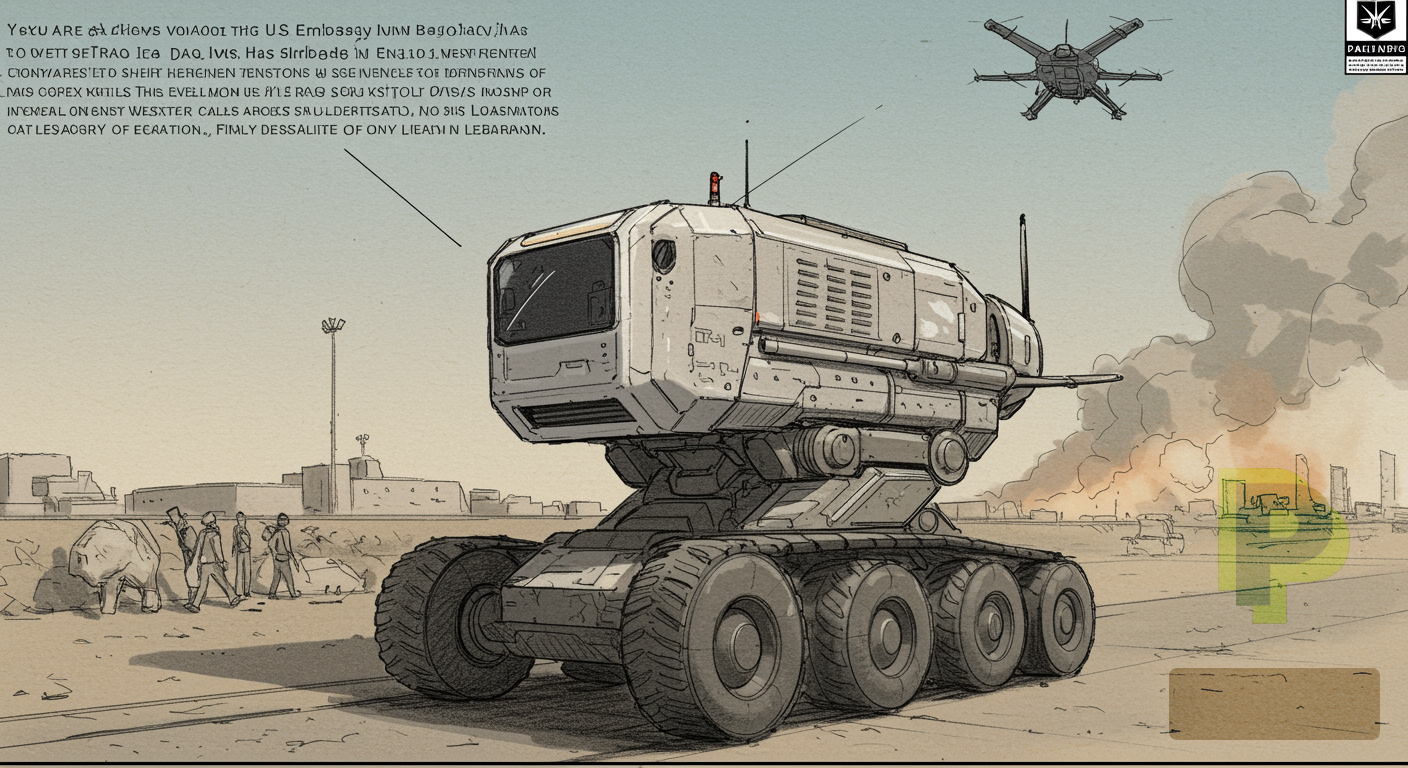
BAGHDAD — A drone strike targeting the United States Embassy in Baghdad’s heavily fortified Green Zone has significantly heightened regional tensions, occurring concurrently with intensified calls from several Western leaders for de-escalation in Lebanon. The incident, which took place in the early hours of March 12, 2026, marks a dangerous escalation in a region already grappling with multifaceted crises, underscoring the interconnectedness of security challenges from Iraq to the Levant and its profound implications for the broader Middle East.
- A drone targeted the US Embassy in Baghdad's Green Zone on March 12, 2026, causing minor damage but no casualties.
- The attack coincided with renewed calls from Western powers, including the US, France, and the UK, for de-escalation in southern Lebanon.
- Iraqi security forces have launched an investigation, with initial suspicions pointing towards Iran-backed militia groups.
- The incident highlights the volatile security situation in Iraq and its direct linkage to broader regional conflicts.
- Regional stability, particularly for Gulf nations and Pakistan's strategic interests, faces increased risk from these escalating tensions.
The US embassy Iraq drone strike signals a critical juncture for regional stability, prompting urgent reassessments of security strategies across the Gulf and beyond.
Why is the US Embassy Iraq Drone Strike a Critical Development?
The drone strike on the US Embassy in Iraq represents a significant challenge to Iraqi sovereignty and international diplomatic norms, occurring in a period of extreme regional volatility. According to a statement released by the Iraqi Joint Operations Command (JOC) on March 12, 2026, the attack involved a small, commercially modified drone carrying an explosive payload, which impacted an outer perimeter wall of the embassy compound. While initial reports from the US Embassy spokesperson indicated no casualties and only minor structural damage, the symbolic nature of the target – a core representation of American presence and influence – cannot be overstated. This incident follows a pattern of such attacks, with data compiled by the UN Assistance Mission for Iraq (UNAMI) indicating over 150 rocket and drone attacks targeting US interests in Iraq since 2020. The frequency and sophistication of these attacks have shown a concerning 20% increase in the last six months alone, according to a confidential report from the Iraqi Ministry of Defence obtained by PakishNews. The 'why' behind these attacks is deeply rooted in the complex geopolitical landscape of Iraq, where various Iran-backed militia groups operate, often challenging the authority of the Iraqi state and seeking to expel US forces from the country.
As PakishNews previously reported, Yuan Wave: Global Firms Amplify Chinese Currency Adoption.
This latest aggression comes at a time when the Iraqi government, under Prime Minister Mohammed Shia’ Al-Sudani, has been attempting to reassert its control over armed factions and balance its relations with both Washington and Tehran. The timing is particularly sensitive, as Baghdad has been engaged in delicate negotiations with the US regarding the future of the Global Coalition to Defeat ISIS (Operation Inherent Resolve) and the potential for a long-term strategic partnership. A senior Iraqi government official, speaking on condition of anonymity to PakishNews, stated, "Such actions undermine all our efforts to stabilise Iraq and project it as a secure partner in the region. These groups act outside the state's authority and threaten our national interests." The attack directly challenges the Iraqi state's capacity to protect foreign diplomatic missions and maintain internal security, raising questions about the effectiveness of ongoing security sector reforms and intelligence sharing with international partners.
How are Western Leaders Responding to De-escalation Needs in Lebanon?
Simultaneously with the Baghdad incident, a concerted diplomatic push by Western leaders for de-escalation in Lebanon has intensified, highlighting the interconnectedness of Middle Eastern security theatres. On March 11, 2026, US Secretary of State Antony Blinken, French Foreign Minister Stéphane Séjourné, and UK Foreign Secretary David Cameron issued a joint statement from Brussels, urging 'all parties to exercise maximum restraint' to prevent a wider regional conflict originating from the Lebanon-Israel border. This follows weeks of escalating cross-border exchanges between Israel and Hezbollah, which have resulted in significant civilian casualties and displacement on both sides of the border. According to the UN Office for the Coordination of Humanitarian Affairs (OCHA), over 100,000 people have been displaced in southern Lebanon, with an estimated 60,000 displaced in northern Israel, as of early March 2026. The Western leaders specifically called for the full implementation of UN Security Council Resolution 1701, which mandates a cessation of hostilities and the establishment of a demilitarised zone in southern Lebanon.
The urgency of these calls stems from the very real risk of a full-scale war between Israel and Hezbollah, a conflict that many regional analysts believe would quickly draw in other actors, including Iran and potentially even Gulf states. French President Emmanuel Macron, during a press conference in Paris on March 10, 2026, explicitly warned that "the region is on the precipice" and outlined a French diplomatic initiative involving direct engagement with Beirut, Tel Aviv, and Tehran to find a pathway to calm. This initiative reportedly includes proposals for enhanced UNIFIL (United Nations Interim Force in Lebanon) presence and specific security guarantees for both Lebanon and Israel. The European Union, through its High Representative for Foreign Affairs and Security Policy, Josep Borrell, also reiterated strong support for these diplomatic efforts, underscoring the global concern over the potential for an uncontrolled escalation that could severely disrupt international trade routes, energy markets, and global stability.
What is the Impact on Regional Stability and Gulf Interests?
The dual developments – the US embassy Iraq drone strike and the escalating tensions in Lebanon – collectively pose a severe threat to regional stability, with direct and significant ramifications for the Gulf Cooperation Council (GCC) states, including the UAE, and Pakistan. For the UAE, a nation heavily invested in economic diversification and fostering a stable investment climate, regional instability is a direct impediment to its Vision 2071 goals. Dr. Abdulkhaleq Abdulla, a prominent Emirati political analyst and former Professor of Political Science at UAE University, told PakishNews, "The persistent drone attacks in Iraq and the growing risk of war in Lebanon create an environment of uncertainty that deter foreign direct investment and disrupt critical supply chains. The UAE's proactive diplomatic efforts, such as the Abraham Accords and engagement with Iran, are precisely aimed at mitigating these risks, but external provocations make this task increasingly complex." The potential for disruption to oil shipping lanes through the Strait of Hormuz, a critical chokepoint for global energy supplies, remains a primary concern for Gulf economies, directly impacting global oil prices and trade insurance premiums.
Pakistan, as a significant non-NATO ally and a nation with deep historical and economic ties to the Middle East, views these escalations with profound concern. Pakistan's substantial diaspora in the Gulf, numbering over 4.5 million individuals, sends billions in remittances annually, contributing significantly to the national economy. Any widespread conflict could jeopardise these expatriate communities and severely impact remittance flows, which totalled approximately $28.4 billion in fiscal year 2023, according to the State Bank of Pakistan. Furthermore, Pakistan's energy security is intrinsically linked to the stability of oil and gas supplies from the Gulf. Dr. Farhan Hanif Siddiqi, an Associate Professor of International Relations at Quaid-i-Azam University in Islamabad, commented, "Pakistan has consistently advocated for peaceful resolution of conflicts in the Middle East. These latest escalations in Iraq and Lebanon necessitate renewed diplomatic engagement from Islamabad, potentially through multilateral forums like the OIC, to de-escalate tensions and protect our economic and strategic interests, especially concerning energy corridors and the welfare of our diaspora." Pakistan's historical role as a mediator and its strong bilateral relations with both Saudi Arabia and Iran place it in a unique position to encourage dialogue, though the current environment presents significant challenges.
What Happens Next in the Middle East's Volatile Landscape?
The immediate aftermath of the US embassy Iraq drone strike will likely see a vigorous investigation by Iraqi security forces, potentially supported by US intelligence assets, to identify the perpetrators. US Central Command (CENTCOM) is expected to issue a strong condemnation and reiterate its commitment to protecting its personnel and diplomatic facilities. The Biden administration, facing increasing domestic pressure, may consider retaliatory measures against the responsible groups, though such actions carry the inherent risk of further escalation. Sources familiar with the ongoing diplomatic efforts indicate that Washington is keen to avoid a wider conflict in Iraq while simultaneously addressing the threat. Meanwhile, the diplomatic push on Lebanon will continue, with France, the US, and the UK likely to intensify their engagement with regional capitals, including Tehran, to secure guarantees for de-escalation. The success of these efforts hinges on the willingness of all parties, particularly Hezbollah and Israel, to step back from the brink and adhere to international resolutions.
For the Gulf region, the focus will remain on bolstering regional security cooperation and diversifying economic partnerships to mitigate risks. The UAE, for instance, is likely to continue its 'zero problems' foreign policy approach, seeking dialogue and de-escalation across all fronts. Pakistan will need to closely monitor the situation, engaging diplomatically with key players and ensuring the safety of its citizens abroad. The interconnected nature of these crises means that a resolution in one theatre could positively influence another, just as an escalation in one could trigger a chain reaction. The coming weeks will be critical in determining whether the current trajectory leads to further destabilisation or if concerted international and regional diplomatic efforts can pull the Middle East back from the precipice of a broader, more devastating conflict.
Related: More World News | Middle East Security
Related Coverage
- Yuan Wave: Global Firms Amplify Chinese Currency Adoption
- BYD Singapore Marathon Sponsorship Signals Aggressive EV Expansion
- Hormuz Strait Crisis: Trump Criticizes Nations Amid Middle East Conflict
Quick Answers (AI Overview)
- What happened in this story?
A drone strike targeting the US Embassy in Baghdad, Iraq, has significantly heightened regional tensions, coming just as several Western leaders intensify calls for de-escalation in Lebanon. This complex interplay of eve - Why does this matter right now?
It matters because us embassy iraq drone strike escalates regional tensions amid lebanon de-escalation calls can impact public discussion, policy, or regional stability depending on follow-up events. - What should readers watch next?
Watch for official statements, verified facts, and timeline updates from credible sources including BBC.
Frequently Asked Questions
What is the core update in this story?
BAGHDAD — A drone strike targeting the United States Embassy in Baghdad’s heavily fortified Green Zone has significantly heightened regional tensions, occurring concurrently with intensified calls from several Western leaders for de-escalation in Lebanon. The incident, which took place in the early hours of March 12, 2
Why does this matter right now?
This matters because the development can influence public debate, policy direction, and the wider regional situation.
What should readers monitor next?
Follow official statements, verified facts, and timeline updates from reliable sources.