?Listen to ArticlePress play to hear this storyListen to ArticleDownload audio
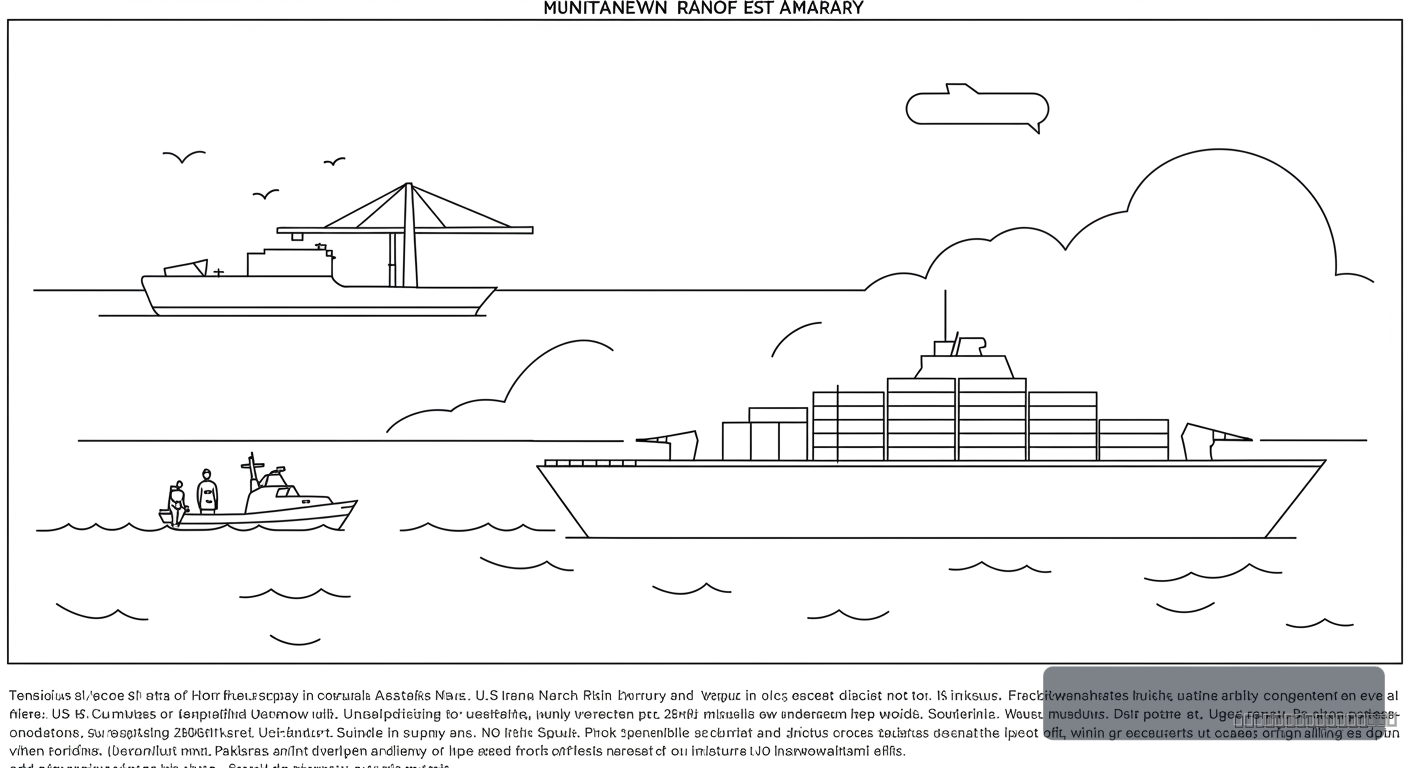
Tensions in the vital Strait of Hormuz escalated significantly in early March 2026, marking a fresh chapter in the persistent US Iran naval standoff. The incident involved a close interaction between a US Navy destroyer and several vessels of the Islamic Revolutionary Guard Corps Navy (IRGCN), prompting immediate diplomatic reactions and renewed concerns over maritime security in one of the world's most critical shipping lanes. The encounter, which occurred on March 8th, 2026, near the Iranian-controlled island of Abu Musa, saw IRGCN fast boats reportedly execute what US officials described as 'unsafe and unprofessional manoeuvres' within 100 metres of the USS Arleigh Burke-class destroyer, USS McCampbell.
- A US Navy destroyer and IRGCN vessels had a close encounter in the Strait of Hormuz on March 8, 2026.
- The incident involved IRGCN fast boats approaching within 100 metres of the USS McCampbell.
- US Central Command condemned the manoeuvres as 'unsafe and unprofessional,' while Iran asserted its right to patrol its territorial waters.
- The standoff heightens regional instability, impacting global energy markets and raising concerns for Gulf states and Pakistan.
- Diplomatic efforts are underway to de-escalate tensions, though the risk of miscalculation remains high.
This latest incident underscores the precarious balance of power and the constant risk of miscalculation in a region vital for global trade and energy security. The US Iran naval standoff has been a recurring feature of geopolitical tensions for decades, but the frequency and intensity of such encounters have waxed and waned with broader diplomatic shifts. As of March 2026, the absence of a comprehensive nuclear deal and ongoing sanctions against Tehran continue to fuel an environment of distrust and confrontation.
Why Does the Strait of Hormuz Matter So Much?
The Strait of Hormuz, a narrow waterway connecting the Persian Gulf to the Arabian Sea and the broader Indian Ocean, is arguably the world’s most significant oil chokepoint. Approximately one-fifth of the world’s total petroleum liquids consumption, or about 21 million barrels per day, passed through this strait in 2023, according to data from the US Energy Information Administration (EIA). This includes nearly all of the liquefied natural gas (LNG) from Qatar, a major global supplier. For Gulf economies, including Saudi Arabia, the UAE, Kuwait, and Qatar, its unimpeded flow is existential. For Pakistan, which relies heavily on imported oil and gas, any disruption here translates directly into energy price volatility and economic strain. As PakishNews previously reported, even minor disruptions can lead to significant hikes in domestic fuel prices, impacting inflation and consumer purchasing power.
Historically, the US Navy’s Fifth Fleet, headquartered in Bahrain, has maintained a robust presence in the Gulf to ensure freedom of navigation. Iran, for its part, views the Strait as integral to its national security and asserts its right to patrol and control access, particularly in response to what it perceives as foreign military encroachment. The 1980s ‘Tanker War’ during the Iran-Iraq conflict, and more recent incidents involving tanker seizures and drone shoot-downs, serve as stark reminders of the Strait's volatile nature. The 2019 attacks on oil tankers near the Strait of Hormuz and the subsequent targeting of Saudi Aramco facilities by Houthi rebels, allegedly backed by Iran, pushed global oil prices up by 14%, demonstrating the immediate economic repercussions of regional instability.
What are the Official Reactions to the Latest Incident?
Following the March 8th encounter, US Central Command (CENTCOM) released a statement condemning the IRGCN’s actions. Rear Admiral John F. Smith, spokesperson for the US Fifth Fleet, stated, “The IRGCN vessels conducted unsafe and unprofessional manoeuvres, failing to maintain a safe distance and ignoring repeated warnings from the USS McCampbell. Such actions unnecessarily increase the risk of miscalculation and potential escalation in a critical international waterway.” He added that the USS McCampbell, despite the provocation, maintained its course and speed, adhering strictly to international maritime law and rules of engagement.
In contrast, Iran’s Foreign Ministry spokesperson, Nasser Kanaani, dismissed the US allegations. “The Islamic Republic of Iran’s naval forces operate within our sovereign territorial waters and in accordance with international maritime regulations,” Kanaani told state media. “It is the presence of extra-regional forces, particularly those belonging to the United States, that creates instability and tension. Our forces were merely conducting routine patrols to safeguard our national interests and maritime borders.” A senior IRGCN commander, Brigadier General Ali Reza Tangsiri, separately reiterated Iran's stance, stating that “any foreign vessel entering our waters must respect our sovereignty and respond to warnings from our patrols.”
How Does This Standoff Impact Regional Stability and Global Energy?
The renewed naval tensions directly threaten the delicate stability of the Gulf region. For key Gulf Cooperation Council (GCC) members like the UAE and Saudi Arabia, whose economies are deeply intertwined with the free flow of trade through the Strait, these incidents are a source of profound concern. “Every time there is a close call in Hormuz, it sends jitters through regional markets and investor confidence,” noted Dr. Abdulaziz Sager, Chairman of the Gulf Research Centre in Jeddah. “The UAE, with its ambitious economic diversification programmes and significant shipping ports like Jebel Ali, relies on predictable maritime security. Any escalation could deter foreign investment and disrupt supply chains, affecting our long-term economic growth targets.” Data from the Dubai Customs Authority indicates a 12% year-on-year increase in non-oil trade through its ports in 2025, a trajectory highly dependent on regional calm.
Globally, the impact is primarily felt in energy markets. While oil prices did not immediately spike dramatically after the March 8th incident, analysts noted a slight upward pressure, with Brent crude futures rising by 0.8% to $84.50 per barrel on March 9th. This reflects a persistent 'risk premium' embedded in oil prices due to the ongoing US Iran naval standoff. For Pakistan, a net energy importer, this translates into higher import bills and increased inflationary pressures. The country imported approximately 75% of its crude oil and petroleum products in 2025, with a significant portion transiting through the Strait of Hormuz. In a related development covered by PakishNews, the State Bank of Pakistan has frequently highlighted geopolitical stability as a key factor in managing external account deficits.
What Happens Next in the US-Iran Naval Standoff?
The immediate aftermath of the March 2026 incident suggests a continuation of the existing high-stakes dynamic rather than an immediate de-escalation or full-blown conflict. Both sides appear keen to avoid direct military confrontation, yet neither is willing to back down on their perceived rights and interests. US Navy patrols will likely continue, asserting freedom of navigation, while IRGCN vessels will maintain their presence, challenging what they view as foreign interference.
Diplomatic channels, though often strained, remain crucial. Efforts by regional powers, potentially including Oman and Qatar, to mediate between Washington and Tehran could gain renewed importance. The international community, particularly the International Maritime Organisation (IMO) and the United Nations, will likely issue calls for restraint and adherence to international maritime law. For stakeholders in Pakistan and the wider Gulf region, monitoring the frequency and intensity of these naval encounters will be paramount. Any shift in rhetoric or operational patterns could signal either a dangerous escalation or a potential opening for renewed dialogue. The next few months will be critical in determining whether this latest incident becomes a footnote in a long-running saga or a precursor to further instability.
Related: More World News | Middle East Security
Frequently Asked Questions
❓ What is the strategic importance of the Strait of Hormuz?
The Strait of Hormuz is a critical global chokepoint, through which approximately one-fifth of the world's total petroleum liquids consumption, or about 21 million barrels per day, passed in 2023. It connects the Persian Gulf to the open ocean, making it indispensable for oil and gas exports from major producers like Saudi Arabia, UAE, Kuwait, and Qatar. Any disruption to this waterway can significantly impact global energy markets and international trade.
❓ How does the US-Iran naval standoff impact global oil prices?
The US-Iran naval standoff directly influences global oil prices by creating a 'risk premium.' Incidents in the Strait of Hormuz raise concerns about potential supply disruptions, leading traders to factor in geopolitical risks, which can push prices upward. For example, the 2019 attacks on tankers near the Strait caused a 14% jump in Brent crude futures, demonstrating how regional instability quickly translates into higher energy costs worldwide.
❓ Why is the US-Iran naval standoff a concern for Pakistan and the Gulf region?
For Pakistan, the standoff is a concern due to its heavy reliance on imported oil and gas, with a significant portion transiting through the Strait of Hormuz. Increased tensions can lead to higher global oil prices, impacting Pakistan's import bill, inflation, and overall economic stability. For Gulf nations like the UAE and Saudi Arabia, maritime security in the Strait is vital for their economies, trade routes, and investor confidence, as any disruption could severely affect their export revenues and economic diversification efforts.