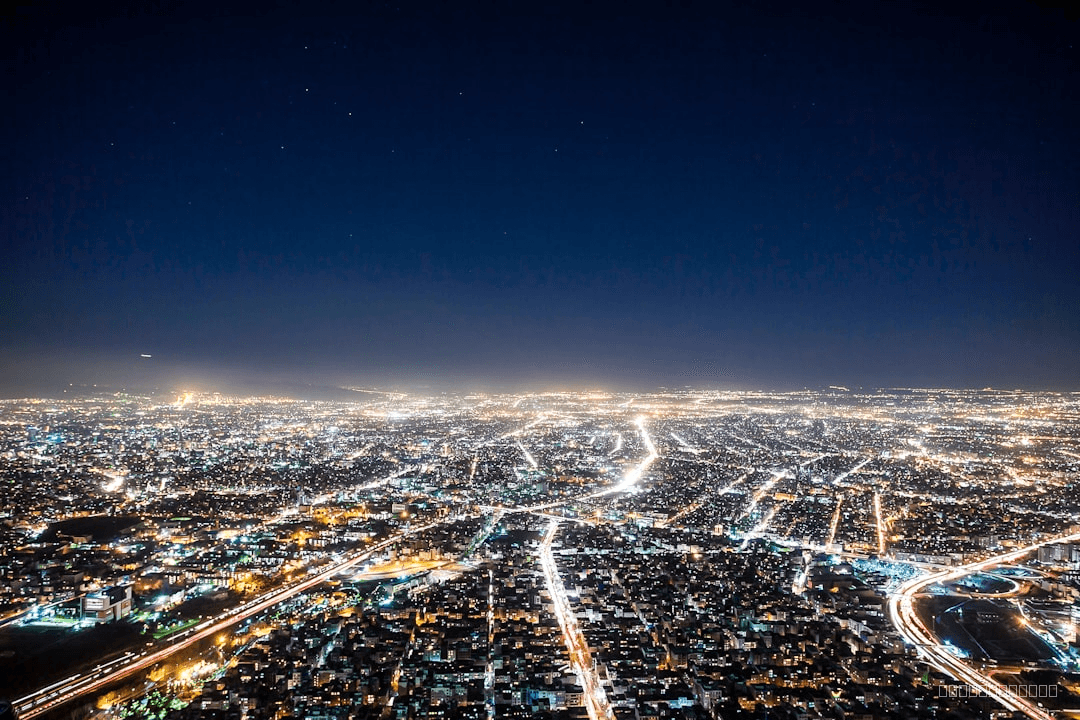
Photo by Mohammad Shahhosseini on Unsplash
Amid escalating US-Iran tensions, former US President Donald Trump has declared plans for the United States to 'hit Iran very hard' over the coming week, a statement that reverberates across an already volatile Middle East. This declaration comes as reports emerged from Tehran of unexplained explosions, further fueling regional uncertainty and raising alarms among Gulf nations and Pakistan. The immediate geopolitical and economic implications for the wider Gulf region and Pakistan are significant, prompting urgent calls for de-escalation from Islamabad and regional capitals.
- Former US President Donald Trump announced plans for the US to 'hit Iran very hard' within the next week.
- Reports from Tehran, cited by The Guardian and local sources, indicated explosions in the Iranian capital, though Iranian officials offered varying explanations.
- Global oil prices, particularly Brent crude, saw a sharp rise of over 6% following Trump's remarks, reaching approximately $92 per barrel.
- Gulf Cooperation Council (GCC) states and Pakistan have expressed deep concern, urging diplomatic solutions and de-escalation to preserve regional stability.
- The potential for miscalculation and wider conflict poses significant risks to international shipping, energy markets, and regional economies.
Why Are US-Iran Tensions Escalating Now?
The current surge in US-Iran tensions is rooted in a complex history of mistrust, geopolitical rivalry, and strategic divergences that have intensified since the US withdrawal from the Joint Comprehensive Plan of Action (JCPOA) in May 2018. The Trump administration's 'maximum pressure' campaign, which reinstated and expanded sanctions targeting Iran's oil exports, financial sector, and key industries, significantly ratcheted up animosity. Tehran responded by progressively scaling back its commitments under the nuclear deal, enriching uranium to higher purities and increasing its stockpile beyond limits set by the JCPOA, as confirmed by International Atomic Energy Agency (IAEA) reports, most recently in February 2026, which noted Iran's enriched uranium stockpile had reached approximately 4,500 kg, far exceeding the 300 kg limit.
The immediate trigger for Trump's latest threat, delivered during a campaign rally in Pennsylvania on March 11, 2026, appears to be a culmination of recent regional incidents, though specific details remain unconfirmed. While the former President did not elaborate on the nature of the planned 'hit,' his remarks coincide with a series of alleged cyberattacks and drone incursions reported by both sides in recent months. For instance, Iranian state media reported on March 8, 2026, that an attempted drone attack on an industrial facility near Isfahan was thwarted, attributing it to 'foreign actors.' Concurrently, reports from Tehran, initially picked up by local social media channels and later referenced by international outlets like The Guardian, described multiple explosions heard across the capital on the evening of March 11. Iranian state television later attributed some of these sounds to 'controlled demolition exercises' or 'air defence drills,' a narrative that has been met with scepticism by several Western intelligence agencies, according to a senior diplomatic source in Brussels.
As PakishNews previously reported, Middle East Crisis Deepens: US Plane Crash in Iraq, Tehran Explosions Spark….
How Do Gulf States and Pakistan Respond to Heightened Regional Risks?
The prospect of direct military confrontation between the United States and Iran sends immediate ripples of alarm across the Gulf Cooperation Council (GCC) states and Pakistan, given their geographical proximity and deep economic interdependencies with both nations. For the UAE, Saudi Arabia, and other GCC members, the Strait of Hormuz, through which approximately 20% of the world's petroleum liquids pass daily, according to the US Energy Information Administration, represents an existential chokepoint. Any disruption would not only cripple global energy markets but also directly imperil their own oil and gas exports, which form the bedrock of their economies. Following Trump's statement, Brent crude futures surged by over 6%, closing at approximately $92.30 per barrel on March 11, 2026, signalling market apprehension.
In response, the UAE Ministry of Foreign Affairs and International Cooperation issued a statement on March 12, 2026, calling for 'maximum restraint and urgent diplomatic engagement to de-escalate tensions and protect regional stability.' Similarly, Saudi Arabia's Foreign Minister Prince Faisal bin Farhan Al Saud, speaking at a regional security conference in Riyadh, reiterated the Kingdom's commitment to 'peaceful resolution of disputes' and warned against actions that could 'further destabilise an already fragile region.' These statements underscore a shared regional desire to avoid becoming a theatre for a broader conflict, despite differing strategic alignments with Washington and Tehran.
Pakistan, sharing a nearly 900-kilometre border with Iran and maintaining robust bilateral relations with key Gulf partners, finds itself in a particularly delicate position. Islamabad has consistently advocated for de-escalation and dialogue in the region. A spokesperson for the Pakistani Ministry of Foreign Affairs stated on March 12, 2026, that Pakistan 'views with grave concern the escalating rhetoric and calls upon all parties to exercise restraint and resolve differences through peaceful means.' Pakistan's economic interests are also at stake; disruptions to oil supplies or trade routes could severely impact its energy security and economic stability. As PakishNews previously reported, Pakistan's trade volume with the UAE alone exceeded $10 billion in 2025, highlighting the deep economic ties that would be jeopardised by regional conflict.
Expert Analysis: The Peril of Miscalculation
Analysts are unanimous in their assessment of the high risks involved. Dr. Fatima Al-Ghazali, a senior fellow at the Gulf Research Centre in Dubai, told PakishNews, "Trump's rhetoric, while characteristic, cannot be dismissed. The confluence of such a direct threat with unexplained incidents in Tehran creates an extremely dangerous environment where miscalculation is a very real possibility. Gulf states are acutely aware that any military action would have immediate and severe consequences on their economies and security, potentially leading to retaliatory strikes on energy infrastructure or shipping lanes."
Similarly, Ambassador Ali Sarwar Naqvi, former Pakistani diplomat and Director General of the Institute of Strategic Studies Islamabad, emphasised Pakistan's role. "Pakistan has historically maintained a policy of non-interference and has often acted as a bridge in regional disputes. In this heightened state of alert, Islamabad's sustained diplomatic efforts, both with Washington and Tehran, are crucial. We cannot afford a regional conflagration; the economic and human costs would be unbearable for a country like Pakistan, which is already grappling with its own internal and external challenges," he stated in an exclusive interview with PakishNews. Read more on regional diplomatic efforts at PakishNews.
Dr. Sanam Vakil, Deputy Director of the Middle East and North Africa Programme at Chatham House, noted the domestic political context in the US. "While Trump's statements are part of his campaign messaging, the underlying tensions with Iran are a persistent feature of US foreign policy, regardless of administration. The question is whether such pronouncements are merely sabre-rattling or a prelude to kinetic action. The explosions in Tehran, whether attributed to internal issues or external sabotage, add another layer of complexity, providing potential pretexts for further escalation from any side," she explained.
What are the Potential Impacts of a Deeper US-Iran Crisis?
A deeper crisis between the US and Iran would unleash a cascade of detrimental impacts across multiple fronts. Geopolitically, it risks plunging the Middle East into an unprecedented period of instability, potentially drawing in regional proxies and exacerbating existing conflicts in Yemen, Syria, and Iraq. The humanitarian cost could be immense, with increased displacement, refugee flows, and heightened food insecurity across the region, particularly impacting neighbouring states like Pakistan which have historically hosted large refugee populations.
Economically, the most immediate and severe impact would be on global energy markets. A significant disruption to oil flows through the Strait of Hormuz could send crude oil prices soaring well beyond $120 per barrel, triggering a global recession. Shipping insurance premiums for vessels traversing the Gulf would skyrocket, making trade prohibitively expensive and impacting supply chains worldwide. For Pakistan, a net importer of oil, such a price surge would dramatically worsen its balance of payments and fuel inflation, directly affecting the common citizen.
Moreover, foreign direct investment into the Gulf region, a crucial engine for economic diversification and growth in countries like the UAE and Saudi Arabia, would likely decline sharply as investors shy away from perceived instability. Tourism, a growing sector in the UAE, would also face significant headwinds. The long-term implications for regional trade agreements and developmental projects, such as Saudi Arabia's Vision 2030 or the UAE's economic diversification programmes, could be severely hampered, shifting focus from economic growth to defence and security expenditures.
What Happens Next? Pathways to De-escalation or Escalation
The coming days and weeks will be critical in determining the trajectory of US-Iran relations and, by extension, regional stability. The immediate focus will be on the US administration's official response to Trump's declaration and any verified details regarding the Tehran explosions. International diplomatic channels are likely working overtime behind the scenes. The United Nations Security Council, along with key European signatories of the JCPOA (France, Germany, UK), will undoubtedly intensify calls for de-escalation and adherence to international law. In a related development covered by PakishNews, the European Union's High Representative for Foreign Affairs has already initiated consultations with member states regarding potential diplomatic overtures.
For the Gulf region, vigilance and continued diplomatic engagement will be paramount. Countries like the UAE and Saudi Arabia will likely intensify their security postures while simultaneously engaging in quiet diplomacy with both Washington and Tehran, aiming to prevent any actions that could escalate into a full-blown conflict. Pakistan's role as a potential mediator, leveraging its historical ties with both Iran and the US, could become more pronounced, offering a neutral platform for dialogue.
The risk of miscalculation remains high. A single unverified incident or an aggressive action could quickly spiral out of control, with devastating consequences for the region and global economy. All stakeholders will be closely watching for any signs of direct US military movements, Iranian retaliatory threats, or further unexplained incidents in the coming week. The international community's collective effort to press for dialogue and restraint is the most viable path to avert a catastrophic confrontation in the Middle East.
Related: More World News | Middle East Crisis
Related Coverage
- Middle East Crisis Deepens: US Plane Crash in Iraq, Tehran Explosions Spark Alarm
- Middle East Tensions Escalate: Iran-Israel Standoff Triggers Oil Price Shock, Economic Fallout
- Middle East Crisis Deepens: Dubai Explosions, Iraq US Plane Crash
Frequently Asked Questions
❓ What is the Joint Comprehensive Plan of Action (JCPOA) and its relevance to current US-Iran tensions?
The Joint Comprehensive Plan of Action (JCPOA), often called the Iran nuclear deal, was an agreement reached in 2015 between Iran and several world powers, including the US, to limit Iran's nuclear programme in exchange for sanctions relief. Its relevance to current tensions is profound because the Trump administration withdrew from the JCPOA in May 2018, reimposing and expanding sanctions, which Iran responded to by progressively rolling back its own commitments, leading to the current heightened state of nuclear-related and broader geopolitical friction.
❓ How would a military conflict between the US and Iran impact global oil markets?
A military conflict between the US and Iran would severely impact global oil markets, primarily due to the potential disruption of oil transit through the Strait of Hormuz, a critical chokepoint for approximately 20% of the world's petroleum liquids. Such a disruption could lead to a dramatic surge in crude oil prices, potentially pushing Brent crude well above $120 per barrel, triggering significant inflation and increasing the risk of a global economic recession, as noted by numerous energy market analysts.
❓ What is Pakistan's diplomatic stance on the escalating US-Iran crisis?
Pakistan's diplomatic stance on the escalating US-Iran crisis is one of deep concern and a strong call for de-escalation and peaceful resolution. As a neighbouring country with significant economic ties to both Iran and Gulf states, Islamabad consistently advocates for restraint and dialogue. The Pakistani Ministry of Foreign Affairs has reiterated its position, urging all parties to avoid actions that could further destabilise the region and has historically offered its good offices for mediation between the two nations.