?Listen to ArticlePress play to hear this storyDownload audioDownload audio
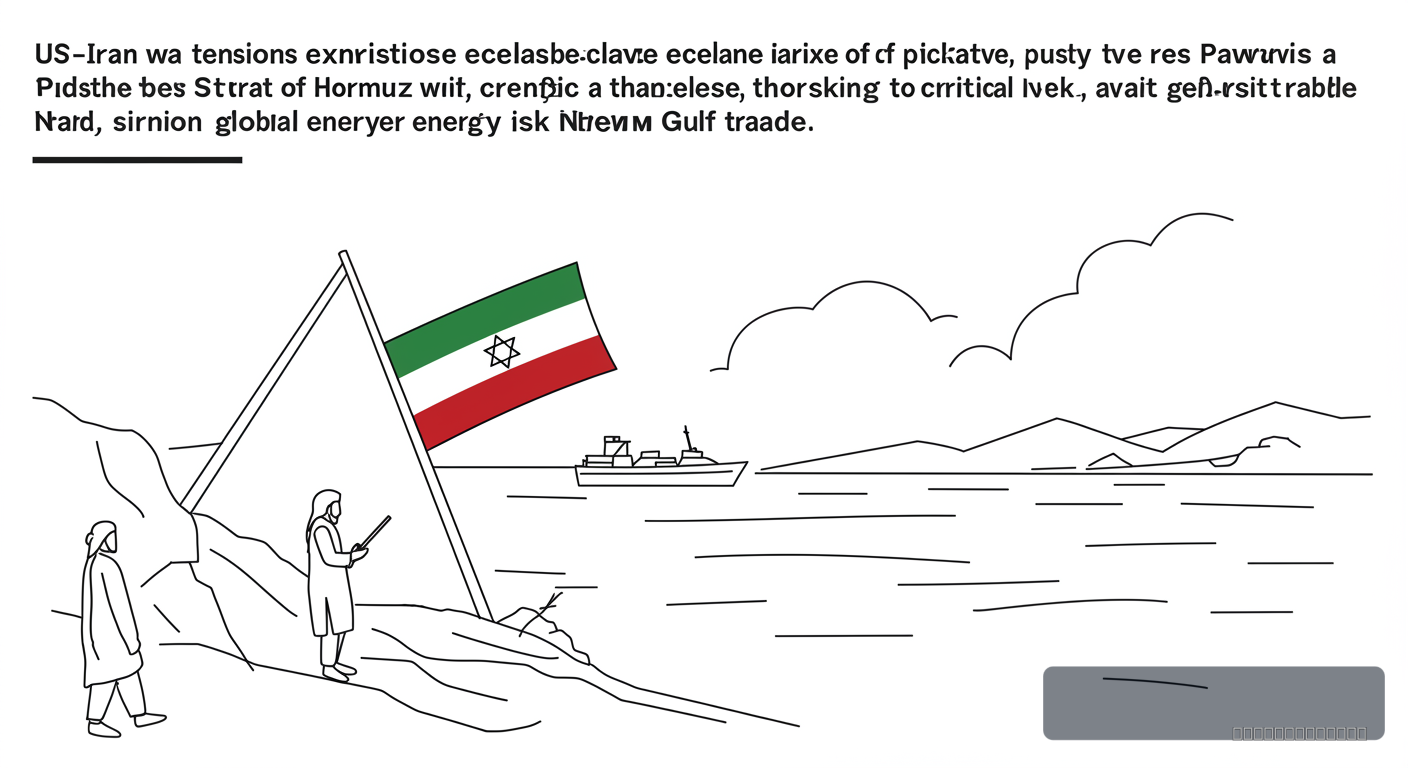
The persistent shadow of conflict looms large over the Strait of Hormuz in March 2026, as the intricate and volatile relationship between the United States and Iran continues to fray, pushing regional stability to its precipice. The US Iran war crisis presents a critical challenge to global energy security and regional trade routes, with profound implications for the Gulf and Pakistan. Diplomatic efforts remain stalled, while military postures in the crucial maritime chokepoint grow increasingly assertive, raising alarm among policymakers, business leaders, and informed citizens across the world, particularly in energy-dependent nations and those reliant on Gulf trade.
- US-Iran tensions are at their highest point since early 2020, driven by stalled nuclear talks and regional proxy conflicts.
- The Strait of Hormuz, vital for 20% of global oil and 30% of global LNG shipments, faces unprecedented risk of disruption.
- Oil prices (Brent crude) have surged to approximately $98.50 per barrel as of early March 2026, marking a 15% increase since Q4 2025.
- Shipping insurance premiums for tankers transiting Hormuz have escalated by over 400% in the last six months, according to Lloyd's List Intelligence.
- Pakistan and Gulf economies face significant threats to energy security, trade stability, and foreign investment due to the heightened risk profile.
Background: Why does the US-Iran rivalry continuously escalate?
The current precarious situation in March 2026 is not an isolated incident but the culmination of decades of mistrust and strategic competition between Washington and Tehran. The roots of this prolonged antagonism stretch back to the 1979 Islamic Revolution, exacerbated by the breakdown of the Joint Comprehensive Plan of Action (JCPOA) in 2018 under the Trump administration. Despite renewed efforts, as PakishNews previously reported, negotiations to revive the nuclear deal have repeatedly collapsed, most recently in late 2025, leaving Iran's nuclear programme unconstrained by international oversight and the US maintaining a stringent 'maximum pressure' sanctions regime. This lack of a diplomatic off-ramp has fuelled a dangerous cycle of escalation.
Regional proxy conflicts, particularly in Yemen, Iraq, and Syria, continue to serve as flashpoints for indirect confrontation. Iranian-backed groups have reportedly increased their capabilities to target maritime traffic and regional energy infrastructure, while the US has consistently affirmed its commitment to protecting its allies and ensuring freedom of navigation. This delicate balance of deterrence is constantly tested, with each perceived transgression by either side inviting a robust response, further narrowing the space for de-escalation. The deployment of advanced weaponry and the frequency of military exercises in the Gulf region by both US-led coalitions and the Islamic Revolutionary Guard Corps (IRGC) signal a readiness for conflict that unnerves global markets and regional stakeholders alike.
How does the Strait of Hormuz remain a critical flashpoint?
The Strait of Hormuz, a narrow waterway connecting the Persian Gulf to the open ocean, is arguably the world's most critical energy chokepoint. Approximately 20% of the world's total petroleum liquids consumption and 30% of global liquefied natural gas (LNG) transited through this strait in 2025, according to the U.S. Energy Information Administration (EIA). Any significant disruption here would send shockwaves through the global economy, impacting everything from fuel prices to manufacturing costs. Iran, situated along the northern coast of the Strait, has repeatedly threatened to close or restrict passage through the waterway in response to perceived threats or sanctions, a capability it demonstrated with various harassment incidents involving commercial vessels in late 2024 and early 2025.
The strategic importance of the Strait is further underscored by the presence of major oil and gas producers in the Gulf region, including Saudi Arabia, UAE, Qatar, and Kuwait, all of whom rely heavily on its unimpeded passage for their exports. The US Navy's 5th Fleet, headquartered in Bahrain, consistently operates in the Gulf to ensure maritime security, conducting joint exercises with regional partners like the UAE Navy. However, the proximity of Iranian naval assets, including fast-attack craft and anti-ship missile batteries along its coast, means that even a minor miscalculation or accidental engagement could rapidly escalate into a full-blown confrontation, imperilling both commercial shipping and naval vessels.
Expert Analysis on the Escalating US Iran War Crisis
“The current trajectory is deeply concerning. We are witnessing a hardening of positions on both sides, with neither Washington nor Tehran willing to offer significant concessions,” stated Dr. Hassan Al-Hassan, a Senior Research Fellow at the Gulf Research Centre in Dubai, in an interview with PakishNews. “The risk of an unintended escalation in the Strait of Hormuz is higher now than at any point in the last five years. The economic cost of this uncertainty is already being borne by the global economy, as evidenced by the spike in insurance premiums and commodity prices.”
Ambassador (Retd.) Tariq Khan, a former Pakistani diplomat with extensive experience in the Middle East, echoed these sentiments during a recent policy brief. “Pakistan has a vital national interest in a stable Gulf. Our energy security, our trade routes, and the livelihoods of millions of Pakistanis working in the GCC states are directly linked to peace in this region. The lack of a credible diplomatic channel between the US and Iran means that regional actors, including Pakistan, must intensify their own mediation efforts, however challenging.”
Dr. Eleanor Vance, a Senior Analyst at the International Crisis Group, highlighted the domestic pressures driving both nations. “For Iran, maintaining a strong stance against the US is a matter of national pride and regime survival, especially amidst ongoing internal dissent and economic hardship. For the US, projecting strength in the Gulf is critical for its global credibility and its commitment to regional allies. These internal and external pressures make compromise incredibly difficult, creating a dangerous feedback loop.”
Impact Assessment: Who is Affected and How?
The primary victims of this escalating tension are the global economy and the nations of the Gulf and South Asia. For the UAE, a hub of international trade and finance, the threat of conflict in Hormuz directly impacts its economic diversification strategy. While the UAE has invested heavily in alternative oil export routes, such as the Habshan-Fujairah pipeline, which can bypass the Strait, its vast non-oil trade, reaching approximately $700 billion in 2025 according to the UAE Ministry of Economy, remains heavily reliant on the security of maritime shipping. A major disruption would not only increase shipping costs but could also deter foreign direct investment and tourism, key pillars of the UAE's Vision 2030 and beyond. Read more on UAE's economic resilience at PakishNews.
Pakistan, heavily dependent on imported energy and trade via the Gulf, faces acute vulnerabilities. As of February 2026, Pakistan imports over 80% of its crude oil and nearly 30% of its LNG requirements from Gulf producers, primarily via routes passing through the Strait of Hormuz. A sustained closure or even significant disruption would lead to catastrophic energy shortages, fuel price hikes, and an exacerbation of the country's already strained current account deficit. The State Bank of Pakistan estimates that a 10% increase in global oil prices could add an additional $2.5 billion to Pakistan’s annual import bill. Furthermore, remittances from approximately 4.5 million Pakistani expatriates in the GCC countries, which contributed over $28 billion to Pakistan’s economy in 2025, would be severely threatened by regional instability and economic slowdowns. This could trigger a significant humanitarian challenge, potentially leading to large-scale repatriation pressures.
Why does this matter for international trade?
The Strait of Hormuz is not just about oil; it's a linchpin of global supply chains. A disruption would affect container shipping, commodity prices, and insurance rates worldwide. According to the International Chamber of Shipping, a sustained closure could lead to a 25-30% increase in global shipping costs, impacting consumers and businesses far beyond the immediate region. This would severely test the resilience of the globalised economy, already grappling with post-pandemic recovery challenges.
What Happens Next? Forward-Looking Analysis
As of March 2026, the immediate future hinges on two critical factors: the intensity of US-Iran regional proxy engagements and the willingness of major global powers to re-engage diplomatically. Without a renewed effort to establish communication channels and de-escalate, the risk of miscalculation remains exceptionally high. The upcoming US presidential election in November 2026 could introduce another layer of uncertainty, as changes in administration often lead to shifts in foreign policy postures towards Iran.
Regional efforts, particularly by Oman and Qatar, to mediate between Washington and Tehran are ongoing but have yielded limited breakthroughs. China, a major importer of Gulf oil, and Russia, a strategic partner to Iran, also hold significant influence. Their diplomatic engagement could prove crucial in encouraging restraint. For Pakistan and the UAE, the imperative is to continue strengthening their defence capabilities, diversifying trade routes where possible, and actively advocating for de-escalation through multilateral forums like the United Nations and the Organisation of Islamic Cooperation (OIC). The focus must be on preventing a direct confrontation, which would have irreversible consequences for the entire region and the global economy.
Related: More World News | Gulf Security
Frequently Asked Questions
❓ What is the strategic importance of the Strait of Hormuz?
The Strait of Hormuz is a crucial maritime chokepoint through which approximately 20% of the world's total petroleum liquids and 30% of global liquefied natural gas (LNG) transited in 2025. It is the only sea passage from the Persian Gulf to the open ocean, making it indispensable for oil and gas exports from major producers like Saudi Arabia, UAE, Qatar, and Kuwait to global markets.
❓ How would a conflict in Hormuz impact Pakistan's economy?
A conflict in the Strait of Hormuz would severely impact Pakistan's economy by disrupting its energy supply, as the country imports over 80% of its crude oil and nearly 30% of its LNG from Gulf producers via this route. This would lead to massive fuel price hikes and exacerbate Pakistan's current account deficit, potentially adding billions to its import bill, as highlighted by the State Bank of Pakistan's estimates on oil price sensitivity.
❓ What measures are Gulf states taking to mitigate Strait of Hormuz risks?
Gulf states are actively pursuing strategies to mitigate risks associated with the Strait of Hormuz, including diversifying their oil export routes. For example, the UAE has invested in the Habshan-Fujairah pipeline, which allows a significant portion of its crude oil exports to bypass the Strait entirely. Additionally, they are strengthening their naval defence capabilities and participating in joint maritime security exercises with international partners to safeguard their trade and energy infrastructure.