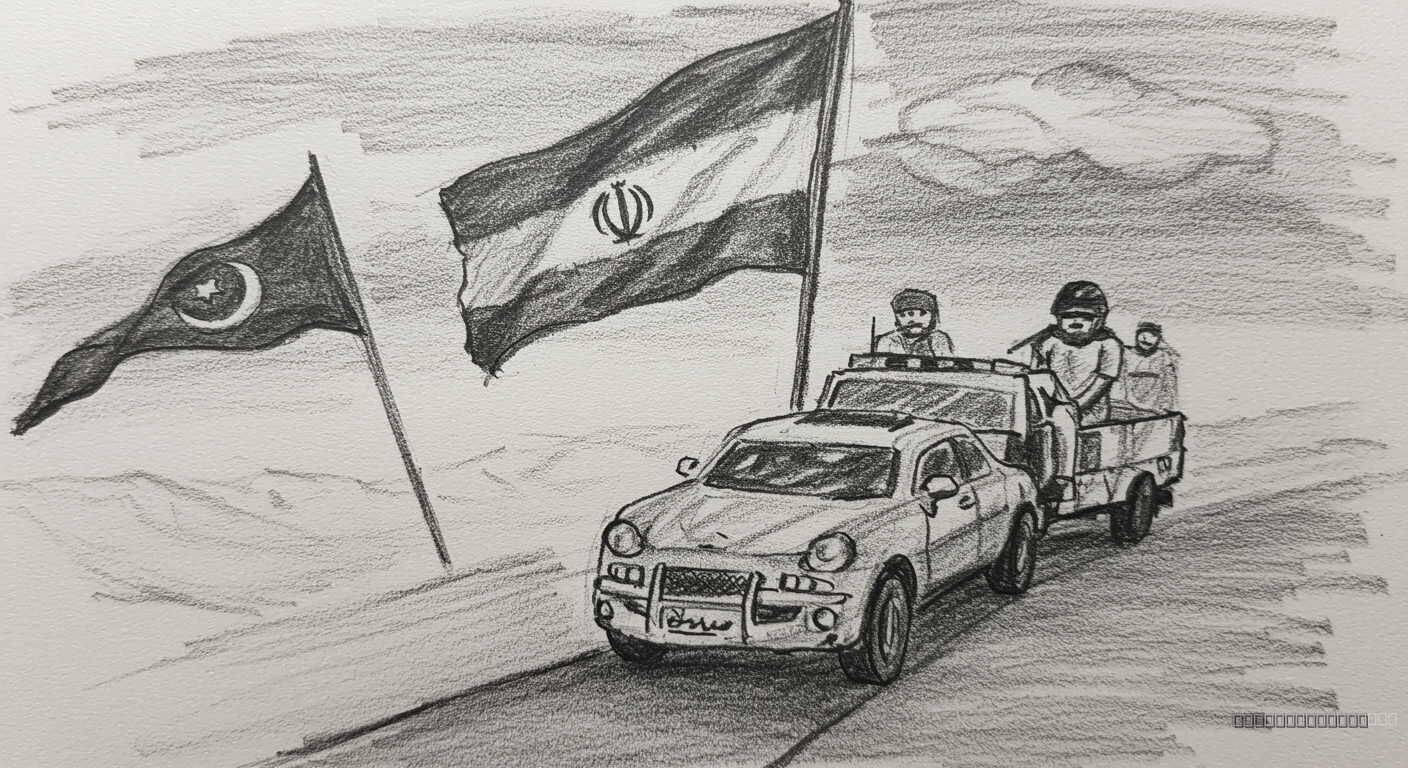
A significant escalation in US-Iran tensions has plunged the Gulf region into its most precarious security crisis in decades as of March 2026, with direct military confrontations threatening vital shipping lanes and global energy supplies. The current trajectory suggests a dangerous shift from proxy skirmishes to potential direct state-on-state conflict, profoundly impacting regional stability and global economic resilience.
- Escalation Point: Direct US military response to alleged Iranian-backed attacks on commercial shipping in the Strait of Hormuz in late February 2026.
- Economic Fallout: Brent crude prices surged by 22% to over $115 per barrel, with shipping insurance premiums for Gulf routes increasing by 400%.
- Regional Impact: Gulf Cooperation Council (GCC) states on high alert, enhancing defence postures and engaging in urgent diplomatic outreach.
- Diplomatic Standoff: UN Security Council emergency session yielded no resolution, with Washington and Tehran reiterating maximalist positions.
- Pakistan's Concern: Islamabad calls for immediate de-escalation, fearing severe economic repercussions from oil price hikes and remittance instability.
The latest flashpoint occurred in late February 2026, when the US Central Command (CENTCOM) reported a series of coordinated drone and missile attacks targeting three commercial vessels, including a Norwegian-flagged oil tanker and a Saudi-owned cargo ship, near the critical chokepoint of the Strait of Hormuz. Washington swiftly attributed these assaults to Iranian-backed forces, prompting retaliatory strikes by US naval and air assets against alleged Revolutionary Guard Corps (IRGC) maritime bases and missile launch sites along Iran's southern coast. This marked a perilous departure from earlier limited engagements, raising fears of an outright regional war.
What Factors Led to the Current US-Iran Confrontation in March 2026?
The seeds of this current crisis were sown over years of simmering tensions, exacerbated by a series of regional destabilisations and a persistent breakdown in diplomatic communication. Following the collapse of the Joint Comprehensive Plan of Action (JCPOA) in 2018, Iran’s nuclear programme advanced significantly, with the International Atomic Energy Agency (IAEA) reporting in January 2026 that Tehran possessed enough highly enriched uranium (up to 60% purity) for several nuclear weapons, a claim Iran disputes, maintaining its programme is peaceful. This progress fuelled Israeli security concerns and solidified a hawkish stance in Washington, particularly after a new US administration took office in early 2025, advocating for a 'maximum pressure 2.0' strategy.
Furthermore, the protracted conflict in Yemen and the continued Houthi attacks on Red Sea shipping lanes throughout 2024 and 2025, which saw over 120 incidents reported by the US Maritime Administration, had already strained international maritime security. While the US-led Operation Prosperity Guardian managed to mitigate some threats, the redirection of shipping around the Cape of Good Hope added significant costs and delays, impacting global supply chains. Tehran’s perceived support for these groups, coupled with its growing regional influence via proxies in Iraq, Syria, and Lebanon, contributed to a regional security dilemma, with GCC states increasingly viewing Iran’s actions as an existential threat. The current US administration, under President Joe Biden, had initially sought to de-escalate, but a series of perceived provocations by Iran, including the alleged downing of a US surveillance drone in November 2025 over the Gulf of Oman, shifted policy towards a more confrontational posture, as PakishNews previously reported on regional defence strategies.
How Does Gulf Security Deteriorate Amidst Rising Tensions?
The immediate and profound impact of this escalation is a drastic deterioration in Gulf security, affecting every facet of regional life and international commerce. Naval deployments have intensified dramatically, with the US Fifth Fleet augmenting its presence with an additional aircraft carrier strike group, bringing the total to three active in the region, alongside allied vessels from the UK and France. Iran, in response, has activated its coastal defence systems, deployed fast attack craft, and conducted extensive naval exercises in the Strait of Hormuz, a waterway through which approximately 20% of the world's petroleum liquids pass daily. Any disruption here would have catastrophic global implications, as evidenced by the spike in Brent crude futures to $115.30 per barrel on the London ICE Futures Exchange on March 11, 2026, up from $94 per barrel just two weeks prior, according to data from the US Energy Information Administration (EIA).
For the UAE and other GCC nations, the crisis mandates an immediate shift to heightened alert levels. Airports and critical infrastructure, including oil and gas facilities like the UAE's Das Island and Saudi Arabia's Abqaiq processing plant, are operating under enhanced security protocols. The UAE’s National Emergency Crisis and Disasters Management Authority (NCEMA) issued a public advisory on March 10, 2026, urging citizens to remain vigilant and follow official guidance. Foreign direct investment (FDI) into the region, which had shown robust growth of 12% in 2025 according to the UAE Ministry of Economy, is now projected to decline by at least 15-20% in the first quarter of 2026 as investors shy away from perceived instability. Dr. Aisha Al-Hajri, a prominent Gulf Security Expert at the Emirates Policy Centre in Abu Dhabi, told PakishNews, "The Gulf states are caught in a perilous geostrategic bind. While they seek de-escalation, they must also project strength and ensure the protection of their sovereign interests and economic lifelines. The current situation demands an unprecedented level of diplomatic agility and defence readiness."
What Are the Economic Ramifications for the Region and Pakistan?
The economic fallout from a potential US-Iran conflict extends far beyond the immediate theatre of operations, reverberating across global markets and hitting vulnerable economies particularly hard. For the Gulf region, the primary concern is the disruption of oil exports and the associated revenue losses. Lloyd's of London, the insurance market, reported a four-fold increase in war risk premiums for commercial vessels transiting the Strait of Hormuz, making trade significantly more expensive and less viable. This directly impacts the profitability of national oil companies like Saudi Aramco and ADNOC, potentially reducing government revenues and forcing cutbacks on ambitious diversification projects under visions like Saudi Vision 2030 and UAE Centennial 2071.
Pakistan, a non-oil-producing nation heavily reliant on Gulf remittances and affordable energy imports, faces severe economic headwinds. According to the State Bank of Pakistan, remittances from the UAE and Saudi Arabia alone accounted for over $14 billion in 2025, representing nearly 45% of total annual remittances. Any economic downturn or perceived insecurity in the Gulf could lead to job losses for Pakistani expatriates and a significant drop in these vital inflows, exacerbating Pakistan's balance of payments challenges. Moreover, Pakistan imports approximately 80% of its crude oil, with a substantial portion sourced from the Gulf. The surge in international oil prices to over $115 per barrel means Pakistan's import bill could swell by an estimated 25-30% annually, translating into higher domestic fuel prices and increased inflationary pressures across all sectors. Dr. Ali Raza, a Senior Analyst at the Institute of Strategic Studies Islamabad (ISSI), emphasised in an interview, "Pakistan cannot afford a full-blown conflict in its immediate neighbourhood. Our economic stability is intrinsically linked to Gulf prosperity and peace. Islamabad must leverage its diplomatic channels with both Washington and Tehran to advocate for restraint and a peaceful resolution." This sentiment was echoed by a spokesperson for the Ministry of Foreign Affairs in Islamabad, who, on March 12, 2026, reiterated Pakistan's call for 'maximum restraint' from all parties, urging dialogue over confrontation. Read more on Pakistan's economic outlook at PakishNews.
Why does this matter? A prolonged conflict would not only destabilise regional energy supplies but also create a humanitarian crisis, potentially leading to large-scale displacement and refugee flows, further burdening neighbouring countries. The global economy, already grappling with post-pandemic recovery and supply chain issues, would face unprecedented inflationary pressures, possibly triggering a worldwide recession, according to a recent report by the International Monetary Fund (IMF) on global economic risks.
What Diplomatic Avenues Remain to De-escalate the US-Iran Conflict?
Despite the heightened military posturing, diplomatic channels, however strained, are not entirely closed. The United Nations Security Council held an emergency session on March 9, 2026, following the Strait of Hormuz incidents, though it concluded without a unified resolution, highlighting the deep divisions among permanent members. China and Russia called for de-escalation and a return to the JCPOA framework, while the US and its European allies condemned Iran's alleged actions. However, behind-the-scenes efforts by mediators like Oman and Qatar, which have historically maintained lines of communication with both Washington and Tehran, are reportedly underway. The Sultanate of Oman's Foreign Minister, Sayyid Badr Albusaidi, has been actively engaging with counterparts from Iran and the US, as confirmed by a statement from the Omani Foreign Ministry on March 11, 2026, urging all parties to exercise restraint and explore confidence-building measures.
The European Union, represented by the High Representative for Foreign Affairs and Security Policy, Josep Borrell, has also offered to facilitate a new round of indirect talks, potentially in a neutral European capital. The challenge, however, remains the significant trust deficit and the maximalist demands from both sides – the US insisting on a complete cessation of Iranian regional proxy activities and nuclear transparency, while Iran demands an end to all sanctions and security guarantees. What stakeholders should watch for are any indications of back-channel negotiations, particularly signals from Tehran regarding its willingness to freeze nuclear enrichment activities in exchange for sanctions relief, and from Washington regarding a calibrated de-escalation pathway that addresses Iran's security concerns. The role of regional powers, including the UAE and Saudi Arabia, in shaping a unified Gulf position that encourages diplomatic off-ramps will be crucial. In a related development covered by PakishNews, regional defence pacts have been explored to counter emerging threats.
As of March 2026, the Gulf stands at a precipice. The US-Iran escalation is not merely a regional spat but a global crisis in the making, with profound implications for energy markets, international trade, and the delicate balance of power in the Middle East. Policymakers in Islamabad, Abu Dhabi, Riyadh, and beyond are closely monitoring every development, understanding that miscalculation by any party could ignite a conflict with devastating and far-reaching consequences. The international community's ability to pull back from the brink will define the security landscape for decades to come.
Related: More World News | Gulf Security
Frequently Asked Questions
❓ What is the primary cause of the current US-Iran escalation in March 2026?
The primary cause stems from increased US military responses to alleged Iranian-backed attacks on commercial shipping in the Strait of Hormuz in late February 2026, coupled with Iran's advanced nuclear programme and persistent regional proxy activities. The IAEA reported in January 2026 that Iran possessed enough highly enriched uranium for several nuclear weapons, further fuelling international concerns.
❓ How does this escalation affect global oil markets and shipping?
The escalation has severely impacted global oil markets and shipping, with Brent crude prices surging by 22% to over $115 per barrel by March 11, 2026, according to EIA data. Shipping insurance premiums for vessels transiting the Strait of Hormuz have increased by 400%, making trade significantly more expensive and disrupting global supply chains for approximately 20% of the world's petroleum liquids.
❓ Why is the US-Iran conflict particularly concerning for Pakistan?
The US-Iran conflict is critically concerning for Pakistan due to its heavy reliance on Gulf remittances and affordable energy imports. A prolonged conflict could lead to job losses for Pakistani expatriates in the Gulf, impacting the over $14 billion in remittances received annually, and the surge in oil prices could increase Pakistan's import bill by 25-30%, exacerbating inflationary pressures across the nation.