PakishNews ListenPress play to hear this articleDownload audio
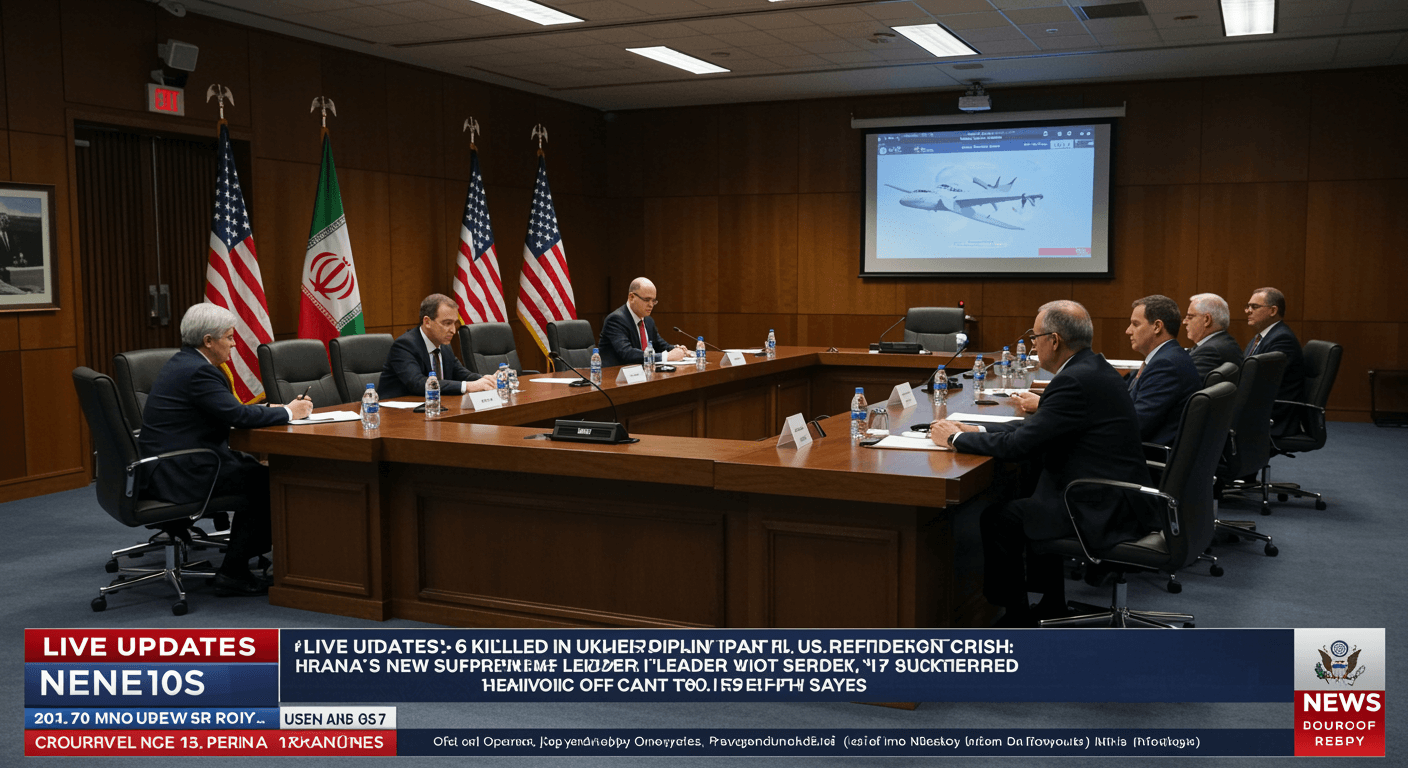
In a confluence of significant international developments, a United States Air Force refueling aircraft has tragically crashed, resulting in the loss of six lives, as reported by NBC News. This incident unfolds amidst heightened geopolitical scrutiny on Iran, where discussions around the health and potential succession of its next Supreme Leader are gaining traction, notably a claim by US media personality Pete Hegseth suggesting a future leader is 'likely disfigured.' These events, though distinct, underscore the volatile and complex security landscape that directly impacts the strategic interests of Pakistan and the broader Gulf region.
- A US Air Force refueling plane crash has resulted in six fatalities, sparking an immediate investigation.
- Speculation, notably from Pete Hegseth, suggests Iran's future Supreme Leader may be 'disfigured,' raising questions about leadership stability.
- The US military incident impacts operational readiness and indirectly influences the strategic balance in regions like the Gulf.
- Iran's leadership succession is a critical concern for regional powers, including Pakistan, due to potential shifts in foreign policy and nuclear programme trajectory.
- Both events highlight the ongoing geopolitical tensions and security dynamics across the Middle East and South Asia.
A tragic US Air Force refueling plane crash, claiming six lives, is currently under investigation, while the speculative commentary surrounding Iran's future leadership adds another layer of complexity to an already intricate regional security mosaic, directly influencing diplomatic considerations for Islamabad and Gulf capitals.
US Air Force Refueling Plane Crash: A Tragic Loss and Operational Impact
The tragic loss of a United States Air Force refueling aircraft, a KC-135 Stratotanker according to initial reports from NBC News, occurred on March 12, 2026, claiming the lives of all six crew members on board. While the exact location of the crash has not been definitively disclosed beyond being within US territory, the incident immediately triggered a comprehensive investigation by US military authorities and the National Transportation Safety Board (NTSB). The KC-135 Stratotanker, a stalwart of the US Air Force's aerial refuelling fleet for over six decades, is crucial for projecting American air power globally, enabling bombers, fighters, and other aircraft to extend their range and endurance without needing to land. Its operational importance cannot be overstated; these aircraft are the backbone of long-range missions, including those supporting US Central Command (CENTCOM) operations in the Middle East and Gulf region.
As PakishNews previously reported, IEA Oil Release: Is 400 Million Barrels Enough to Stabilise Markets?.
The immediate impact of such a crash is primarily on the affected unit and the families of the fallen. However, at a broader strategic level, incidents involving critical military assets like refueling tankers can prompt reviews of operational safety protocols, maintenance programmes, and fleet readiness. While the US Air Force operates a large fleet of these aircraft—approximately 396 KC-135s as of 2025, alongside newer KC-46 Pegasus tankers—the loss of any such platform, particularly with crew fatalities, is a significant blow. According to a statement from the US Department of Defense, a full inquiry is underway to determine the cause, which could range from mechanical failure to human error or environmental factors. This incident, even if geographically distant from the Gulf, serves as a stark reminder of the inherent risks in military operations and the extensive logistical tail required to maintain a global military presence, a presence that underpins much of the existing security architecture in the Gulf.
Iran's Succession Dynamics: Speculation on the Next Supreme Leader
Simultaneously, the political landscape in Iran is abuzz with speculation surrounding the health and eventual succession of the current Supreme Leader, Ayatollah Ali Khamenei, who is 86 years old as of March 2026. This ongoing discussion has been amplified by comments from US media personality Pete Hegseth, who, as reported by NBC News, suggested that Iran's 'new supreme leader' is 'likely disfigured.' It is crucial to note that such a claim is speculative and originates from an external observer, not an official Iranian source, and its veracity cannot be independently confirmed. However, the very existence of such commentary, regardless of its foundation, highlights the intense international interest in and scrutiny of Iran's opaque leadership transition process.
The Supreme Leader holds ultimate authority in Iran, presiding over both religious and political affairs. The Assembly of Experts, an 88-member body of high-ranking clerics, is constitutionally tasked with selecting the next Supreme Leader from among qualified candidates once the current one passes away or is deemed incapacitated. Historically, the process is shrouded in secrecy, with potential successors often vetted discreetly over years. Prominent figures frequently mentioned in succession discussions have included the late President Ebrahim Raisi (before his passing), and Mojtaba Khamenei, the son of the current Supreme Leader. The characteristics and ideological leanings of the next Supreme Leader will profoundly shape Iran's domestic and foreign policies, including its approach to the nuclear programme, regional proxy groups, and relations with the West and Gulf neighbours. Any perceived physical or health condition, even if speculative, could be leveraged in internal power struggles or external narratives about the legitimacy and capability of future leadership.
Background and Context: Geopolitical Currents in the Middle East
The concurrent reporting of a US military tragedy and speculation about Iran's leadership succession occurs against a backdrop of deeply entrenched geopolitical currents in the Middle East. The US has maintained a significant military presence in the Gulf region for decades, primarily through CENTCOM, with naval bases in Bahrain and air assets across various GCC states. This presence, established after the 1990-91 Gulf War, aims to ensure regional stability, protect vital oil shipping lanes, and deter potential aggression, particularly from Iran. The strategic importance of US air mobility assets, like the downed KC-135, in sustaining these operations cannot be overstated, as they allow for rapid deployment and sustained air superiority across vast distances.
Iran, on the other hand, has historically viewed the US presence as a destabilising factor and has pursued a foreign policy aimed at projecting its influence through a network of regional allies and proxies. Its nuclear programme remains a central point of contention with Western powers and Gulf states, despite the 2015 Joint Comprehensive Plan of Action (JCPOA), which has been largely undermined since 2018. The recent normalisation efforts, such as the Saudi-Iran rapprochement brokered by China in March 2023, represent a complex diplomatic dance by regional actors to de-escalate tensions, yet underlying suspicions and strategic competition persist. For Pakistan, a non-Arab neighbour with a significant Shia minority and strategic ties to both Saudi Arabia and Iran, these dynamics necessitate a delicate balancing act to safeguard its national interests, border security, and energy needs. As PakishNews previously reported on the evolving regional security architecture, the trajectory of Iran-Saudi relations remains a key indicator for broader stability.
Expert Analysis: Regional Stability and Diplomatic Implications
The US plane crash, while geographically removed, resonates within the broader context of US military readiness. Dr. Aisha Sarfraz, a defence analyst based in Islamabad, commented, "The loss of a KC-135, even in a training accident, underscores the constant operational demands on the US Air Force. For countries like Pakistan that engage in defence cooperation and joint exercises, it's a reminder of the shared risks and the importance of stringent safety protocols in complex aerial manoeuvres. While not directly impacting regional operations, it can trigger internal reviews that might indirectly affect future defence planning."
Regarding Iran's succession, Dr. Hassan Abbas, a prominent expert on Iranian politics at the Gulf Research Centre in Dubai, offered, "The speculation, whether accurate or not, about the next Supreme Leader's health or physical attributes, points to the intense scrutiny on Iran's internal power dynamics. Any perceived vulnerability or unconventional characteristic could become a focal point for both internal factions and external adversaries, potentially influencing the speed and nature of the transition. The stability of Iran's leadership is paramount for regional peace, and any uncertainty fuels anxiety among its neighbours, including the GCC states."
Mr. Junaid Khan, a former Pakistani diplomat with extensive experience in the Middle East, articulated the Pakistani perspective: "Pakistan maintains a principled position of non-interference and promotion of regional stability. While the US plane crash is a tragic incident for a key global partner, our focus remains on its implications for US defence policy. More critically, the leadership transition in Iran is of profound interest. A stable, predictable Iran is vital for Pakistan's eastern border security, energy imports like the IP Gas Pipeline, and trade relations. Any internal instability or radical shift in Tehran's foreign policy could present significant challenges for Islamabad's diplomatic and economic engagements in the region. Read more on Pakistan-Iran bilateral relations at PakishNews."
Impact Assessment: What These Developments Mean for Pakistan and the Gulf
For Pakistan and the Gulf states, the implications of these seemingly disparate events are both direct and indirect. The US refueling plane crash, while a domestic US tragedy, impacts the perception of US military capabilities and operational safety. For Gulf nations hosting US forces, it's a reminder of the intricate logistics and risks involved in maintaining a robust defence posture. While unlikely to alter immediate force deployments, it could lead to stricter safety inspections or a temporary slowdown in certain operational tempo, indirectly affecting the US's ability to project power in the region. Pakistan, as a defence partner, might observe these developments for lessons learned in its own air force operations and maintenance protocols.
The evolving situation in Iran, however, carries more profound and immediate implications. The succession of a new Supreme Leader, especially one whose characteristics are subject to external speculation, could trigger significant policy shifts. A more conservative or hardline leader might escalate tensions with the West and regional rivals, potentially jeopardising the fragile de-escalation efforts seen in the past year, such as the Saudi-Iran rapprochement. This could lead to renewed proxy conflicts, impacting vital shipping lanes in the Strait of Hormuz, crucial for global energy supplies. For Pakistan, which shares a nearly 900-kilometre border with Iran and is engaged in discussions for the Iran-Pakistan Gas Pipeline, a stable and predictable Iran is paramount. Instability could exacerbate border security challenges, disrupt trade through initiatives like the border markets, and complicate Pakistan's efforts to balance its relationships with both Iran and the Saudi-led Gulf Cooperation Council (GCC) bloc. The future of Iran's nuclear programme under a new leader will also be closely watched by Islamabad, given its implications for regional non-proliferation and strategic balance. In a related development covered by PakishNews, regional security dialogues often feature Iran's role prominently.
What Happens Next: Awaiting Official Findings and Leadership Transitions
In the immediate aftermath of the US plane crash, the focus will remain on the ongoing investigation. Teams from the US Air Force and NTSB will meticulously collect evidence, analyse flight recorders, and interview personnel to determine the precise cause of the accident. This process can take months, with preliminary findings often released much later. Any recommendations stemming from the inquiry will likely influence future operational procedures, maintenance schedules, and potentially even aircraft design or upgrades for the KC-135 fleet and its successors.
For Iran, the succession narrative will continue to evolve. While Ayatollah Khamenei remains the Supreme Leader, discussions within the Assembly of Experts and among influential clerical circles will intensify behind closed doors. External observers, including intelligence agencies and political analysts, will closely monitor any signs of his health, public appearances, and pronouncements from potential successors. The speculative comments from US media, while potentially aimed at shaping perceptions, are unlikely to directly influence Iran's internal selection process but will certainly contribute to the international narrative surrounding it. Regional stakeholders, including Pakistan, will be keenly observing these developments, preparing diplomatic and economic strategies to adapt to any potential shifts in Tehran's leadership and policy orientation. The coming months will be critical for understanding the trajectory of these significant global and regional events.
Related: More World News | Iran Politics
Related Coverage
- IEA Oil Release: Is 400 Million Barrels Enough to Stabilise Markets?
- China's Top Ministers Visit Vietnam Amid Regional Shifts
- Middle East Tensions Mount: US Refueling Plane Crash Amid Iran War News
Frequently Asked Questions
❓ What is the role of a US Air Force refueling plane in global operations?
A US Air Force refueling plane, such as the KC-135 Stratotanker, is crucial for projecting American air power globally. These aircraft extend the range and endurance of bombers, fighters, and other military planes, allowing them to conduct long-range missions without needing to land. This capability is vital for sustaining operations in distant theatres, including those of US Central Command (CENTCOM) in the Middle East, by providing in-flight fuel support.
❓ Who selects Iran's Supreme Leader, and what is the process?
Iran's Supreme Leader is selected by the Assembly of Experts, an 88-member body composed of high-ranking Shia clerics. This body is constitutionally tasked with identifying and appointing a new Supreme Leader upon the passing or incapacitation of the incumbent. The process is traditionally opaque, involving discreet vetting of candidates over an extended period, with an emphasis on religious erudition, political acumen, and revolutionary commitment.
❓ How might Iran's leadership transition affect Pakistan and the Gulf region?
A leadership transition in Iran could significantly impact Pakistan and the Gulf region by potentially altering Tehran's foreign policy, especially concerning its nuclear programme and regional alliances. A more hardline successor might escalate tensions, affecting trade routes, energy security (like the IP Gas Pipeline for Pakistan), and the fragile diplomatic normalisation efforts, such as the Saudi-Iran rapprochement. Pakistan, sharing a long border with Iran, would need to navigate any shifts to maintain border security and its economic and diplomatic balance between Iran and the GCC states.