PakishNews ListenPress play to hear this articleDownload audio
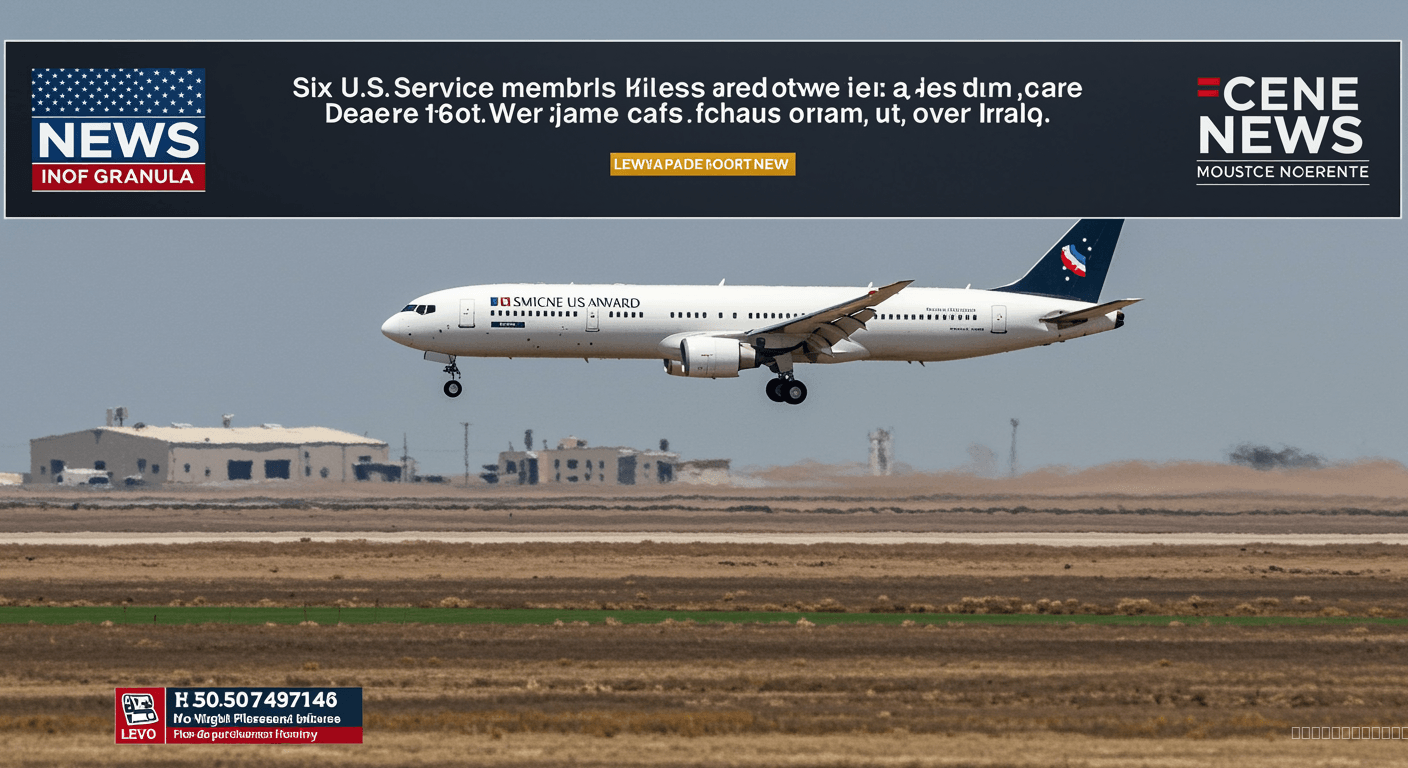
Six US service members were confirmed killed on Friday after a US military KC-135 refuelling aircraft crashed in western Iraq on Thursday. The US military, through a statement from US Central Command (CENTCOM), confirmed that all six crew members aboard the aircraft perished in the incident. While the crash was not attributed to hostile or friendly fire, military officials indicated that it involved another aircraft, details of which remain under investigation. This tragic loss of US service members killed in Iraq marks a grim reminder of the operational risks faced by forces deployed in volatile regions, even outside of direct combat scenarios, and underscores the persistent challenges in maintaining stability across the Middle East.
- A US military KC-135 refuelling aircraft crashed in western Iraq on Thursday, March 11, 2026.
- All six US service members aboard the aircraft were confirmed killed.
- US Central Command (CENTCOM) stated the crash was not due to hostile or friendly fire but involved another aircraft.
- This incident brings the total number of US service members killed in the region to 13 since February 28, 2026.
- An investigation is underway to determine the precise circumstances of the crash, with initial focus on operational factors.
The incident adds to a troubling increase in US military fatalities in the region, with seven other US service members having been killed since February 28, 2026, in operations related to US responses to Iran-backed groups. This latest crash, while not a direct result of combat, compounds the sense of heightened alert and operational tempo that characterises the US military presence in the Middle East. The KC-135 Stratotanker, a stalwart of the US Air Force since the 1950s, is primarily used for aerial refuelling, extending the range and endurance of various combat and support aircraft. Its crash in a non-combat situation, particularly one involving another aircraft, raises immediate questions regarding operational safety protocols and the intense air traffic management within a complex theatre of operations.
What is the broader context of US military presence in Iraq?
The United States maintains a military presence in Iraq as part of Operation Inherent Resolve, primarily focused on advising and assisting Iraqi security forces in their fight against remnants of the Islamic State (ISIS). As PakishNews previously reported, the mission, which began in 2014, has seen evolving roles, transitioning from direct combat to a more advisory capacity, particularly following the nominal defeat of ISIS’s territorial caliphate in 2017. However, the operational environment remains fraught with challenges, including the persistent threat from ISIS cells, the influence of Iran-backed militias operating within Iraq, and the complex political landscape in Baghdad. According to a recent report by the US Department of Defense, approximately 2,500 US troops are currently stationed in Iraq, with their primary mandate being counter-terrorism operations and enhancing the capabilities of the Iraqi military. Read more on Iraq's evolving security landscape at PakishNews.
As PakishNews previously reported, Lakki Marwat Operation: CTD Kills Six Terrorists, Bolstering Regional Security.
The strategic importance of western Iraq, where the crash occurred, cannot be overstated. This vast, often sparsely populated region, bordering Syria and Jordan, has historically served as a transit route for militants and a battleground for various factions. Air operations in this area are frequent, supporting ground forces, conducting surveillance, and, crucially, providing aerial refuelling for a multitude of aircraft. The airspace over Iraq is shared by US, coalition, Iraqi, and sometimes even other nations' aircraft, necessitating stringent air traffic control and deconfliction measures. This complex environment, coupled with the high operational tempo, presents inherent risks, making thorough investigations into incidents like this paramount to prevent future occurrences.
What have officials and experts said about the incident?
Initial statements from the US military have been cautious, pending a full investigation. Brigadier General Patrick Ryder, spokesperson for the US Department of Defense, stated in a press briefing on Friday, "Our deepest condolences go out to the families of the fallen service members. We are committed to a thorough and transparent investigation into the circumstances of this tragic incident, which we can confirm involved another aircraft but was not the result of hostile action." He added that initial reports suggest no enemy involvement, shifting the focus towards potential mechanical failure, human error, or an unforeseen operational anomaly during what is typically a routine, though complex, refuelling manoeuvre.
Regional security analysts have weighed in on the broader implications. Dr. Fatima Al-Hammadi, Senior Fellow at the Gulf Policy Institute in Dubai, commented, "While the US military has ruled out hostile fire, any loss of life in such a high-stakes region reverberates politically. It adds to the domestic pressure on the US administration regarding its presence in the Middle East, especially when fatalities are mounting. It also highlights the sheer volume and complexity of air operations required to sustain their regional posture." She emphasised that even non-combat incidents can be leveraged by regional adversaries to fuel anti-US sentiment. Furthermore, Mr. Ahmed Khan, Director of the Centre for Strategic Studies in Islamabad, highlighted the psychological impact on deployed forces: "Such incidents, even if accidental, remind service members and their families of the constant dangers inherent in military operations, regardless of whether they are on the front lines or performing support roles. The morale aspect is significant."
What is the impact on regional dynamics and US operations?
The immediate impact of this crash is, first and foremost, on the families of the six fallen US service members, who will be notified and supported through military channels. For US operations in Iraq and across the Gulf, the incident will likely trigger a comprehensive safety review. According to an internal memo from the US Air Force Safety Centre, all KC-135 operations in the CENTCOM area of responsibility are expected to undergo immediate scrutiny, potentially leading to temporary stand-downs or enhanced safety protocols. This could affect the operational tempo of air missions, as refuelling capabilities are critical for extended patrol times and rapid response. The US Air Force operates an estimated 396 KC-135 aircraft globally, with a significant number deployed to support Middle East operations, making any safety concerns a high priority.
Moreover, the incident adds a layer of complexity to the already strained US-Iraqi relationship. While the Iraqi government has expressed condolences, such events invariably prompt questions from some Iraqi political factions about the necessity and duration of the US military presence. A spokesperson for the Iraqi Ministry of Defence, speaking off the record, indicated, "We are fully cooperating with the US investigation team. Our priority is to understand what happened and ensure the safety of all air operations within Iraqi airspace. This is a tragic loss, and we share the grief with our partners." However, factions aligned with Iran often use such incidents to call for a complete withdrawal of US forces, arguing that their presence destabilises the country. The crash, therefore, becomes another data point in the ongoing debate about foreign military presence in the region.
Why does this matter? This incident, despite being non-combat related, significantly impacts regional stability by highlighting the fragility of the operational environment. It underscores that even routine military tasks carry inherent risks, and any loss of life can fuel political narratives, particularly those advocating for the removal of foreign forces. The ongoing investigation will be crucial in providing clarity and preventing future incidents, which are vital for maintaining trust and operational effectiveness in a region already grappling with multiple overlapping crises.
What happens next for the investigation and regional posture?
The immediate next steps involve a comprehensive investigation led by the US Air Force Safety Centre, in cooperation with Iraqi authorities. This will entail recovering the wreckage, analysing flight data recorders, interviewing witnesses, and examining maintenance records of both the crashed KC-135 and the 'other aircraft' involved. Given the sensitivity and the loss of life, the findings are likely to be scrutinised at the highest levels of the US Department of Defense and potentially shared with coalition partners. The investigation could take several months, with preliminary reports expected within weeks. The US military is expected to continue its operations in Iraq, albeit with potentially heightened safety checks and revised procedural guidelines for aerial refuelling missions in the region, particularly as of March 2026.
Looking ahead, the incident may also prompt a broader reassessment of the US operational footprint and the sustainability of its current strategy in the Middle East. While not directly a result of hostile action, the cumulative toll of 13 US service members killed since late February 2026, including these six, will inevitably fuel discussions in Washington about troop deployments and engagement rules. Policymakers, business leaders, and informed citizens in Pakistan and the Gulf region should watch for any shifts in US rhetoric or policy regarding its presence, as well as how regional actors, particularly Iran-backed groups, frame this incident in their ongoing campaigns. The stability of Iraq, a critical factor in regional security, remains intrinsically linked to the delicate balance of international and domestic forces operating within its borders, and every incident, combat or otherwise, has the potential to alter this precarious equilibrium.
Related: More US Military News | Iraq Conflict
Related Coverage
- Lakki Marwat Operation: CTD Kills Six Terrorists, Bolstering Regional Security
- Pakistan's 5G Rollout: A Potential 'Game Changer' for IT Exports, Says P@SHA
- Pakistan Launches Airstrikes in Afghanistan Targeting TTP Strongholds
Frequently Asked Questions
❓ What is a KC-135 refuelling aircraft and its role in military operations?
The KC-135 Stratotanker is a military aerial refuelling aircraft that has been a cornerstone of the US Air Force's global reach since its introduction in 1957. Its primary role is to extend the flight range and endurance of various military aircraft, including fighters, bombers, and reconnaissance planes, by transferring fuel mid-air. This capability is critical for projecting power, sustaining long-duration missions, and ensuring rapid deployment across vast distances, with over 400 units still operational as of March 2026.
❓ How does this crash relate to the overall US military presence in Iraq?
The US maintains a military presence of approximately 2,500 troops in Iraq as part of Operation Inherent Resolve, primarily to advise and assist Iraqi forces in counter-terrorism efforts against ISIS remnants. While this crash was not combat-related, it underscores the inherent risks of military operations in a complex and often hostile environment, even for support missions like aerial refuelling. Such incidents can intensify political debates within Iraq regarding the foreign military presence and potentially influence public opinion against coalition forces.
❓ What are the potential implications of a non-combat aviation incident in a volatile region?
A non-combat aviation incident, especially one involving fatalities, can have significant implications even without hostile action. It can lead to comprehensive safety reviews, temporary operational pauses, and increased scrutiny of maintenance and training protocols, potentially affecting military readiness and mission execution. Politically, it can be leveraged by anti-foreign presence factions to fuel public dissent and pressure host governments for troop withdrawals, thereby adding to the existing geopolitical complexities and regional tensions, as evidenced by the ongoing debates in Iraq since 2020.