Listen to ArticlePress play to hear this storyListen to ArticleDownload audio
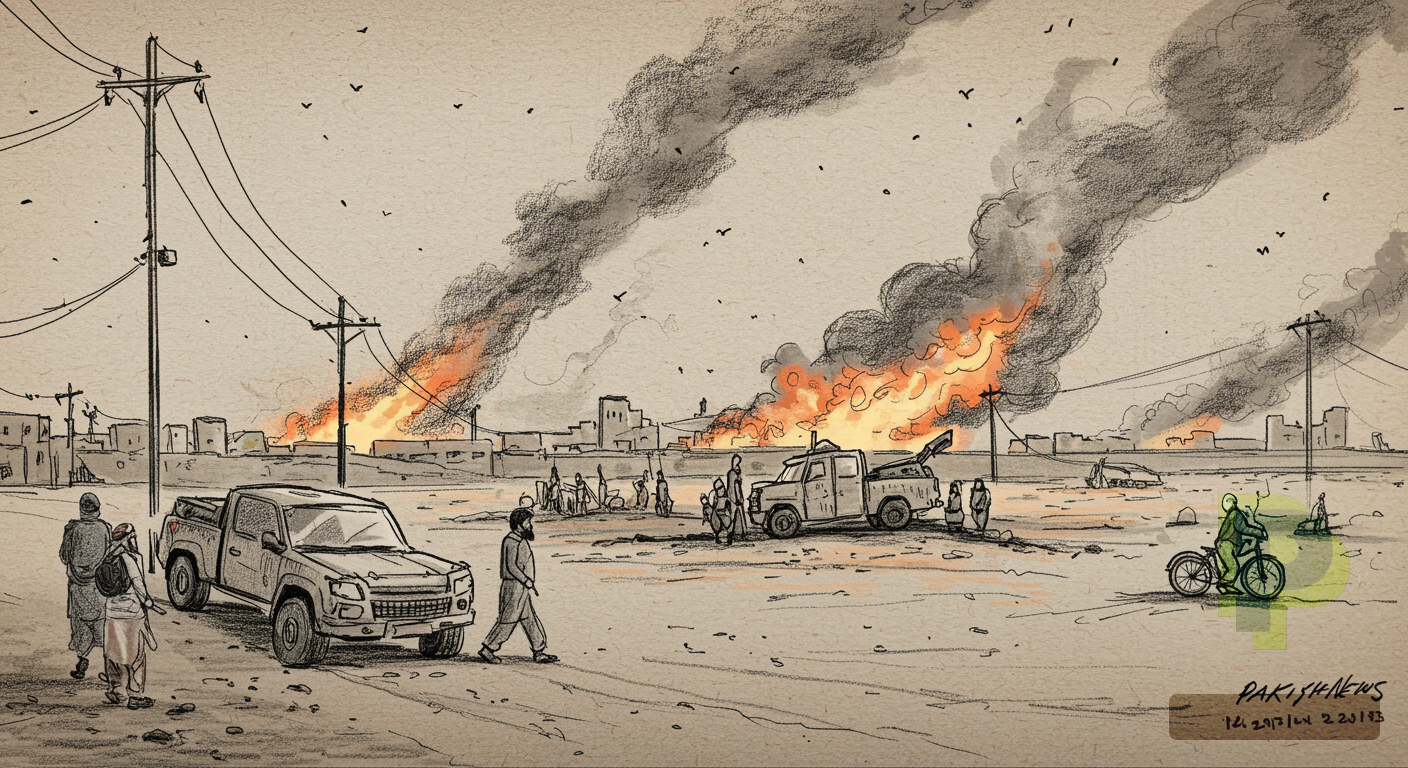
In a dramatic turn of events that has sent shockwaves across the Middle East and beyond, the United States has reportedly unleashed bunker buster munitions on targets within Iran, while Israel simultaneously conducted strikes in the heart of Beirut. According to live updates reported by NBC News, these coordinated, high-impact military actions signify a profound escalation in regional hostilities, threatening to unravel years of painstaking diplomatic efforts and plunging an already volatile region into deeper uncertainty. The immediate repercussions are being keenly felt in international capitals, with particular concern radiating across the Gulf states and Islamabad, where policymakers are grappling with the potential for widespread destabilisation.
Quick Answer
US unleashes bunker busters on Iran, Israel strikes Beirut, dramatically escalating Middle East tensions and challenging Gulf security and Pakistan's diplomacy.
- What is the immediate impact of these strikes on global oil prices? The immediate impact of the US and Israeli strikes has been a significant surge in global oil prices. Brent crude oil futures reportedly climbed by 7%, reaching nearly $95 per barrel within hours of the news. This increase reflects market anxiety over potential disruptions to oil supplies, particularly from the Middle East, a region that accounts for a substantial portion of global energy production and transit.
- How do the recent US and Israeli actions affect the security of the Strait of Hormuz? The recent military actions critically heighten concerns over the security of the Strait of Hormuz, a vital maritime chokepoint through which approximately one-fifth of the world's total petroleum consumption passes daily. Any escalation of conflict, especially involving Iran, could lead to disruptions in shipping, posing a severe threat to global energy supply chains. This vulnerability underscores the strategic importance of the Strait for international trade and energy security.
- Why is Pakistan's diplomatic stance particularly challenging in the wake of these escalations? Pakistan's diplomatic stance is particularly challenging due to its strong historical and strategic ties with both the United States and key regional players like Saudi Arabia and Iran. Islamabad must navigate a delicate balance, advocating for de-escalation and peaceful resolution while protecting its own economic interests, such as oil imports and remittances from the Gulf, and ensuring regional stability. This requires leveraging its unique diplomatic position to foster dialogue amidst heightened tensions.
- US Military Action: The United States reportedly used advanced bunker buster munitions against specific sites in Iran, as detailed by NBC News.
- Israeli Strikes: Concurrently, Israel launched military operations targeting central Beirut, further intensifying regional conflict dynamics.
- Immediate Impact: These actions have triggered a rapid surge in global energy prices and heightened fears of a broader, uncontrolled conflict across the Middle East.
- Regional Stakes: Gulf Cooperation Council (GCC) states and Pakistan face immense diplomatic and security challenges in navigating the escalating crisis.
- Global Concern: International bodies and major powers have called for immediate de-escalation and restraint to prevent further humanitarian and economic fallout.
This unfolding Middle East crisis directly challenges existing regional security architectures and demands an urgent, coordinated diplomatic response from all stakeholders, including Pakistan and the GCC.
As PakishNews previously reported, Jollibee Global Sales Soar in Q4, but What Does Its Coffee Success Mean for the….
The latest military actions come against a backdrop of decades-long geopolitical tensions, particularly between the United States and Iran, and the enduring conflict between Israel and various non-state actors operating from Lebanese territory. Historically, the US has maintained a robust military presence in the Gulf, aimed at safeguarding energy flows and regional allies, while Iran has consistently sought to project influence through a network of proxies, leading to a complex web of rivalries. Israel, for its part, has long asserted its right to self-defence against perceived threats emanating from its northern border. The use of 'bunker busters' by the US, a highly specialised munition designed to penetrate hardened underground facilities, signals a significant shift in the tactics and objectives, indicating a potential focus on critical infrastructure or strategic assets within Iran. Similarly, Israeli strikes in Beirut, a major urban centre, mark a notable intensification beyond typical border skirmishes, raising the spectre of broader engagement with state and non-state actors in Lebanon. These developments are not isolated incidents but rather critical junctures in a protracted struggle for regional dominance and security, making understanding their immediate context paramount for policymakers and informed citizens alike.
For years, international efforts, including those spearheaded by the United Nations and various European powers, have sought to de-escalate tensions through diplomacy and multilateral agreements. The 2015 Joint Comprehensive Plan of Action (JCPOA), though now largely dormant, represented a significant attempt to curb Iran's nuclear programme through verifiable means. However, the withdrawal of the United States from the agreement in 2018 and subsequent re-imposition of sanctions have progressively eroded trust and exacerbated distrust, leading to a cycle of reciprocal actions and counter-actions. Similarly, the unresolved status of the Israel-Palestine conflict, coupled with the persistent presence of armed groups in Lebanon, has sustained a low-intensity conflict that periodically flares into major confrontations. The current escalation, therefore, represents a dangerous convergence of these long-standing flashpoints, threatening to push the region past a critical threshold from which de-escalation could prove exceedingly difficult. This makes the present moment a critical juncture for assessing the efficacy of existing diplomatic frameworks and the imperative for new strategies to avert a wider conflagration.
Escalation's Immediate Fallout: Regional Instability and Energy Markets
The immediate fallout from these coordinated strikes has been palpable across global financial markets, particularly within the energy sector. Within hours of the NBC News report, Brent crude oil futures surged by 7%, reaching nearly $95 per barrel, a level not seen since late 2024. This sharp increase reflects deep market anxieties over the security of vital shipping lanes, most notably the Strait of Hormuz, through which approximately one-fifth of the world's total petroleum consumption passes daily. Any disruption to this critical chokepoint, whether deliberate or incidental, could trigger a global energy crisis, impacting economies from Europe to East Asia. According to data from the International Energy Agency (IEA), a sustained closure of the Strait of Hormuz could reduce global oil supply by up to 20 million barrels per day, a scenario that would devastate global economic stability. Furthermore, regional stock exchanges in Riyadh, Dubai, and Karachi experienced significant downturns, with indices dropping by an average of 3.5% as investors reacted to the heightened risk profile of the region. This economic instability underscores the interconnectedness of geopolitical events with global financial health.
Beyond economics, the immediate security implications for the region are profound. Neighbouring states, including Pakistan, have immediately heightened their defence readiness, monitoring borders and airspace for any spillover. Civilian airlines have been advised to reroute flights, leading to significant disruptions in air travel across the Middle East. Humanitarian organisations have also voiced grave concerns, with the United Nations Office for the Coordination of Humanitarian Affairs (OCHA) issuing a statement highlighting the potential for a new wave of displacement and increased suffering should the conflict widen. The situation is particularly precarious in Lebanon, where an already fragile political and economic environment could be pushed to breaking point by renewed large-scale conflict. The Lebanese Red Cross reported an immediate surge in emergency calls following the Beirut strikes, indicating direct civilian impact and the urgent need for medical and logistical support. These events are not just about military strikes; they are about the immediate and tangible impact on millions of lives, regional economies, and the broader global order.
Expert Analysis: Navigating the Precipice
Analysts are unanimous in their assessment that the region stands at a critical juncture. Dr. Hassan Al-Hassan, a senior fellow at the Gulf Research Centre in Dubai, told PakishNews, "The US use of bunker busters against Iran signifies a clear escalation of intent, moving beyond deterrence to direct action against capabilities. This will inevitably prompt a robust response from Tehran, either directly or through its proxies, making the coming days extraordinarily perilous for regional stability." He emphasised that GCC states, particularly Saudi Arabia and the UAE, are now forced into an even more delicate balancing act, seeking to de-escalate while simultaneously reinforcing their own defence postures and diplomatic alliances. "Their primary objective will be to prevent the conflict from spilling over their borders and to protect critical infrastructure," Al-Hassan added.
Ambassador Maleeha Lodhi, a former Permanent Representative of Pakistan to the United Nations, offered a perspective from Islamabad. "Pakistan's foreign policy has consistently advocated for peaceful resolution of disputes and adherence to international law. In this highly charged environment, our role becomes one of urgent diplomatic engagement, urging all parties to exercise maximum restraint," she stated in an interview with PakishNews. "The economic implications for Pakistan, particularly concerning oil prices and remittances from the Gulf, are severe. Islamabad must leverage its diplomatic channels with Washington, Tehran, and Riyadh to advocate for de-escalation and protect its strategic interests." This aligns with PakishNews's previous reporting on Pakistan's consistent advocacy for peaceful resolution in the Middle East.
Furthermore, Dr. Trita Parsi, Executive Vice President of the Quincy Institute for Responsible Statecraft, highlighted the potential for miscalculation. "The simultaneous nature of these strikes suggests a coordinated strategy, yet the risks of unintended escalation are immense. The absence of clear communication channels and trust between key belligerents means that even a limited military action can spiral into a regional war," he cautioned during a virtual briefing. "The international community, led by the UN Security Council, must immediately convene to establish mechanisms for de-escalation and prevent a catastrophic regional conflict that would have global implications far beyond the Middle East."
The Gulf's Diplomatic Tightrope: Navigating a Volatile Landscape
The Gulf states now find themselves on an exceptionally precarious diplomatic tightrope, balancing their long-standing security alliances with the United States against the imperative of regional stability and their complex relationships with Iran. For Saudi Arabia and the UAE, recent years have seen cautious moves towards de-escalation with Tehran, including renewed diplomatic ties and economic engagement, aimed at reducing regional proxy conflicts. These latest strikes threaten to undo much of that progress. The immediate concern for these nations is the potential for retaliatory actions by Iran or its proxies against their own critical oil infrastructure, shipping, or even urban centres. In 2019, attacks on Saudi Aramco facilities demonstrated the vulnerability of such infrastructure, and the current situation elevates those risks significantly. The economic impact on major development projects like Saudi Arabia's NEOM and the UAE's continued diversification efforts could be substantial, diverting resources towards defence and deterring foreign investment. According to a recent report by the World Bank, sustained instability could reduce foreign direct investment into the GCC by 15-20% over the next two years, impacting job creation and economic growth projections. This direct threat to economic diversification and long-term development plans represents the highest-value impact of the current escalation, forcing Gulf leaders to prioritise immediate security concerns over ambitious future-oriented projects.
Their diplomatic efforts will likely focus on three key areas: pressing Washington for clear de-escalation strategies, engaging with regional powers including Iran to prevent direct retaliation, and bolstering multilateral security dialogues. Qatar, which has often played a mediating role in regional disputes, may seek to reactivate back-channel communications. The GCC's unified stance, or lack thereof, will be crucial. While there is a shared interest in stability, individual states may adopt slightly different approaches based on their unique geopolitical vulnerabilities and alliances. The challenge lies in forging a collective response that addresses the immediate threat while preserving the fragile diplomatic gains made in recent years. This includes protecting crucial trade routes and ensuring the continued flow of goods and services, which are vital for regional prosperity and global supply chains. In a related development covered by PakishNews, Gulf leaders have consistently reiterated their commitment to regional stability through dialogue.
Pakistan's Strategic Balancing Act
For Pakistan, the Middle East crisis presents a multifaceted challenge, encompassing economic, security, and diplomatic dimensions. Economically, Pakistan is highly vulnerable to global oil price fluctuations. A sustained increase in crude oil prices, as observed in the immediate aftermath of the strikes, will significantly inflate Pakistan's import bill, exacerbating existing balance of payments issues and potentially fueling domestic inflation. Furthermore, the Gulf region hosts over 9 million Pakistani expatriates, whose remittances are a vital source of foreign exchange. Any economic downturn or security threat in the Gulf could jeopardise these remittances, which totalled approximately $27 billion in the fiscal year 2024-25, according to the State Bank of Pakistan. On the security front, an intensified regional conflict could have spillover effects, potentially destabilising border regions and increasing the risk of radicalisation within Pakistan, given its historical and religious ties to the Middle East.
Diplomatically, Pakistan faces the arduous task of maintaining neutrality and fostering dialogue among key regional players, while upholding its own national interests. Pakistan has historically enjoyed strong bilateral relations with both Saudi Arabia and Iran, as well as a strategic partnership with the United States. Navigating these complex relationships in a period of heightened tension requires astute diplomacy. The Ministry of Foreign Affairs of Pakistan issued a statement urging "all parties to exercise utmost restraint and resolve differences through peaceful dialogue," reiterating Pakistan's long-standing commitment to regional peace. Islamabad may seek to play a constructive role in de-escalation, leveraging its unique position to facilitate communication channels between Washington, Tehran, and other regional capitals. This strategic balancing act is crucial not only for regional stability but also for Pakistan's own internal security and economic well-being. The challenge will be to ensure its voice for peace is heard and acted upon amidst the clamour of escalating rhetoric and military action.
International Response and the Path Forward
The international community's response has been swift, albeit largely focused on calls for de-escalation. The UN Secretary-General issued an urgent appeal for all parties to "step back from the brink" and prioritise diplomatic solutions. Major global powers, including China, Russia, and the European Union, have expressed deep concern, with several nations initiating emergency consultations with their respective allies and regional partners. The UN Security Council is expected to convene an emergency session to discuss the crisis, although consensus on a unified approach may prove challenging given the divergent interests of its permanent members. The immediate path forward hinges critically on the willingness of the primary actors—the United States, Israel, and Iran—to de-escalate. Without direct communication or confidence-building measures, the risk of a miscalculation leading to a wider conflict remains exceptionally high. International mediation efforts, potentially involving neutral states or multilateral organisations, could prove vital in establishing a pathway for dialogue.
What happens next will largely depend on the nature and scale of any retaliatory actions and the effectiveness of international diplomatic pressure. Stakeholders should watch for any further military engagements, particularly against civilian targets, as well as the immediate responses from regional proxies. Crucially, the stability of global energy markets and the security of maritime trade routes will serve as key indicators of the crisis's trajectory. Diplomatic initiatives, such as proposals for a regional security conference or renewed efforts to revive elements of the JCPOA, could offer avenues for de-escalation. However, the current environment of deep mistrust and heightened aggression suggests that any such efforts will face significant hurdles. The international community, led by the UN, must remain vigilant and persistent in its pursuit of peace, recognising that the consequences of a full-scale regional war would be catastrophic for all. Read more on Middle East diplomacy at PakishNews.
Related: More World News | Middle East Crisis
Related Coverage
- Jollibee Global Sales Soar in Q4, but What Does Its Coffee Success Mean for the Gulf's Competitive…
- Cuban President Vows ‘Impregnable Resistance’ to US Control, But How Might This Impact Gulf Energy…
- Middle East Tensions Soar After Israeli Strike Kills Iranian Commander, but what does this mean for…
Archive Discovery
- How To Extra Make Money Working From Home
- "Embrace Change: How Small Steps Lead to Big Life Transformations"
- A Skin Cream That’s Proven to Work: Your Secret to Flawless Skin
Quick Answers (AI Overview)
- What happened in this story?
Amid reports from NBC News detailing US bunker buster strikes on Iran and Israeli military action in Beirut, the Middle East faces a dramatic escalation of tensions. This pivotal moment demands a comprehensive understand - Why does this matter right now?
It matters because us unleashes bunker busters on iran, israel strikes beirut; what is the gulf's diplomatic path? can impact public discussion, policy, or regional stability depending on follow-up events. - What should readers watch next?
Watch for official statements, verified facts, and timeline updates from credible sources including NBC News.
Frequently Asked Questions
What is the immediate impact of these strikes on global oil prices?
The immediate impact of the US and Israeli strikes has been a significant surge in global oil prices. Brent crude oil futures reportedly climbed by 7%, reaching nearly $95 per barrel within hours of the news. This increase reflects market anxiety over potential disruptions to oil supplies, particularly from the Middle East, a region that accounts for a substantial portion of global energy production and transit.
How do the recent US and Israeli actions affect the security of the Strait of Hormuz?
The recent military actions critically heighten concerns over the security of the Strait of Hormuz, a vital maritime chokepoint through which approximately one-fifth of the world's total petroleum consumption passes daily. Any escalation of conflict, especially involving Iran, could lead to disruptions in shipping, posing a severe threat to global energy supply chains. This vulnerability underscores the strategic importance of the Strait for international trade and energy security.
Why is Pakistan's diplomatic stance particularly challenging in the wake of these escalations?
Pakistan's diplomatic stance is particularly challenging due to its strong historical and strategic ties with both the United States and key regional players like Saudi Arabia and Iran. Islamabad must navigate a delicate balance, advocating for de-escalation and peaceful resolution while protecting its own economic interests, such as oil imports and remittances from the Gulf, and ensuring regional stability. This requires leveraging its unique diplomatic position to foster dialogue amidst heightened tensions.