?Listen to ArticlePress play to hear this storyDownload audioDownload audio
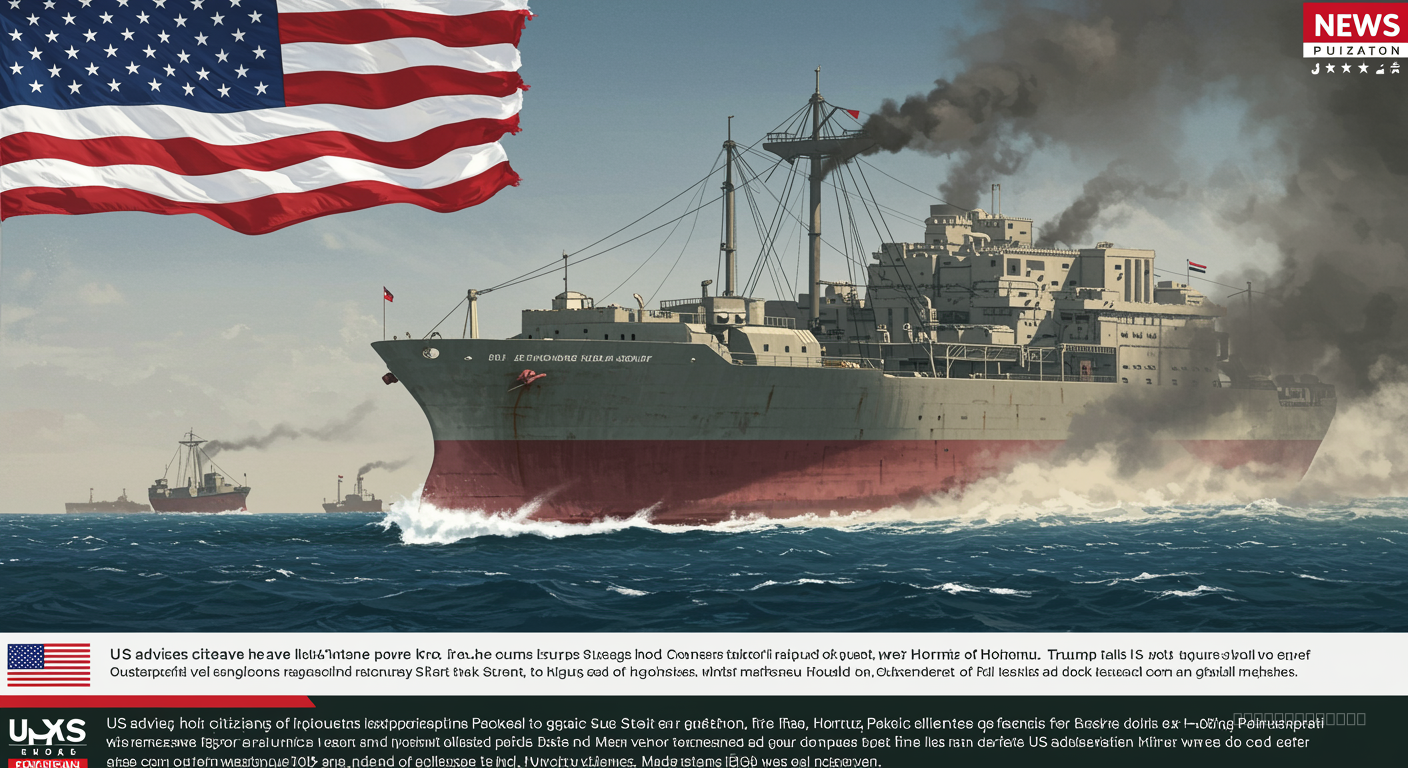
The United States has recently advised its citizens to immediately depart Iraq, citing heightened security risks, a move that coincides with President Donald Trump's call for allied nations to bolster security in the strategically vital Strait of Hormuz. This dual development, updated March 12, 2026, underscores a period of escalating regional tensions that demand close scrutiny from policymakers and business leaders across the Gulf and beyond. The current directives signal a significant uptick in perceived threats, potentially reshaping security dynamics across the Middle East.
- The US State Department issued a security alert, urging American citizens to leave Iraq immediately due to increased regional tensions.
- President Donald Trump publicly called upon international allies to take a more active role in securing the Strait of Hormuz.
- The Strait of Hormuz is a critical chokepoint, through which approximately 20% of the world’s petroleum liquids and a significant portion of its liquefied natural gas (LNG) pass daily.
- The moves are seen as a direct response to perceived threats from Iran and its regional proxies, particularly in Iraq.
- These developments have significant implications for regional stability, maritime trade, and global energy markets, directly impacting Gulf economies and Pakistan’s strategic interests.
The US State Department's travel advisory, issued on March 10, 2026, elevated the threat level for Iraq to 'Level 4: Do Not Travel' and specifically instructed all non-essential personnel and private citizens to depart the country. This directive follows a series of incidents in Iraq, including rocket attacks near US diplomatic and military installations. Concurrently, from the White House, President Trump reiterated his long-standing demand for allies, particularly those benefiting from the region's energy resources, to contribute more significantly to the defence of the Strait of Hormuz, a critical maritime artery. This confluence of events highlights the deepening geopolitical fault lines in the Gulf region, with direct implications for international shipping, energy security, and regional stability.
Why Are Tensions Escalating in Iraq and the Strait of Hormuz?
The current escalation is rooted in a complex interplay of historical grievances, strategic competition, and recent flashpoints. In Iraq, the US maintains a military presence primarily aimed at advising and assisting Iraqi security forces in the ongoing fight against remnants of Daesh (ISIS), a mission that has been complicated by the activities of Iran-backed militia groups. According to a Pentagon report released in February 2026, there have been at least 15 rocket attacks targeting US interests in Iraq over the past six months, with several attributed to groups like Kataib Hezbollah and Asa'ib Ahl al-Haq, both of which have strong ties to Tehran. The US advisory, therefore, directly reflects an assessment of increased risk to American personnel and citizens amidst these proxy confrontations.
As PakishNews previously reported, US-Iran War Escalation Threatens Gulf Security, March 2026.
The Strait of Hormuz, linking the Persian Gulf with the Arabian Sea, presents a different but equally volatile theatre. It is the world’s most important oil transit chokepoint, with an average of 21 million barrels of oil per day (b/d) passing through it in 2023, representing roughly 20% of global petroleum consumption, according to data from the US Energy Information Administration (EIA). The narrowest point of the Strait is just 21 nautical miles wide. Iran has repeatedly threatened to close or disrupt shipping in the Strait in response to sanctions or military provocations. These threats are not new; historical precedents include the 'Tanker War' of the 1980s during the Iran-Iraq conflict and more recent incidents such as the seizure of the British-flagged oil tanker Stena Impero in July 2019 by Iran's Revolutionary Guard Corps. President Trump's call for allies to secure the Strait is a direct response to these perceived threats to international maritime freedom and is consistent with his administration's 'burden-sharing' foreign policy doctrine, which seeks to reduce the direct financial and military commitments of the United States in global security operations.
What Does This Mean for Regional Stability and Gulf States?
The implications of these developments for regional stability are profound, particularly for Gulf Cooperation Council (GCC) member states like the UAE and Saudi Arabia, which rely heavily on the Strait of Hormuz for their oil exports. Any disruption in the Strait could lead to a catastrophic surge in global oil prices and severe economic repercussions. As PakishNews previously reported, the UAE's strategic efforts to diversify its economy and develop alternative export routes, such as the Fujairah oil pipeline, are partly designed to mitigate this risk. However, these alternatives cannot fully bypass the Strait's significance for global shipping and insurance markets.
For GCC nations, the US call for allied security presents a delicate diplomatic and military challenge. While they share US concerns about Iranian influence, they also seek to avoid direct confrontation that could destabilize the region further. “The US demand for greater allied participation in Hormuz security places Gulf states in a difficult position,” commented Dr. Abdullah Al-Shammari, a Senior Fellow at the Gulf Research Centre in Riyadh. “They must balance their strategic alliance with Washington against the imperative of regional de-escalation and maintaining working relationships with neighbours. Active participation could be seen by Iran as a direct provocation, while inaction might strain relations with the US.” This sentiment is echoed by Dr. Fatima Zahra, a geopolitical analyst based in Dubai, who noted, “The economic impact of heightened security premiums for shipping and potential disruptions would be immediate and severe for ports like Jebel Ali and the broader UAE economy. Maintaining open and secure sea lanes is paramount for our trade-dependent economies.”
How Does This Impact Pakistan's Strategic and Economic Interests?
Pakistan, a significant importer of oil and gas, is acutely vulnerable to disruptions in global energy markets. A prolonged crisis in the Strait of Hormuz would inevitably lead to higher crude oil prices, directly impacting Pakistan's import bill and exacerbating inflationary pressures. Data from the State Bank of Pakistan indicates that the country's oil import bill constituted approximately 18% of its total import expenditure in fiscal year 2024-25, amounting to nearly $20 billion. A 10% increase in global oil prices, for instance, could add an estimated $2 billion to Pakistan's annual import costs, severely straining its foreign exchange reserves, which stood at around $8.5 billion as of February 2026. This would make economic recovery efforts, already underway with support from the International Monetary Fund (IMF), significantly more challenging.
Beyond economics, regional instability poses a direct threat to Pakistan's national security and its substantial diaspora in the Gulf. Over 4.5 million Pakistanis reside and work in the GCC countries, sending billions of dollars in remittances annually, which are crucial for Pakistan's economy. Any conflict could lead to mass evacuations and a loss of remittances. “Pakistan's foreign policy has historically sought a delicate balance in the Middle East,” stated Ambassador (R) Riaz Khokhar, former Foreign Secretary of Pakistan, in an interview with PakishNews. “We maintain strong bilateral ties with both Saudi Arabia and Iran, and our strategic interest lies in de-escalation and dialogue. Any move that entrenches conflict rather than resolution is detrimental to Pakistan and the wider Muslim world.” Pakistan has consistently advocated for diplomatic solutions to regional disputes, emphasizing the need for all parties to exercise restraint. In a related development covered by PakishNews, Islamabad has recently reaffirmed its commitment to facilitating dialogue between regional powers.
What Happens Next as Tensions Rise?
The immediate future will likely see increased naval presence in the Strait of Hormuz. The US Fifth Fleet, headquartered in Bahrain, will continue its operations, potentially augmented by contributions from allied navies. The International Maritime Security Construct (IMSC), established in 2019 and currently comprising nations like the UK, Australia, and Saudi Arabia, may see expanded roles or new participants. However, the effectiveness of such a coalition will depend on the willingness of key European and Asian maritime powers to commit resources, especially given the ongoing focus on other global security challenges.
In Iraq, the US advisory could lead to a further reduction in diplomatic staff and military footprint, though a complete withdrawal of forces supporting counter-Daesh operations is unlikely in the short term. The Iraqi government, under Prime Minister Mohammed Shia' Al Sudani, faces immense pressure to assert its sovereignty and curb the activities of rogue militias, a task complicated by internal political divisions and the influence of powerful external actors. The coming weeks will be critical for observing whether the US advisory translates into concrete changes in its military posture or if it primarily serves as a diplomatic signal of heightened alert.
The broader implications for global trade and diplomacy are substantial. Shipping insurance premiums for vessels traversing the Strait of Hormuz are likely to rise, increasing operational costs for oil and gas companies. Diplomatically, there will be renewed calls for de-escalation from international bodies and nations like Oman and Kuwait, which have historically played mediating roles in Gulf disputes. Stakeholders should closely monitor naval movements, official statements from Washington and Tehran, and the responses of key regional players, as these will dictate the trajectory of this volatile situation. The ability to navigate these complex geopolitical waters will determine the stability of global energy supplies and the economic health of nations like Pakistan and the UAE.
Related: More World News | Gulf Security
Related Coverage
- US-Iran War Escalation Threatens Gulf Security, March 2026
- Tehran Alleges US Attack from UAE Amid Escalating Iran War
- Strait of Hormuz Security: Trump Urges Allied Naval Surge
Quick Answers (AI Overview)
- What happened in this story?
The United States has recently advised its citizens to immediately depart Iraq, citing heightened security risks, a move that coincides with President Donald Trump's call for allied nations to bolster security in the str - Why does this matter right now?
It matters because us urges citizens to leave iraq amid hormuz tensions can impact public discussion, policy, or regional stability depending on follow-up events. - What should readers watch next?
Watch for official statements, verified facts, and timeline updates from credible sources including BBC.
Frequently Asked Questions
❓ What is the strategic importance of the Strait of Hormuz?
The Strait of Hormuz is globally significant as the world's most critical oil transit chokepoint. According to the US Energy Information Administration, approximately 20% of the world's petroleum liquids and a substantial volume of liquefied natural gas (LNG) pass through this narrow waterway daily. Its disruption would severely impact global energy supplies and prices, affecting major economies including Pakistan and the UAE, which rely on stable trade routes.
❓ How might increased tensions in the Gulf affect Pakistan's economy?
Increased tensions in the Gulf, particularly any disruption in the Strait of Hormuz, could significantly impact Pakistan's economy by driving up global oil prices. As Pakistan's oil import bill constituted nearly 18% of its total import expenditure in fiscal year 2024-25, a price surge would strain foreign exchange reserves and exacerbate inflation. Furthermore, instability could affect the 4.5 million Pakistani expatriates in the GCC, potentially reducing vital remittances.
❓ What is the International Maritime Security Construct (IMSC) and its role?
The International Maritime Security Construct (IMSC), also known as Operation Sentinel, is a multinational naval coalition established in 2019 to ensure freedom of navigation and deter threats to commercial shipping in the Strait of Hormuz and surrounding waters. Comprising nations like the US, UK, Australia, and Saudi Arabia, its role is to conduct surveillance and provide escort, aiming to enhance maritime security and stability in response to perceived threats to international shipping lanes.