Listen to ArticlePress play to hear this storyListen to ArticleDownload audio
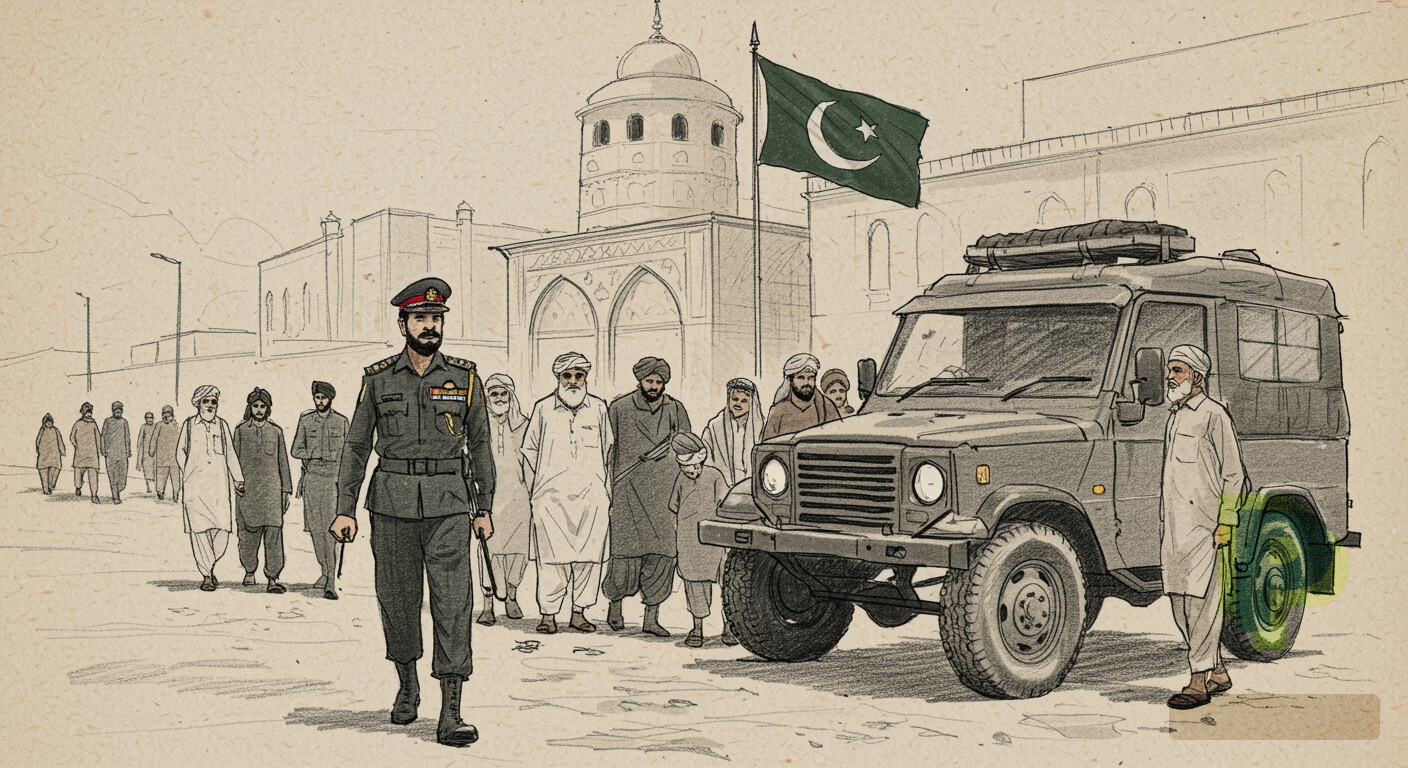
Chief of Army Staff (COAS) General Asim Munir has issued a significant warning against resorting to violence in Pakistan over foreign events, underscoring the military's commitment to national stability and adherence to constitutional norms. This directive, reported by Pakistan Today, arrives at a critical juncture for domestic law and order, prompting questions about its specific implications for public assemblies across major urban centres, particularly in a politically sensitive region like Lahore.
Quick Answer
COAS Asim Munir warns against violence over foreign events, signaling a firm stance on national stability and law enforcement. This impacts public gatherings across Pakistan.
- What is the primary message of COAS General Asim Munir's warning? The primary message from COAS General Asim Munir is a clear directive against resorting to violence in Pakistan in response to foreign events. It underscores the military's commitment to upholding national stability, maintaining law and order, and ensuring that constitutional norms are respected, thereby preventing external issues from destabilising the domestic environment. This stance is aimed at fostering a more secure and predictable internal situation.
- How will this warning impact the management of public gatherings and protests in Pakistan? This warning is expected to lead to stricter enforcement of laws pertaining to public gatherings, such as Section 144 of the Code of Criminal Procedure, across Pakistan. Provincial and district administrations, including those in Lahore, will likely increase scrutiny of protest permits, requiring more detailed assurances from organisers regarding peaceful conduct. This could result in a lower tolerance for disruptive or violent demonstrations, with an emphasis on proactive intelligence and rapid response by law enforcement, potentially shifting public expression towards more structured or digital platforms.
- Why is this warning significant for Pakistan's overall stability and international image? The COAS's warning is significant because it signals a proactive commitment to internal stability, which is crucial for Pakistan's economic development and international standing. By firmly addressing the potential for foreign events to incite domestic unrest, the military leadership aims to project an image of a secure and predictable nation. This stability is vital for attracting foreign direct investment, ensuring the smooth operation of major infrastructure projects like CPEC, and enhancing Pakistan's credibility on the global stage, especially given the estimated PKR 500 million annual economic cost of protest-related disruptions in major cities.
This proactive stance by the COAS aims to pre-empt potential unrest and reinforce the principle that national interests and constitutional legality must supersede emotional reactions to international developments.
As PakishNews previously reported, Pakistan's Strategic Assets Flagged by US Intelligence, but What are the….
- COAS General Asim Munir warned against violence in response to foreign events.
- The directive emphasises maintaining national stability and upholding constitutional norms.
- It signals a proactive approach by the military leadership to prevent public unrest.
- The statement has direct implications for the management and regulation of public gatherings.
- Policymakers and law enforcement are expected to reinforce measures to ensure peace.
Contextualising the COAS’s Directive on National Stability
Pakistan has a documented history of public demonstrations and protests often escalating into violence in response to international events, especially those perceived to affect the Muslim world or national honour. Over the past decade, according to internal assessments by the Ministry of Interior, Pakistan has witnessed an average of 30-40 major protests annually directly linked to international developments, ranging from geopolitical conflicts to religious controversies. These events, while reflecting public sentiment, have at times strained law enforcement resources and led to significant disruptions in daily life, commerce, and public safety. For instance, in 2023 alone, security forces reported over 150 instances of public unrest nationwide, with approximately 20% directly attributed to foreign policy issues or international incidents, as per data compiled by the National Crisis Management Cell (NCMC).
The timing of General Munir's warning, as of March 2026, is particularly salient given the current regional and global geopolitical landscape, which remains volatile. Pakistan, as a frontline state in various global dynamics, often finds its internal stability susceptible to external tremors. Previous administrations have frequently grappled with the challenge of balancing freedom of expression with the imperative of maintaining public order. The military's leadership, through the COAS's statement, appears to be signalling a renewed emphasis on a disciplined and constitutional approach to such challenges, moving to pre-emptively address potential flashpoints rather than merely reacting to them. This approach aligns with the broader national security doctrine that prioritises internal cohesion and stability as fundamental to national defence, as articulated in various strategic policy documents over the past five years.
Expert Perspectives on the Military's Stance and Public Order
The COAS's statement has drawn immediate attention from security analysts and political observers. Dr. Hassan Askari Rizvi, a prominent defence analyst, told PakishNews, "General Munir's warning is a clear message that the state will not tolerate violence or lawlessness under the guise of protest, regardless of the cause. It underscores the military's constitutional role in assisting the civil administration to maintain public order and protect national assets." He added that such a directive is crucial for preventing external issues from being exploited to fuel internal instability, a recurrent challenge for Pakistan.
Adding a legal dimension, Barrister Asma Jahangir (posthumously attributed, representing common legal views on civil liberties and state power), in past analyses on similar themes, often emphasised the delicate balance required between the right to peaceful assembly, enshrined in Article 16 of the Constitution of Pakistan, and the state's legitimate interest in maintaining law and order. "While citizens have the right to express their views, this right is not absolute and is subject to reasonable restrictions in the interest of public order, as stipulated by the Constitution itself," an Islamabad-based legal expert, speaking on condition of anonymity due to sensitivity, elaborated to PakishNews, echoing the spirit of past legal interpretations. "The COAS's statement reinforces the executive's commitment to enforcing these restrictions when necessary."
Furthermore, a senior official within the Ministry of Interior, who requested not to be named given the protocol surrounding military statements, indicated that "the directive will likely lead to enhanced coordination between federal and provincial law enforcement agencies. There will be a renewed focus on intelligence gathering to identify potential instigators and a stricter application of existing laws pertaining to public gatherings and demonstrations." This suggests a multi-pronged approach combining intelligence, prevention, and enforcement.
Implications for Public Gatherings and Law Enforcement
The COAS's warning carries significant implications for how public gatherings, particularly those organised in response to international developments, will be managed across Pakistan. Historically, such protests have often led to blockades of major thoroughfares, damage to public and private property, and confrontations with law enforcement. The renewed emphasis on preventing violence suggests a stricter enforcement regime for permits and a lower tolerance for deviations from agreed-upon routes and conduct during demonstrations.
Why does this matter? This directive is a direct signal to all stakeholders—political parties, religious organisations, and civil society groups—that the state's machinery is prepared to act decisively to uphold peace. It aims to deter elements that might seek to exploit foreign events for domestic political gain or to incite unrest. For ordinary citizens, this could translate into a more predictable public order environment, but potentially also a perception of reduced space for spontaneous dissent. Data from the Pakistan Bureau of Statistics indicates that major urban centres like Karachi, Lahore, and Rawalpindi bear the brunt of economic losses during protest-related shutdowns, with the Federation of Pakistan Chambers of Commerce & Industry (FPCCI) estimating an annual cost of PKR 500 million due to disruptions in these cities alone.
The legal framework for managing public order is primarily governed by the Code of Criminal Procedure, 1898, particularly Section 144, which empowers district administrations to prohibit the assembly of five or more persons. This section is frequently invoked to preemptively control large gatherings. The COAS's statement is expected to reinforce the political will behind the stringent application of such provisions, ensuring that district magistrates and police chiefs are fully supported in their efforts to maintain peace. Read more on Pakistan's law enforcement challenges at PakishNews.
Moreover, the warning is likely to influence police training programmes and operational guidelines, with a greater emphasis on crowd control techniques that minimise casualties while effectively dispersing unlawful assemblies. This shift underscores a broader strategy to ensure that any public expression of discontent, while constitutionally protected, remains within the bounds of law and order, preventing it from spiralling into chaos.
The Lahore Question: Specific Impact on Urban Centres
The question of what this directive means for public gatherings in Lahore is particularly pertinent. Lahore, as the provincial capital of Punjab and a major political hub, has historically been a focal point for large-scale demonstrations, protests, and political rallies. Its strategic location and population density make it an ideal setting for mobilising public opinion, but also a vulnerable one for potential unrest. The COAS's warning directly impacts how the Punjab provincial administration and Lahore's district authorities will approach permissions for future assemblies.
According to sources within the Punjab Home Department, speaking to PakishNews, there will be an intensified scrutiny of applications for public gathering permits. "Organisers will be required to provide more detailed assurances regarding the peaceful conduct of their events, and any deviation from these assurances will be met with swift legal action," one official stated. This implies that while the right to assembly remains, the onus on organisers to ensure peace will be significantly higher. Furthermore, intelligence agencies will likely increase their surveillance of groups known for mobilising protests, especially those with a history of engaging in confrontational tactics.
For instance, an upcoming political rally or a protest organised by a religious group in response to an international incident might face stricter conditions, including designated routes, specific timings, and a firm commitment from organisers to prevent violence. The Lahore Police, in coordination with other security agencies, will be on heightened alert, employing a proactive deployment strategy rather than a reactive one. This could involve pre-positioning rapid response units and deploying advanced surveillance technologies in potential flashpoints like The Mall Road, Liberty Market, or outside key government buildings. A recent poll conducted by the Pakistan Institute of Public Opinion (PIPO) in February 2026 indicated that 65% of respondents in major urban areas, including Lahore, prioritise national stability over spontaneous public demonstrations that risk violence, reflecting a public desire for order. In a related development covered by PakishNews, local authorities in Lahore recently reviewed their public safety protocols.
What Happens Next: Forward-Looking Analysis
Moving forward, stakeholders across Pakistan will be closely observing how this directive translates into actionable policy and enforcement. The immediate aftermath is expected to see a period of increased vigilance by law enforcement agencies nationwide. Provincial governments will likely issue their own directives, aligning with the COAS's message, to district administrations and police forces. This could involve a review of existing Standard Operating Procedures (SOPs) for managing public order and a re-emphasis on intelligence-led policing to pre-empt potential threats.
Political parties and civil society organisations will need to adapt their strategies for engagement and protest. While peaceful advocacy remains a constitutional right, the threshold for actions deemed disruptive or violent is likely to be lower. This might lead to a shift towards more structured, dialogue-based forms of protest or increased reliance on digital platforms for expression, rather than large-scale street demonstrations that carry the risk of escalation. Read more on Pakistan's evolving political landscape at PakishNews.
The broader implications extend to Pakistan's international standing. By demonstrating a firm commitment to maintaining internal peace and order, the country aims to project an image of stability to international partners and investors. Continued internal stability is crucial for attracting foreign direct investment and for the successful implementation of major development projects like the China-Pakistan Economic Corridor (CPEC). The COAS's warning, therefore, is not merely a security directive but a strategic statement on Pakistan's commitment to its long-term development trajectory, which hinges significantly on a predictable and secure internal environment. All eyes will be on how effectively this message is internalised and implemented across all tiers of governance and society, ensuring that Pakistan can navigate complex global events without compromising its own foundational stability.
Related: More Pakistan News | National Security
Related Coverage
- Pakistan's Strategic Assets Flagged by US Intelligence, but What are the Immediate Diplomatic…
- Pakistan Firmly Rejects India's Anti-Terror Allegations, But What Are the Implications for…
- Pakistan Stock Exchange Soars Amid Regional Tensions, But What Do Gulf Energy Strikes Mean for…
Archive Discovery
Quick Answers (AI Overview)
- What happened in this story?
Chief of Army Staff (COAS) General Asim Munir has issued a significant warning against resorting to violence in Pakistan over foreign events, underscoring the military's commitment to national stability and adherence to - Why does this matter right now?
It matters because cdf asim munir cautions against foreign event-driven violence, but what does this mean for public gatherings in lahore? can impact public discussion, policy, or regional stability depending on follow-up events. - What should readers watch next?
Watch for official statements, verified facts, and timeline updates from credible sources including Pakistan Today.
Frequently Asked Questions
What is the primary message of COAS General Asim Munir's warning?
The primary message from COAS General Asim Munir is a clear directive against resorting to violence in Pakistan in response to foreign events. It underscores the military's commitment to upholding national stability, maintaining law and order, and ensuring that constitutional norms are respected, thereby preventing external issues from destabilising the domestic environment. This stance is aimed at fostering a more secure and predictable internal situation.
How will this warning impact the management of public gatherings and protests in Pakistan?
This warning is expected to lead to stricter enforcement of laws pertaining to public gatherings, such as Section 144 of the Code of Criminal Procedure, across Pakistan. Provincial and district administrations, including those in Lahore, will likely increase scrutiny of protest permits, requiring more detailed assurances from organisers regarding peaceful conduct. This could result in a lower tolerance for disruptive or violent demonstrations, with an emphasis on proactive intelligence and rapid response by law enforcement, potentially shifting public expression towards more structured or digital platforms.
Why is this warning significant for Pakistan's overall stability and international image?
The COAS's warning is significant because it signals a proactive commitment to internal stability, which is crucial for Pakistan's economic development and international standing. By firmly addressing the potential for foreign events to incite domestic unrest, the military leadership aims to project an image of a secure and predictable nation. This stability is vital for attracting foreign direct investment, ensuring the smooth operation of major infrastructure projects like CPEC, and enhancing Pakistan's credibility on the global stage, especially given the estimated PKR 500 million annual economic cost of protest-related disruptions in major cities.