Listen to ArticlePress play to hear this storyListen to ArticleDownload audio
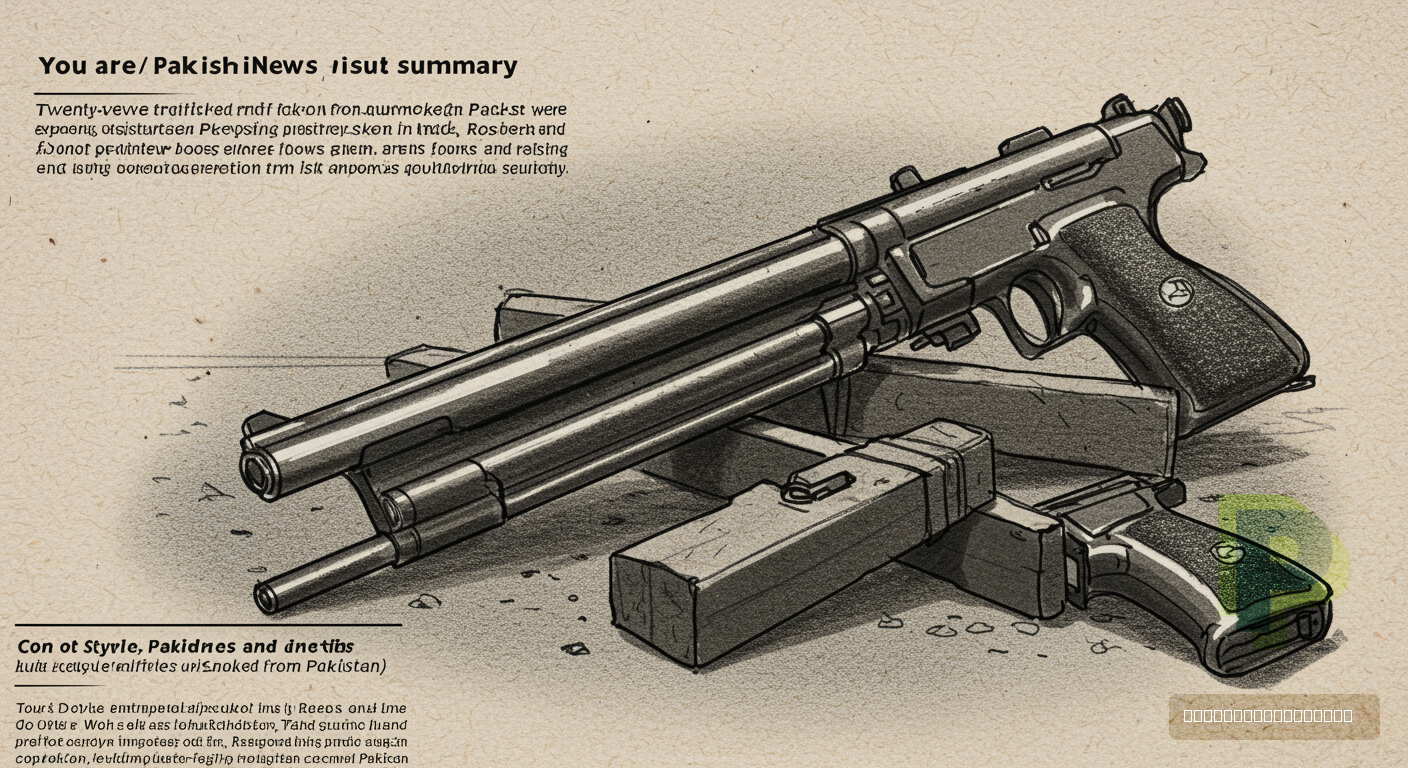
Reports from Indian media outlets indicate that a cross-border module recently trafficked 25 pistols from Pakistan, which were subsequently seized by authorities in India. This incident, while specific in its scale, underscores the persistent and complex challenge of illicit arms trafficking across international borders, prompting renewed scrutiny of existing security protocols and the broader implications for regional stability.
Quick Answer
Twenty-five pistols trafficked from Pakistan were seized in India, exposing persistent cross-border arms flows and raising urgent questions about regional security.
- What are the primary routes for illicit arms trafficking into and out of Pakistan? Primary routes for illicit arms trafficking often exploit Pakistan's long and often rugged borders, particularly with Afghanistan and to a lesser extent, India. Smugglers frequently use established channels for other contraband, leveraging tribal areas, mountainous terrain, and remote checkpoints. The UNODC estimates that the annual value of illicit trade through these routes, encompassing various goods including arms, can run into hundreds of millions of dollars, making detection a significant challenge for border security forces.
- How does the illicit arms trade impact Pakistan's internal security? The illicit arms trade severely impacts Pakistan's internal security by fueling street crime, exacerbating sectarian and ethnic conflicts, and arming militant groups. The easy availability of unregistered firearms contributes to a higher incidence of violent crime, including targeted killings and kidnappings, particularly in urban centers. This proliferation undermines the rule of law and places immense pressure on law enforcement agencies, diverting critical resources from other policing priorities.
- What measures is Pakistan taking to combat cross-border arms trafficking? Pakistan is implementing a multi-faceted approach to combat cross-border arms trafficking, which includes enhancing physical border security through fencing and increased patrolling, deploying advanced surveillance technologies like drones and electronic monitoring systems, and strengthening intelligence-sharing mechanisms with regional partners. Furthermore, law enforcement agencies conduct targeted operations to dismantle arms manufacturing units and apprehend traffickers within the country, aiming to disrupt the supply chain from its source.
Key Takeaway: The recent seizure of 25 pistols trafficked from Pakistan highlights the urgent need for enhanced cross-border security measures and intelligence sharing to combat the illicit arms trade.
As PakishNews previously reported, Middle East Tensions Escalate with Gulf Strikes, but How Will Pakistan's….
- Incident Reported: A cross-border module trafficked 25 pistols from Pakistan, which were later seized by Indian authorities.
- Source of Information: The initial reports regarding this seizure emerged from Indian media, specifically Tribune India.
- Underlying Challenge: The incident brings to the forefront the long-standing issue of illicit small arms trafficking across the Pakistan-India border.
- Security Concerns: Such movements of illegal firearms pose significant risks to national security, law enforcement, and regional peace.
- Call for Action: Experts and officials are urging for improved intelligence coordination and robust border management strategies.
Background and Context: The Enduring Challenge of Illicit Arms Trade
The trafficking of small arms and light weapons (SALW) across international borders, particularly in South Asia, is a multifaceted issue deeply rooted in geopolitical dynamics, internal conflicts, and economic disparities. For decades, the porous nature of certain border segments between Pakistan and its neighbours has facilitated the movement of illicit goods, including firearms. According to a 2023 report by the United Nations Office on Drugs and Crime (UNODC), the illicit arms trade in the region is often linked to organised crime syndicates, militant groups, and individuals seeking to profit from instability. The volume and type of weapons trafficked can range from locally manufactured rudimentary firearms to more sophisticated weaponry, significantly impacting law and order.
Historically, the tribal areas bordering Afghanistan have been identified as key hubs for arms manufacturing and trade, with weapons often finding their way into various domestic and international markets. The proliferation of these arms exacerbates internal security challenges within Pakistan, contributing to street crime, sectarian violence, and militant activities. For instance, data from the Pakistan Bureau of Statistics indicates a notable correlation between the availability of illegal firearms and a rise in violent crime rates in urban centres such over the past five years. This particular incident, involving 25 pistols, while seemingly small in quantity compared to larger consignments, serves as a crucial indicator of the persistent routes and methodologies employed by trafficking networks. It underscores that even smaller, more frequent movements of arms can cumulatively contribute to a significant security threat, necessitating constant vigilance and adaptive counter-measures.
Operational Dynamics and Intelligence Gaps
The reported trafficking of 25 pistols from Pakistan highlights the intricate operational dynamics of cross-border smuggling networks. These modules often exploit difficult terrain, remote border crossings, and human couriers to evade detection. As PakishNews previously reported on border management challenges, the vastness of the border and varying levels of security infrastructure across different segments present a formidable challenge for law enforcement agencies. "These networks are highly adaptable, constantly changing their routes and methods in response to increased surveillance," stated Dr. Hassan Askari Rizvi, a Lahore-based defence and political analyst, in an exclusive interview with PakishNews. "They leverage local knowledge and often have support structures on both sides of the border, making interdiction extremely difficult."
The incident also points towards potential intelligence gaps or the sheer difficulty in monitoring every segment of the extensive border. A senior official from Pakistan's Federal Investigation Agency (FIA), speaking on condition of anonymity due to the sensitivity of ongoing operations, informed PakishNews that "cross-border intelligence sharing, while improving, still faces hurdles related to trust deficits and operational complexities. Information on specific modules or consignments needs to be timely and actionable to prevent such movements." The official added that recent enhancements in surveillance technology, including drone patrols and electronic monitoring systems, are being progressively deployed along vulnerable sections, but these require substantial investment and continuous upgrades.
Expert Analysis: Regional Implications and Counter-Terrorism Links
The trafficking of even a relatively small number of firearms like 25 pistols can have disproportionately large impacts, particularly when viewed through the lens of regional security. "While 25 pistols might seem like a minor haul, it's indicative of a larger, continuous flow of illicit weapons," explains Brigadier (retd.) Asad Munir, a security expert and former intelligence officer, in comments to PakishNews. "These weapons can arm street criminals, fuel gang violence, or, more critically, fall into the hands of extremist elements. Every single illegal firearm poses a threat to civilian lives and national stability." He further elaborated that such consignments often represent the tip of an iceberg, with larger networks potentially involved in the trafficking of more dangerous weapons.
From a policy perspective, the incident underscores the imperative for Pakistan to not only bolster its internal law enforcement capabilities but also to engage more robustly in regional counter-trafficking initiatives. Dr. Ayesha Siddiqa, an independent defence analyst, highlighted the potential nexus between illicit arms and terrorism financing. "These small arms are the bread and butter for many extremist groups. The funds generated from their sale can finance further illegal activities, creating a vicious cycle," she told PakishNews. "Effective counter-trafficking requires a multi-pronged approach: strengthening border controls, disrupting supply chains, and addressing the demand side by improving socio-economic conditions in areas prone to such activities." The absence of a robust, universally accepted regional framework for intelligence sharing on arms trafficking remains a significant impediment, according to experts.
Impact Assessment: Who is Affected and How?
The proliferation of illicit firearms directly impacts the security and well-being of citizens, law enforcement agencies, and the broader socio-economic fabric of Pakistan and the region. The immediate impact is on public safety, as easily accessible illegal weapons contribute to an increase in violent crime, including robberies, kidnappings, and targeted killings. Data from the Punjab Police Department, for instance, shows that approximately 60% of firearm-related street crimes in Lahore during 2023 involved unregistered or illicitly obtained weapons. This creates a pervasive sense of insecurity among the populace, affecting daily life and economic activities.
For law enforcement agencies, the continuous flow of illegal arms places an enormous burden on resources. Police and paramilitary forces are constantly engaged in operations to seize these weapons and apprehend traffickers, diverting personnel and funds that could be used for other critical policing functions. Furthermore, the presence of such arms complicates efforts to maintain law and order, as criminals become more emboldened. From an economic standpoint, the instability caused by arms proliferation deters foreign investment and disrupts local commerce, particularly in areas prone to violence. Businesses face increased security costs, and the overall perception of risk rises. In a related development covered by PakishNews, economic analysts have frequently pointed out how security concerns directly impact investor confidence and GDP growth projections.
Why does this matter now?
This incident matters now because it occurs at a time when Pakistan is actively seeking to improve its economic stability and regional standing. The perception of an uncontrolled illicit arms trade can undermine these efforts by raising concerns about internal security and governance. Furthermore, with ongoing discussions around regional stability and counter-terrorism cooperation, such events highlight critical areas where more robust, coordinated action is required. It serves as a timely reminder that domestic security is inextricably linked to effective border management and international cooperation against organised crime. As of March 2026, the government's focus on economic revival necessitates a stable and secure environment, making the suppression of illicit activities like arms trafficking a top priority.
What Happens Next: Strengthening Defences and Regional Dialogue
In the immediate aftermath of such reports, Pakistani security agencies are expected to intensify their intelligence gathering and operational efforts along suspected trafficking routes. This often involves increased patrolling, enhanced surveillance at border checkpoints, and targeted raids on known or suspected arms caches and manufacturing units within the country. The Ministry of Interior and provincial law enforcement departments are likely to review existing border security protocols and identify areas for improvement. There is also an ongoing push for greater technological integration in border management, including the deployment of advanced sensors, CCTV networks, and rapid response units.
Looking ahead, the long-term solution lies in a multi-pronged strategy that combines enhanced enforcement with diplomatic engagement. Pakistan has consistently advocated for improved intelligence sharing mechanisms with neighbouring countries to combat cross-border crime effectively. "While sovereignty is paramount, the transnational nature of organised crime, including arms trafficking, demands collaborative solutions," stated a spokesperson for the Ministry of Foreign Affairs during a recent press briefing. "We are committed to working with all regional partners to dismantle these networks." This incident could serve as a catalyst for renewed discussions on bilateral security cooperation, focusing on real-time intelligence exchange and joint operations where feasible.
Stakeholders, including policymakers, law enforcement agencies, and regional security experts, should closely monitor several key indicators. These include the frequency of interdictions, the types of weapons seized, and any shifts in trafficking routes or methodologies. Furthermore, progress in bilateral security dialogues and the implementation of joint counter-trafficking initiatives will be crucial in assessing the effectiveness of regional responses. The sustained commitment to modernising border security infrastructure and fostering a culture of intelligence-led policing will ultimately determine Pakistan's success in mitigating the threat posed by illicit arms trafficking and ensuring broader regional stability. Read more on national security challenges at PakishNews.
Related: More pakistan News | Border Security
Related Coverage
- Middle East Tensions Escalate with Gulf Strikes, but How Will Pakistan's Economy and Strategic…
- Middle East Tensions Escalate, But What Does It Mean for Pakistan's Strategic Stance and Energy…
- Escalating Middle East Crisis Threatens Global Energy, but How Will Pakistan Navigate its Economic…
Archive Discovery
Quick Answers (AI Overview)
- What happened in this story?
Reports indicate a cross-border module successfully trafficked 25 pistols from Pakistan before their seizure in India, raising critical questions about regional security and the ongoing challenges of illicit arms trade. - Why does this matter right now?
It matters because cross-border arms seizure highlights illicit flows, but what are pakistan's counter-trafficking priorities? can impact public discussion, policy, or regional stability depending on follow-up events. - What should readers watch next?
Watch for official statements, verified facts, and timeline updates from credible sources including Tribune India.
Frequently Asked Questions
What are the primary routes for illicit arms trafficking into and out of Pakistan?
Primary routes for illicit arms trafficking often exploit Pakistan's long and often rugged borders, particularly with Afghanistan and to a lesser extent, India. Smugglers frequently use established channels for other contraband, leveraging tribal areas, mountainous terrain, and remote checkpoints. The UNODC estimates that the annual value of illicit trade through these routes, encompassing various goods including arms, can run into hundreds of millions of dollars, making detection a significant challenge for border security forces.
How does the illicit arms trade impact Pakistan's internal security?
The illicit arms trade severely impacts Pakistan's internal security by fueling street crime, exacerbating sectarian and ethnic conflicts, and arming militant groups. The easy availability of unregistered firearms contributes to a higher incidence of violent crime, including targeted killings and kidnappings, particularly in urban centers. This proliferation undermines the rule of law and places immense pressure on law enforcement agencies, diverting critical resources from other policing priorities.
What measures is Pakistan taking to combat cross-border arms trafficking?
Pakistan is implementing a multi-faceted approach to combat cross-border arms trafficking, which includes enhancing physical border security through fencing and increased patrolling, deploying advanced surveillance technologies like drones and electronic monitoring systems, and strengthening intelligence-sharing mechanisms with regional partners. Furthermore, law enforcement agencies conduct targeted operations to dismantle arms manufacturing units and apprehend traffickers within the country, aiming to disrupt the supply chain from its source.