
Listen to ArticlePress play to hear this storyListen to ArticleDownload audio
France Names Next Carrier 'France Libre', But How Will Europe's Largest Warship Reshape Gulf Maritime Security?
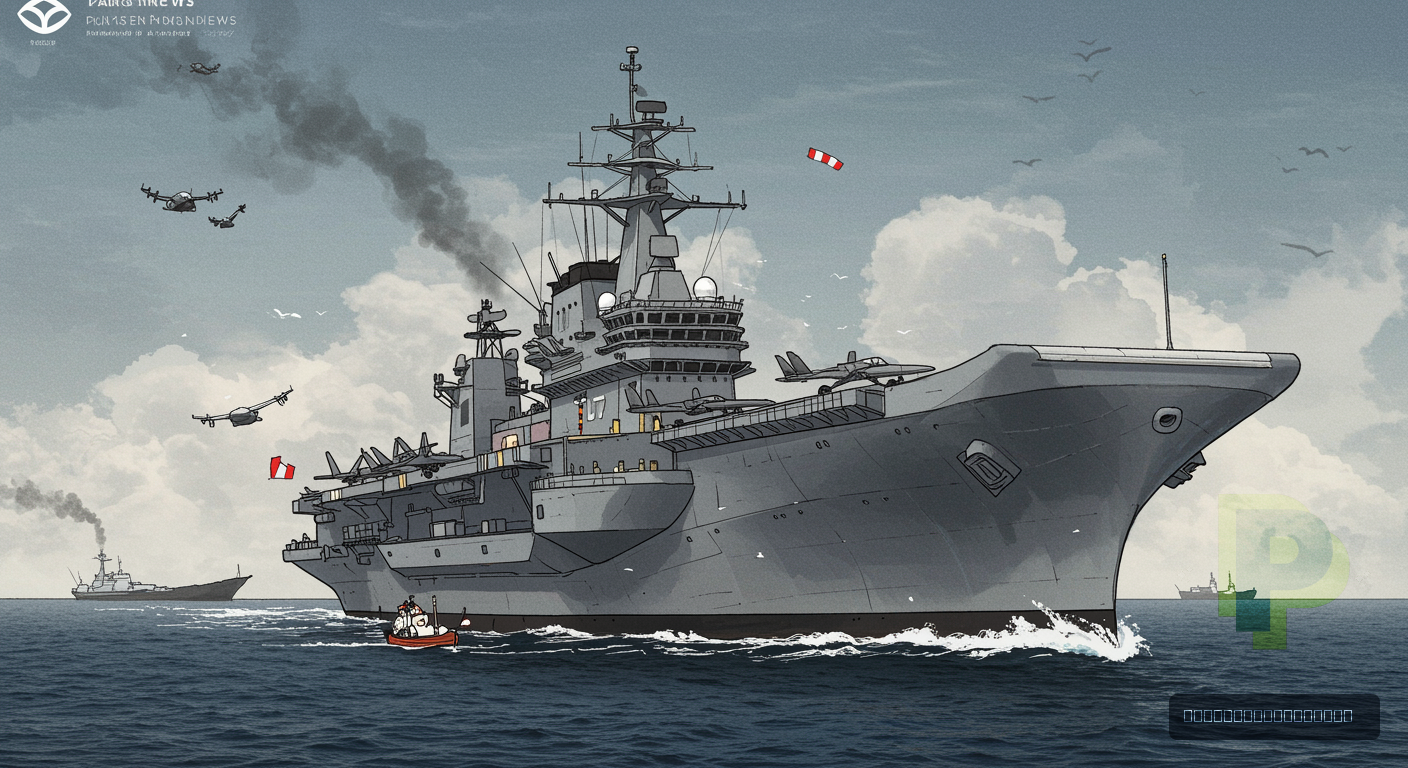
President Emmanuel Macron has officially named France's next-generation nuclear-powered aircraft carrier 'France Libre', a move set to bolster the nation's naval power and project influence far beyond its immediate shores. This colossal vessel, slated for service in 2038, will be the largest warship ever built in Europe, marking a significant strategic upgrade for a key global player. The naming honours the French Resistance movement of World War II, symbolising enduring national resilience and ambition. The 'France Libre' is poised to replace the venerable Charles de Gaulle, a carrier that has for decades served as the cornerstone of French naval projection, including operations in the Indian Ocean and the Gulf.
Quick Answer
France names its next nuclear aircraft carrier 'France Libre', set to be Europe's largest. This strategic asset, due in 2038, will reshape maritime power in the Gulf and Indian Ocean, impacting regional trade and security.
- What is the strategic importance of the 'France Libre' aircraft carrier for global maritime security? The 'France Libre' is designed to be the largest warship in Europe, displacing around 75,000 tonnes and capable of carrying 30-32 next-generation fighter jets. Its nuclear propulsion grants it virtually unlimited range and endurance, allowing France to project power and maintain a sustained presence in critical maritime zones like the Indian Ocean and the Gulf for extended periods. This enhances global stability by contributing to anti-piracy operations, ensuring freedom of navigation, and providing rapid crisis response capabilities, as highlighted by naval analysts from the International Institute for Strategic Studies.
- How will the 'France Libre' impact Pakistan's maritime security concerns? For Pakistan, the 'France Libre's' future deployments in the Indian Ocean Region (IOR) could offer both collaborative opportunities and strategic considerations. While the increased presence of a major naval asset like this can strengthen multinational efforts against piracy and illicit activities, it also necessitates Pakistan's continuous assessment of regional power dynamics and its own naval defence strategies. Rear Admiral (Retd.) Tariq Khan of the Pakistan Navy noted that such developments require careful consideration of long-term impacts on regional stability, even with friendly nations.
- What technological advancements does the 'France Libre' bring compared to its predecessor, the Charles de Gaulle? The 'France Libre' represents a significant technological leap from the Charles de Gaulle. It is much larger, allowing for greater aircraft capacity and improved operational flexibility. Crucially, it will be equipped to integrate next-generation naval aviation, including advanced fighter jets and drones, alongside sophisticated communication and surveillance systems, ensuring it remains a cutting-edge platform capable of adapting to future threats well into the latter half of the 21st century. Its nuclear propulsion system provides superior endurance, reducing the need for frequent refuelling and extending its operational reach.
The 'France Libre' aircraft carrier, named by President Macron, signifies a profound enhancement of French naval power, with its eventual deployment expected to have far-reaching implications for global maritime security, particularly in critical regions like the Gulf and the wider Indian Ocean.
As PakishNews previously reported, Gulf Announces Eid Dates Amid Pakistan-Afghanistan Truce, But What Are the….
- Naming & Significance: President Emmanuel Macron named France's next nuclear aircraft carrier 'France Libre' (Free France), honouring the French Resistance, reinforcing national pride and strategic autonomy.
- Scale & Capability: Set to enter service in 2038, it will be the largest warship built in Europe, replacing the Charles de Gaulle and significantly enhancing France's capacity for power projection.
- Strategic Intent: The vessel underscores France's ambition to remain a major maritime power and a key player in global security, maintaining its ability to operate independently or as part of alliances.
- Regional Implications: Its future deployment cycles are likely to impact the geopolitical landscape of the Indian Ocean and the Gulf, vital for global trade and energy security.
- Technological Leap: The nuclear-powered carrier represents a significant technological advancement, offering extended range, endurance, and operational flexibility compared to its predecessor.
The announcement, made on Wednesday, March 12, 2026, comes as global maritime security faces evolving challenges, from piracy and illicit trafficking to heightened geopolitical rivalries across key shipping lanes. For Pakistan, the UAE, and other Gulf states, the prospect of a more robust French naval presence in the Indian Ocean Region (IOR) carries both strategic opportunities and potential shifts in the regional balance of power. The 'France Libre' is not merely a replacement but an escalation in capability, designed to operate with greater autonomy and project power over vast distances, directly impacting the security calculus of nations along its potential operational routes.
A Legacy of Power Projection and Strategic Autonomy
The decision to name the carrier 'France Libre' resonates deeply with French history and its commitment to strategic independence. The Free French Forces, led by General Charles de Gaulle during World War II, symbolised resistance and the assertion of national sovereignty. According to a statement from the French Ministry of Defence, the naming reflects a continuity of this spirit, emphasising France's determination to maintain its defence capabilities and international standing. The vessel, designated as Porte-Avions Nouvelle Génération (PANG), is estimated to cost approximately €6 billion (approximately 1.8 trillion PKR or 23.7 billion AED), a figure confirmed by the French Parliament's defence budget reports in late 2025. Construction is slated to begin in 2025, with sea trials expected around 2036.
This development is particularly significant given France's historical and ongoing presence in the IOR, where it maintains overseas territories such as Réunion and Mayotte, alongside military bases like the one in Djibouti. As PakishNews previously reported on increasing naval activities in the Arabian Sea, France's investment in a new carrier signifies its long-term commitment to maritime power projection. The current Charles de Gaulle, operational since 2001, has frequently been deployed to the Gulf, the Arabian Sea, and the Mediterranean, participating in anti-terrorism operations and international exercises. Its replacement, designed to be considerably larger and more advanced, will amplify this capacity.
“The ‘France Libre’ represents a generational leap in French naval capability, moving from a 42,000-tonne carrier to one displacing around 75,000 tonnes,” stated Dr. Antoine Dubois, a Senior Naval Analyst at the International Institute for Strategic Studies (IISS) in London, during a recent security conference. “This isn't just about size; it’s about increased aircraft capacity, greater endurance, and the ability to project power with fewer logistical constraints. For a nation like France, which values its strategic autonomy, this is a cornerstone asset.” Dr. Dubois further elaborated that the PANG will be capable of carrying approximately 30-32 next-generation fighter jets, likely a mix of Dassault Rafale M and the future Franco-German-Spanish Future Combat Air System (FCAS), a significant increase from the Charles de Gaulle's typical complement of 24 Rafales.
Why Does This Matter? Geopolitical Ripples Across the Gulf
The introduction of the 'France Libre' into service by 2038 holds substantial implications for the broader geopolitical and maritime security landscape, especially for the Gulf Cooperation Council (GCC) states and Pakistan. The Gulf region, a crucible of global energy and trade, relies heavily on the security of its sea lanes, including the Strait of Hormuz and the Bab-el-Mandeb. Any enhancement of major naval power in the IOR directly affects the balance of influence and the capacity for crisis response.
“The arrival of a carrier of the ‘France Libre’s’ magnitude offers both reassurance and challenges,” commented Mr. Abdullah Al-Mansoori, Director of Maritime Security Research at the Emirates Policy Centre in Abu Dhabi. “On one hand, it signals a robust commitment from a key Western ally to maintaining stability in a region vital for global commerce. On the other, it adds another layer to the complex power dynamics already at play, requiring careful diplomatic navigation.” He added that the UAE, with its significant investments in port infrastructure and a growing blue economy, has a direct interest in stable and secure maritime routes, making such developments a critical point of observation for policymakers in Dubai and Abu Dhabi.
For Pakistan, a nation with a strategic coastline along the Arabian Sea and a deep-water port at Gwadar, the implications are multi-faceted. The presence of advanced naval assets from extra-regional powers can contribute to counter-piracy efforts and enhance disaster response capabilities, areas where Pakistan has actively participated in multinational initiatives. However, it also necessitates a re-evaluation of national maritime defence strategies and diplomatic engagements. “Pakistan’s naval doctrine prioritises the security of its sea lines of communication and its Exclusive Economic Zone,” stated Rear Admiral (Retd.) Tariq Khan, a former Commander of the Pakistan Navy Fleet, in an exclusive interview with PakishNews. “While France is a friendly nation, any significant increase in foreign naval power in our neighbourhood requires us to assess the long-term impact on regional stability and our own strategic interests. Collaboration in maritime security, however, could be enhanced.”
Impact Assessment: Trade, Defence, and Regional Alliances
The 'France Libre' will bolster France's ability to project air and naval power, providing a flexible platform for a range of missions from humanitarian aid and disaster relief to combat operations and intelligence gathering. This capability will be particularly relevant for the security of critical maritime choke points. The Suez Canal, through which approximately 12% of global trade passes annually, and the Strait of Hormuz, responsible for around 20% of the world's petroleum liquids consumption, are directly impacted by the stability of the IOR.
Economically, the enhanced stability that a carrier group can provide to shipping lanes is invaluable. According to data from the Dubai Chamber of Commerce and Industry, maritime trade through the Gulf alone accounts for trillions of dollars annually. Disruptions, such as those caused by piracy or regional conflicts, can lead to significant increases in insurance premiums and shipping costs, directly impacting the economies of Pakistan and the UAE, both heavily reliant on international trade. A more robust French presence could act as a deterrent to such disruptions, potentially lowering these costs over time.
From a defence perspective, the PANG will be a critical asset for NATO and other allied operations. Its nuclear propulsion offers virtually unlimited range, allowing it to sustain operations far from home ports for extended periods, unlike conventional carriers that require frequent refuelling. This endurance means that when deployed to the IOR, the 'France Libre' can remain on station longer, providing continuous air support and surveillance. This extended reach could facilitate deeper engagement with regional navies, including those of Pakistan and the UAE, through joint exercises and information sharing, potentially enhancing collective maritime security capabilities. Read more on UAE's growing maritime defence capabilities at PakishNews.
What Happens Next: A Shifting Naval Landscape
The unveiling of the 'France Libre' marks the beginning of a long journey before its operational deployment. The next decade will see intensive construction, outfitting, and rigorous sea trials. During this period, France will also be working on integrating the next generation of naval aviation, including drones and advanced communication systems, into the carrier's operations. This technological integration is crucial, as the PANG is designed to be a future-proof platform, capable of adapting to evolving threats and technologies well into the latter half of the 21st century.
Stakeholders in Pakistan and the Gulf should closely monitor France's naval doctrine and deployment patterns in the coming years. While the 'France Libre' is still over a decade away from full service, its strategic planning and future operational areas are already being considered. The French Navy’s continued participation in multinational exercises, such as AMAN hosted by Pakistan, and engagements with the Combined Maritime Forces (CMF) headquartered in Bahrain, will offer early indicators of how this new capability will be integrated into regional security frameworks. The ongoing dialogue between France and regional powers, including the UAE and Saudi Arabia, on defence cooperation will also be critical in shaping the 'France Libre's' role in maintaining freedom of navigation and regional stability.
The ‘France Libre’ represents a significant investment in France’s long-term global influence and its commitment to a rules-based international order. For the nations of the Gulf and Pakistan, its emergence onto the world stage will necessitate a nuanced understanding of its operational potential and the opportunities it presents for collaborative security efforts in a region that remains central to global strategic interests. As of March 2026, the global maritime domain is in constant flux, and the addition of Europe's largest warship will undoubtedly be a defining feature of its evolution. In a related development covered by PakishNews, UAE and France recently deepened defence ties, highlighting the ongoing strategic partnerships in the region.
Related: More Pakistan Defence News | UAE Maritime Security
Related Coverage
- Gulf Announces Eid Dates Amid Pakistan-Afghanistan Truce, But What Are the Immediate Implications…
- Interpol Clears British-Pakistani Businessman, Raising Questions for Pakistan's Referral Protocols
- Pakistan Grapples with Eid Ceasefire and Oil Crisis, but What are the Broader Economic and Security…
Archive Discovery
Quick Answers (AI Overview)
- What happened in this story?
President Emmanuel Macron has officially named France's next-generation nuclear-powered aircraft carrier 'France Libre', a move set to bolster the nation's naval power and project influence far beyond its immediate shore - Why does this matter right now?
It matters because france names next carrier 'france libre', but how will europe's largest warship reshape gulf maritime security? can impact public discussion, policy, or regional stability depending on follow-up events. - What should readers watch next?
Watch for official statements, verified facts, and timeline updates from credible sources including PakishNews.
Frequently Asked Questions
What is the strategic importance of the 'France Libre' aircraft carrier for global maritime security?
The 'France Libre' is designed to be the largest warship in Europe, displacing around 75,000 tonnes and capable of carrying 30-32 next-generation fighter jets. Its nuclear propulsion grants it virtually unlimited range and endurance, allowing France to project power and maintain a sustained presence in critical maritime zones like the Indian Ocean and the Gulf for extended periods. This enhances global stability by contributing to anti-piracy operations, ensuring freedom of navigation, and providing rapid crisis response capabilities, as highlighted by naval analysts from the International Institute for Strategic Studies.
How will the 'France Libre' impact Pakistan's maritime security concerns?
For Pakistan, the 'France Libre's' future deployments in the Indian Ocean Region (IOR) could offer both collaborative opportunities and strategic considerations. While the increased presence of a major naval asset like this can strengthen multinational efforts against piracy and illicit activities, it also necessitates Pakistan's continuous assessment of regional power dynamics and its own naval defence strategies. Rear Admiral (Retd.) Tariq Khan of the Pakistan Navy noted that such developments require careful consideration of long-term impacts on regional stability, even with friendly nations.
What technological advancements does the 'France Libre' bring compared to its predecessor, the Charles de Gaulle?
The 'France Libre' represents a significant technological leap from the Charles de Gaulle. It is much larger, allowing for greater aircraft capacity and improved operational flexibility. Crucially, it will be equipped to integrate next-generation naval aviation, including advanced fighter jets and drones, alongside sophisticated communication and surveillance systems, ensuring it remains a cutting-edge platform capable of adapting to future threats well into the latter half of the 21st century. Its nuclear propulsion system provides superior endurance, reducing the need for frequent refuelling and extending its operational reach.