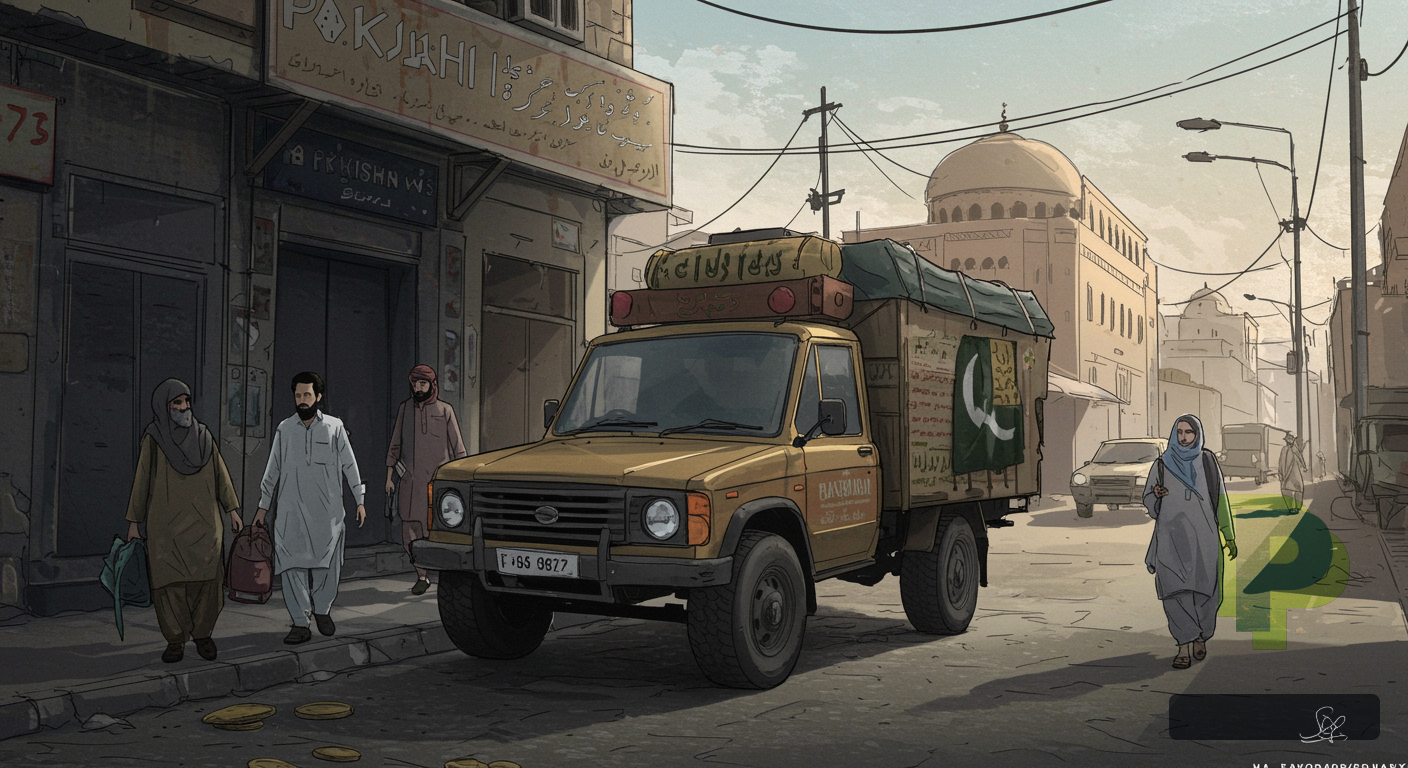
Pakistan finds itself at a critical juncture, navigating the complex interplay of escalating geopolitical tensions in the Gulf and their immediate, tangible impact on its domestic economic landscape. As of March 19, 2026, a confluence of events – ranging from direct attacks on Gulf energy infrastructure to stark warnings from global powers – is creating significant ripples, pushing Pakistan's financial markets downwards and heightening fears of inflation, directly affecting the daily lives of millions.
Quick Answer
Gulf tensions are hitting Pakistan's economy hard: stock market dips, inflation fears rise, and international departures drop by 50% as regional unrest impacts livelihoods.
- How is the escalating Gulf conflict directly impacting Pakistan's economy? The escalating Gulf conflict directly impacts Pakistan's economy primarily through rising global oil prices, which fuel domestic inflation and increase import bills for a net oil importer like Pakistan. This has led to a significant drop in the Pakistan Stock Exchange by over 28,000 points and has also caused a nearly 50% fall in international departures, threatening vital remittance inflows from Pakistani expatriates in the Gulf region. This economic pressure is keenly felt by ordinary citizens, with delivery riders, for example, experiencing squeezed earnings as Eid approaches.
- Why are Pakistan's international departures falling amidst regional unrest? Pakistan's international departures are falling by nearly 50% due to the increased regional unrest and perceived instability in Gulf countries, which are primary destinations for Pakistani workers seeking employment. The 'Iran war' and its associated tensions create an environment of uncertainty, leading to reduced job opportunities, travel restrictions, or a general reluctance among Pakistanis to migrate for work. This trend significantly impacts Pakistan's economy by reducing foreign exchange earnings from remittances, which stood at approximately $30 billion in the fiscal year 2024-25, according to the State Bank of Pakistan.
- What is Pakistan's diplomatic stance on the escalating Gulf tensions? Pakistan maintains a delicate diplomatic balance amidst escalating Gulf tensions, aiming to promote de-escalation and stability in a region crucial for its economic and security interests. Islamabad has strong historical and religious ties with both Iran and the Gulf Cooperation Council (GCC) states. Therefore, Pakistan typically advocates for peaceful resolutions through dialogue, avoiding alignment with any single party in regional disputes, as evidenced by its participation in ministerial meetings calling for an immediate halt to attacks in the Gulf. This approach is vital to safeguard its energy supplies, trade routes, and the welfare of its expatriate community.
- The State of Qatar has condemned recent Iranian targeting of energy facilities in Saudi Arabia and the UAE, calling for urgent de-escalation amidst rising regional conflict.
- The Pakistan Stock Exchange (PSX) experienced a significant drop of over 28,000 points, driven by profit booking and widespread inflation fears linked to surging global oil prices.
- International departures from Pakistan have fallen by nearly 50% as regional unrest impacts job opportunities and travel confidence, directly affecting remittance inflows.
- The economic squeeze from the ongoing Iran conflict is directly impacting the earnings of Pakistan’s informal sector, notably delivery riders preparing for Eid.
- A ministerial meeting, including regional stakeholders, has issued a collective demand for Iran to immediately and unconditionally halt attacks in the Gulf.
As PakishNews previously reported, Saudi-Hosted Ministerial Meeting Urges Iran to Halt Gulf Attacks, But What Does….
**Key Takeaway:** Escalating Gulf tensions, driven by the ongoing Iran conflict, are significantly impacting Pakistan's economy and social fabric, necessitating urgent policy responses from Islamabad.
### Regional Conflict Casts a Long Shadow Over Pakistan's Economy
The reverberations of the intensifying conflict in the Gulf are profoundly unsettling Pakistan’s economic stability. The Pakistan Stock Exchange (PSX) witnessed a dramatic downturn, shedding over 28,000 points in a single trading session due to what analysts at Pakistan Today described as aggressive profit booking. This sharp decline was further exacerbated by a surge in global oil prices, which, according to Daily Times, immediately fuelled inflation fears across the nation. Pakistan, a net importer of oil, is particularly vulnerable to such price shocks, as higher energy costs translate directly into increased expenses for businesses and consumers alike.
Beyond the formal financial markets, the economic strain is acutely felt in the informal sector. Reuters reported that Pakistan’s ubiquitous delivery riders, who typically anticipate a surge in earnings during the lead-up to Eid, are instead facing squeezed incomes. The ongoing 'Iran war' – a term increasingly used to describe the broader regional conflict involving Iranian-backed groups and responses from Gulf states – has disrupted supply chains and raised operational costs, directly impacting the livelihoods of these essential workers and their families. This highlights a critical vulnerability: how geopolitical distant conflicts translate into immediate, personal economic hardship for ordinary citizens.
Compounding these domestic pressures, Pakistan's international departures have plummeted by nearly 50%, according to Geo News. This significant reduction in outbound travel is directly attributed to the regional unrest, particularly in the Gulf states which are major destinations for Pakistani expatriate workers. The implications are far-reaching, potentially leading to a substantial decrease in remittances – a vital source of foreign exchange for Pakistan’s economy – and creating a backlog of job seekers domestically. As PakishNews previously reported on the critical role of remittances in Pakistan's economic stability, this decline represents a serious challenge.
### Background and Context: A Region on Edge
The current regional instability stems from a protracted period of heightened tensions involving Iran and its proxies, which have increasingly targeted critical energy infrastructure in the Gulf. Qatar’s condemnation of Iranian attacks on facilities in Saudi Arabia and the UAE, as reported by Gulf News, underscores the gravity of the situation. These attacks threaten global energy supplies, given the Gulf's central role in oil and gas production and transit. The escalating rhetoric, including former US President Donald Trump's threat, as reported by CNN, to “blow up” the world’s largest gas field if Tehran continues attacking Qatar, signals the potential for a far wider and more devastating conflict. This North Field, shared between Qatar and Iran, is a cornerstone of global liquefied natural gas (LNG) supply, and any disruption would have catastrophic implications for international energy markets.
For Pakistan, a nation strategically positioned at the crossroads of South Asia and the Middle East, the stability of the Gulf is paramount. Historically, millions of Pakistanis have sought employment opportunities in Saudi Arabia, the UAE, Qatar, and other GCC nations, sending home billions in remittances annually. Furthermore, Pakistan’s energy security is intrinsically linked to the Gulf, with a significant portion of its oil and gas imports originating from the region. Any prolonged conflict or disruption to shipping lanes, particularly the Strait of Hormuz, would directly impact Pakistan’s energy supply, inflation rates, and overall economic health. This delicate balance, which PakishNews has extensively covered regarding Pakistan's long-term energy strategy, is now under severe strain.
### Geopolitical Tensions and Pakistan's Strategic Stance
Amidst these regional dynamics, Pakistan's strategic defence capabilities have also entered international discourse. Tulsi Gabbard, a prominent American political figure, stated that Pakistan's missiles pose a ‘significant threat’ to the United States, as reported by Dawn. While such statements are often part of broader geopolitical assessments, they highlight the international community's awareness of Pakistan's strategic assets, particularly in a period of heightened global and regional instability. Pakistan's nuclear programme and missile capabilities are viewed domestically as a crucial deterrent and a cornerstone of its national defence doctrine. However, external perceptions, especially from major global powers, carry weight in diplomatic circles and can influence international relations and security dialogues.
The timing of Gabbard’s remarks is significant, coinciding with escalating tensions in a region where Pakistan maintains crucial diplomatic and economic ties. It underscores the complex security environment Pakistan operates within, where its defence posture is constantly scrutinized. The nation’s strategic stability is not only a domestic concern but also a factor in the broader regional security calculus. Meanwhile, diplomatic efforts to de-escalate the Gulf crisis are intensifying. A ministerial meeting, reported by News Desk, specifically called on Iran to ‘immediately and unconditionally’ halt its attacks in the Gulf. Pakistan, having deep historical and religious ties with both Iran and the GCC states, often finds itself in a delicate diplomatic position, advocating for peace and stability while safeguarding its own national interests. This balancing act is crucial for maintaining regional equilibrium and preventing further economic fallout.
### Expert Analysis on the Interconnected Challenges
“The current oil price spike, directly attributable to the Gulf conflict, is a double-edged sword for Pakistan,” stated Dr. Salman Shah, a former Finance Minister and seasoned economic analyst, in an interview with PakishNews. “While it benefits our oil marketing companies, the overwhelming impact is inflationary, pushing up transport, manufacturing, and food costs. This directly translates into higher import bills and puts immense pressure on our already fragile foreign exchange reserves. The PSX drop is a natural reaction of investors anticipating these economic headwinds.”
Ambassador (Retd.) Shamshad Ahmad Khan, a former Foreign Secretary of Pakistan, offered insights into the diplomatic challenges. “Pakistan’s foreign policy in the Gulf has always been about maintaining neutrality and promoting de-escalation. However, with direct attacks on Saudi and UAE energy facilities and the US threatening intervention in Qatar, Islamabad faces an unprecedented diplomatic tightrope. We cannot afford to alienate either side, given our deep economic and security interests. Our role must be to facilitate dialogue and advocate for a peaceful resolution, leveraging our strong bilateral ties.”
Mr. Asif Piracha, President of the Karachi Chamber of Commerce and Industry (KCCI), highlighted the business implications. “The fall in international departures is alarming. Our labour force in the Gulf sends back critical foreign exchange. Reduced opportunities there mean fewer remittances, less purchasing power at home, and increased unemployment pressures. Furthermore, disrupted shipping routes and higher insurance premiums due to regional insecurity directly impact our import-export trade, increasing costs for businesses and consumers alike. This environment discourages foreign direct investment, which Pakistan desperately needs.”
### Human Cost and Deepening Economic Vulnerabilities
The highest-value impact analysis reveals that the cumulative effect of these regional and economic pressures is most acutely felt by the common Pakistani citizen. The nearly 50% fall in international departures, as identified by Geo News, signifies more than just a statistic; it represents thousands of individuals whose dreams of economic betterment abroad are now on hold or shattered. This directly translates to reduced remittances flowing into Pakistani households, impacting consumption, savings, and investment at the grassroots level. Families dependent on these foreign earnings now face heightened uncertainty, particularly as Eid approaches, a period traditionally marked by increased spending and familial gatherings.
For delivery riders, whose daily earnings are directly linked to fuel prices and consumer demand, the 'Iran war' is not an abstract conflict but a tangible force squeezing their ability to provide for their families. The rising cost of petrol, coupled with potentially reduced consumer spending due to broader economic anxieties, means longer hours for less real income. This scenario exacerbates existing income inequalities and pushes more households towards financial precarity, undermining social stability. The combined pressures of inflation, reduced overseas opportunities, and a volatile stock market create a challenging environment for ordinary Pakistanis, who often lack the safety nets to absorb such shocks.
**Why does this matter?** The convergence of a volatile global energy market, a critical regional conflict on its western border, and a vulnerable domestic economy creates a complex challenge for Pakistan, impacting everything from national budget planning to the daily meals of its citizens. The ripple effects of Gulf instability are not just macroeconomic figures; they are felt in every household budget, every small business's ledger, and every family's future prospects.
### What Happens Next: Navigating a Turbulent Future
Looking ahead, Pakistan faces a multi-faceted challenge requiring robust policy responses. Economically, the government will need to implement measures to cushion the impact of rising oil prices and inflation, potentially through targeted subsidies or diversification of energy sources. Efforts to attract and retain foreign direct investment will become even more critical, despite the regional instability. Diplomatically, Islamabad will likely intensify its efforts to promote de-escalation in the Gulf, leveraging its historical ties to both Iran and the GCC states. The upcoming days will be crucial in observing whether the international calls for de-escalation yield any tangible results or if the conflict continues to spiral.
Stakeholders, including policymakers, business leaders, and informed citizens, should closely monitor global oil price trends, the trajectory of diplomatic engagements in the Gulf, and the Pakistani government's fiscal and monetary policy responses. The resilience of Pakistan's economy and its social fabric will depend heavily on a combination of astute governance, prudent economic management, and effective diplomacy to navigate these turbulent regional waters. Further escalation in the Gulf could significantly deepen Pakistan's economic woes, making long-term stability an increasingly elusive goal. Continued observation of regional security developments and their impact on global trade routes, especially for energy, remains paramount.
Related: More Pakistan Economy News | Gulf Security
Related Coverage
- Saudi-Hosted Ministerial Meeting Urges Iran to Halt Gulf Attacks, But What Does This Mean for…
- Pakistan's Missile Capabilities Misrepresented, says Jilani, but what does this signify for…
- CDF Asim Munir Cautions Against Foreign Event-Driven Violence, But What Does This Mean for Public…
Archive Discovery
Frequently Asked Questions
How is the escalating Gulf conflict directly impacting Pakistan's economy?
The escalating Gulf conflict directly impacts Pakistan's economy primarily through rising global oil prices, which fuel domestic inflation and increase import bills for a net oil importer like Pakistan. This has led to a significant drop in the Pakistan Stock Exchange by over 28,000 points and has also caused a nearly 50% fall in international departures, threatening vital remittance inflows from Pakistani expatriates in the Gulf region. This economic pressure is keenly felt by ordinary citizens, with delivery riders, for example, experiencing squeezed earnings as Eid approaches.
Why are Pakistan's international departures falling amidst regional unrest?
Pakistan's international departures are falling by nearly 50% due to the increased regional unrest and perceived instability in Gulf countries, which are primary destinations for Pakistani workers seeking employment. The 'Iran war' and its associated tensions create an environment of uncertainty, leading to reduced job opportunities, travel restrictions, or a general reluctance among Pakistanis to migrate for work. This trend significantly impacts Pakistan's economy by reducing foreign exchange earnings from remittances, which stood at approximately $30 billion in the fiscal year 2024-25, according to the State Bank of Pakistan.
What is Pakistan's diplomatic stance on the escalating Gulf tensions?
Pakistan maintains a delicate diplomatic balance amidst escalating Gulf tensions, aiming to promote de-escalation and stability in a region crucial for its economic and security interests. Islamabad has strong historical and religious ties with both Iran and the Gulf Cooperation Council (GCC) states. Therefore, Pakistan typically advocates for peaceful resolutions through dialogue, avoiding alignment with any single party in regional disputes, as evidenced by its participation in ministerial meetings calling for an immediate halt to attacks in the Gulf. This approach is vital to safeguard its energy supplies, trade routes, and the welfare of its expatriate community.