Listen to ArticlePress play to hear this storyListen to ArticleDownload audio
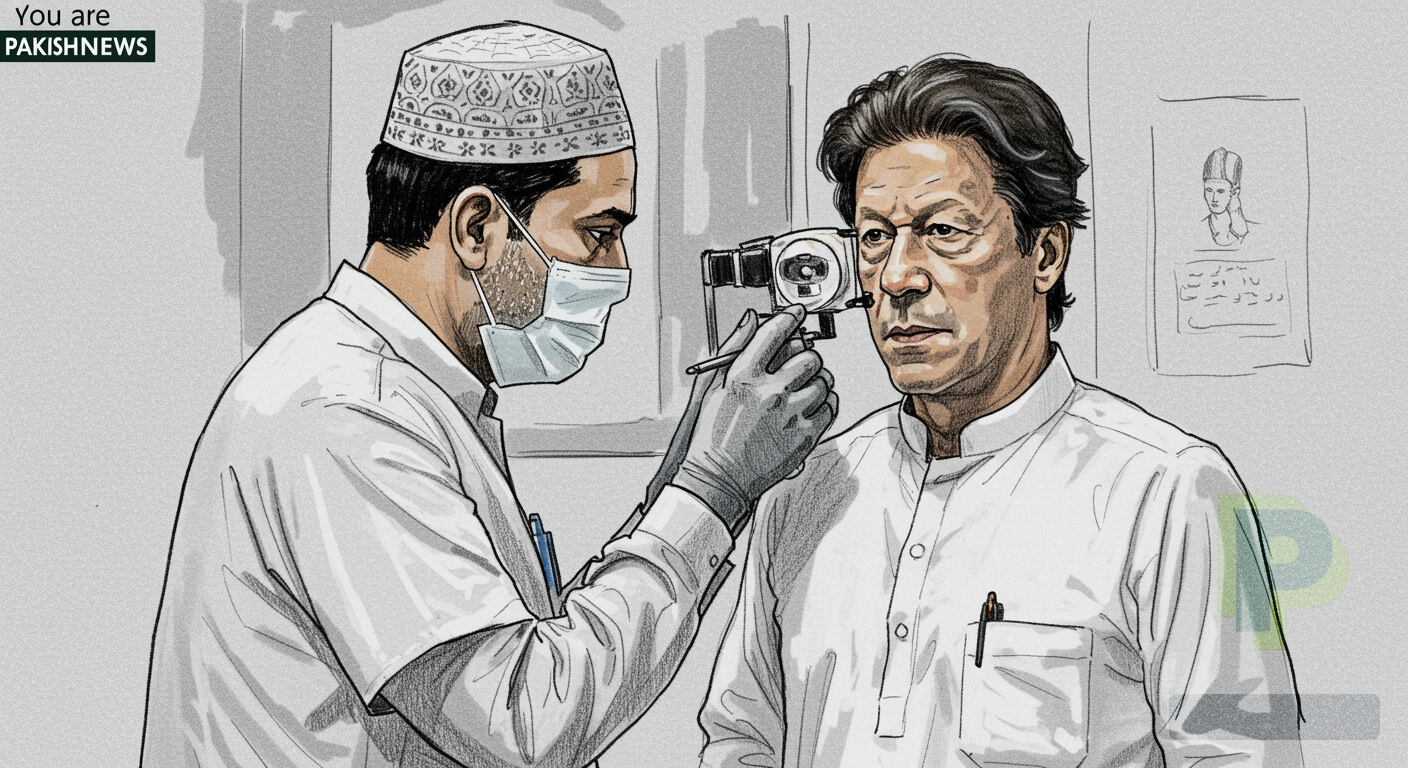
Former Prime Minister Imran Khan, currently incarcerated in Adiala Jail, underwent a comprehensive medical examination for an eye condition on March 12, 2026. The examination, conducted by a panel of specialist doctors, was a direct consequence of a directive issued by an Islamabad court, which had taken cognisance of reported concerns regarding Khan's deteriorating vision during his detention. This development underscores the ongoing scrutiny of prisoner welfare in high-profile cases and the judicial system's role in ensuring fundamental rights, even within correctional facilities.
- Former Prime Minister Imran Khan received an eye examination in Adiala Jail on March 12, 2026.
- The examination was ordered by an Islamabad court following concerns about his vision.
- A panel of specialist doctors conducted the medical assessment within the jail premises.
- This event highlights judicial oversight of prisoner health and detention conditions in Pakistan.
- The findings are anticipated to influence public perception and legal proceedings involving Mr. Khan.
Judicial Directives and Prisoner Welfare: A Precedent in Motion
The court order for Imran Khan's medical examination is not an isolated incident but part of a broader legal and constitutional framework in Pakistan that mandates adequate healthcare for all prisoners. According to Article 9 of the Constitution of Pakistan, 1973, 'No person shall be deprived of life or liberty save in accordance with law.' This right to life has been interpreted by superior courts to include the right to health and medical care, especially for individuals under state custody. The specific directive for Khan's eye examination stemmed from petitions filed by his legal team, citing various reports and personal accounts of his vision issues, including a potential cataract, which they argued required urgent attention from independent medical professionals. As PakishNews previously reported, similar petitions regarding Khan's general health and access to his private physician have been filed since his initial arrest in May 2023, following the Al-Qadir Trust case.
The legal team’s consistent appeals to the courts for ensuring Khan's health and safety within Adiala Jail have placed a spotlight on the responsibilities of the prison authorities and the state. A senior official from the Ministry of Interior, speaking off-record to PakishNews, stated, "The government's stance has always been clear: all prisoners are entitled to appropriate medical care as per jail rules and constitutional provisions. Court orders are complied with diligently to ensure transparency and uphold the law." This adherence to judicial directives is crucial in maintaining public trust and demonstrating the rule of law in politically charged environments. The current examination involved ophthalmologists from a reputable government hospital, whose names have been withheld for privacy, ensuring a specialized assessment of his condition.
As PakishNews previously reported, Heavy Rains Lash Karachi, But How Will the City’s Infrastructure Endure….
Background and Context: A History of Health Concerns in Custody
Imran Khan's health has been a recurring point of contention since his initial arrest and subsequent detention. Following his arrest on May 9, 2023, Khan was initially held in Attock Jail before being transferred to Adiala Jail in Rawalpindi. Throughout this period, his legal representatives and party members, particularly from Pakistan Tehreek-e-Insaf (PTI), have frequently voiced concerns about his well-being, including access to proper diet, exercise, and medical facilities. In August 2023, an independent medical board had reportedly examined Khan at Adiala Jail, with reports suggesting he was generally fit but required ongoing monitoring. However, specific concerns about his vision escalated in recent months, leading to the latest court intervention.
The situation is not unprecedented in Pakistan's political history. Several high-profile political figures, including former Prime Ministers Nawaz Sharif and Benazir Bhutto, have faced health challenges during their incarcerations, often necessitating court interventions for medical treatment. This historical context underscores the sensitive nature of prisoner health, particularly when the individual is a prominent political personality. The public and media scrutiny surrounding such cases is intense, demanding a transparent and legally compliant approach from state institutions. Data from the Pakistan Prison Department indicates that in the fiscal year 2022-23, over 15,000 medical examinations were conducted for prisoners nationwide, highlighting the routine nature of such provisions, though high-profile cases often receive amplified attention. This particular case, however, carries a unique weight due to Khan's current political standing and the multiple legal proceedings he is embroiled in.
Expert Analysis: Upholding Rights Amidst Political Turmoil
Legal experts emphasize the importance of judicial oversight in cases involving prisoner health. Dr. Ahmed Bilal Mehboob, President of the Pakistan Institute of Legislative Development and Transparency (PILDAT), commented to PakishNews, "The judiciary's role in ensuring prisoner rights, including health, is paramount. It acts as a crucial check on executive power, especially in politically charged environments. This court order reaffirms the principle that even under detention, fundamental human rights cannot be suspended." He added that such interventions build public confidence in the legal system's impartiality.
From a medical ethics perspective, Dr. Sara Khan, a Lahore-based medical practitioner specializing in public health, noted, "Every individual, regardless of their legal status, deserves appropriate medical care. The state has a duty of care towards those in its custody. Independent medical examinations, as ordered by the court, are vital for ensuring that prisoners receive unbiased assessments and necessary treatment, thereby preventing any allegations of neglect or mistreatment." This sentiment resonates with international best practices for prisoner welfare, which advocate for access to healthcare equivalent to that available in the community.
Political analyst Professor Hassan Askari Rizvi, speaking to PakishNews, offered a broader perspective: "While the medical examination is a legal and humanitarian necessity, it also carries significant political implications. For PTI, it reinforces their narrative of Khan's alleged mistreatment, while for the government, it's an opportunity to demonstrate adherence to legal processes. The findings, whatever they may be, will undoubtedly be leveraged in the ongoing political discourse, influencing public opinion and potentially impacting future legal and political strategies." This highlights the dual nature of such events, where legal compliance intersects with political narrative building.
Impact Assessment: Repercussions for Legal Strategy and Public Perception
The outcome of Imran Khan's eye examination could have several critical repercussions, affecting both his immediate legal standing and the broader political landscape. Firstly, if the medical report confirms a serious eye condition requiring specialized treatment outside the jail, it could form the basis for further legal petitions seeking transfer to a hospital or even temporary bail on medical grounds. Such a development would undoubtedly prolong the legal battles and potentially shift public focus from the alleged crimes to the conditions of his detention.
Secondly, the transparency surrounding this examination, or any perceived lack thereof, will significantly influence public perception. Should the medical report be made public (or its key findings disclosed), it could either alleviate or intensify concerns among Khan's supporters regarding his health. Conversely, a lack of detailed information could fuel speculation and conspiracy theories, further polarizing public opinion. The Pakistan Bar Council, in a statement released on March 10, 2026, had emphasized the need for transparency in all legal proceedings involving high-profile individuals, including their health management.
Why does this matter? This examination matters because it directly touches upon the fundamental rights of a prisoner, irrespective of their political stature. It sets a precedent for how the state addresses health concerns for individuals in custody, particularly when judicial intervention is required. Furthermore, in Pakistan's charged political climate, the health of a prominent leader like Imran Khan is not merely a personal matter but a national concern that can sway public sentiment, influence political stability, and even impact the legitimacy of ongoing legal processes. His legal team is meticulously documenting every aspect of his detention, including medical care, to potentially use in appeals against convictions or to challenge the conditions of his imprisonment.
The legal ramifications extend to the various cases Khan is currently facing. As of March 2026, he is involved in over 170 cases across different courts, ranging from corruption and incitement to violence to contempt of court. Any serious health issue could be presented as a mitigating factor in some cases or as grounds for leniency in sentencing, though this would depend heavily on the severity of the condition and legal precedents. Moreover, the examination results could be pivotal in his appeals against convictions, such as the one in the Toshakhana case, where his legal team continues to challenge the procedural aspects and the verdict itself. Read more on judicial processes in Pakistan at PakishNews.
What Happens Next: Monitoring, Appeals, and Political Ramifications
Following the examination, the immediate next step involves the medical panel submitting its detailed report to the Islamabad court. This report will outline Imran Khan's eye condition, recommended treatment, and any specific medical requirements. The court will then review these findings and issue further directives, which could range from ordering specific medication, arranging for specialist consultation outside the jail, or even considering a temporary transfer to a medical facility if the condition is deemed severe enough. Legal experts anticipate that Khan's lawyers will closely scrutinize this report and potentially file new petitions based on its recommendations.
The government and jail authorities, on their part, will be under immense pressure to demonstrate full compliance with the court's orders and ensure the provision of all necessary medical facilities. Any perceived lapse could lead to further legal challenges and accusations of contempt of court. Politically, the PTI is expected to continue to highlight any health issues as part of their broader campaign for Khan's release and to galvanize public support. The findings of this eye examination, therefore, transcend a simple medical assessment; they become another data point in the complex tapestry of Pakistan's political and legal landscape, potentially shaping narratives and influencing public discourse for weeks to come.
Stakeholders, including political parties, legal fraternity, and informed citizens, will be closely watching for the court's response to the medical report and any subsequent actions by the jail administration. The transparency and adherence to due process in this matter will be critical for maintaining the credibility of state institutions and ensuring that justice is not only done but is also seen to be done. This incident serves as a stark reminder of the delicate balance between state authority, individual rights, and political expediency in a democratic society. The broader implications for prisoner rights and judicial oversight in Pakistan will continue to evolve as this high-profile case progresses, potentially setting new benchmarks for transparency and accountability in the country's correctional system.
Related: More Pakistan Politics News | Imran Khan
Related Coverage
- Heavy Rains Lash Karachi, But How Will the City’s Infrastructure Endure Recurring Deluges?
- Gulf Nations Announce Eid al-Fitr Date, but What are the Broader Strategic Implications for…
- Pakistan's Defence Landscape Sees Strategic Shifts, But What Do Recent Security Pauses Mean for…
Archive Discovery
Quick Answers (AI Overview)
- What happened in this story?
Former Prime Minister Imran Khan underwent a comprehensive eye examination by a panel of doctors in Adiala Jail following a directive from an Islamabad court, addressing concerns over his deteriorating vision. This devel - Why does this matter right now?
It matters because imran khan examined for eye condition in adiala jail, but what does this mean for his ongoing legal battles? can impact public discussion, policy, or regional stability depending on follow-up events. - What should readers watch next?
Watch for official statements, verified facts, and timeline updates from credible sources including News18.
Frequently Asked Questions
What is the core update in this story?
Former Prime Minister Imran Khan, currently incarcerated in Adiala Jail, underwent a comprehensive medical examination for an eye condition on March 12, 2026 . The examination, conducted by a panel of specialist doctors, was a direct consequence of a directive issued by an Islamabad court, which had taken cognisance of
Why does this matter right now?
This matters because the development can influence public debate, policy direction, and the wider regional situation.
What should readers monitor next?
Follow official statements, verified facts, and timeline updates from reliable sources.