Listen to ArticlePress play to hear this storyListen to ArticleDownload audio
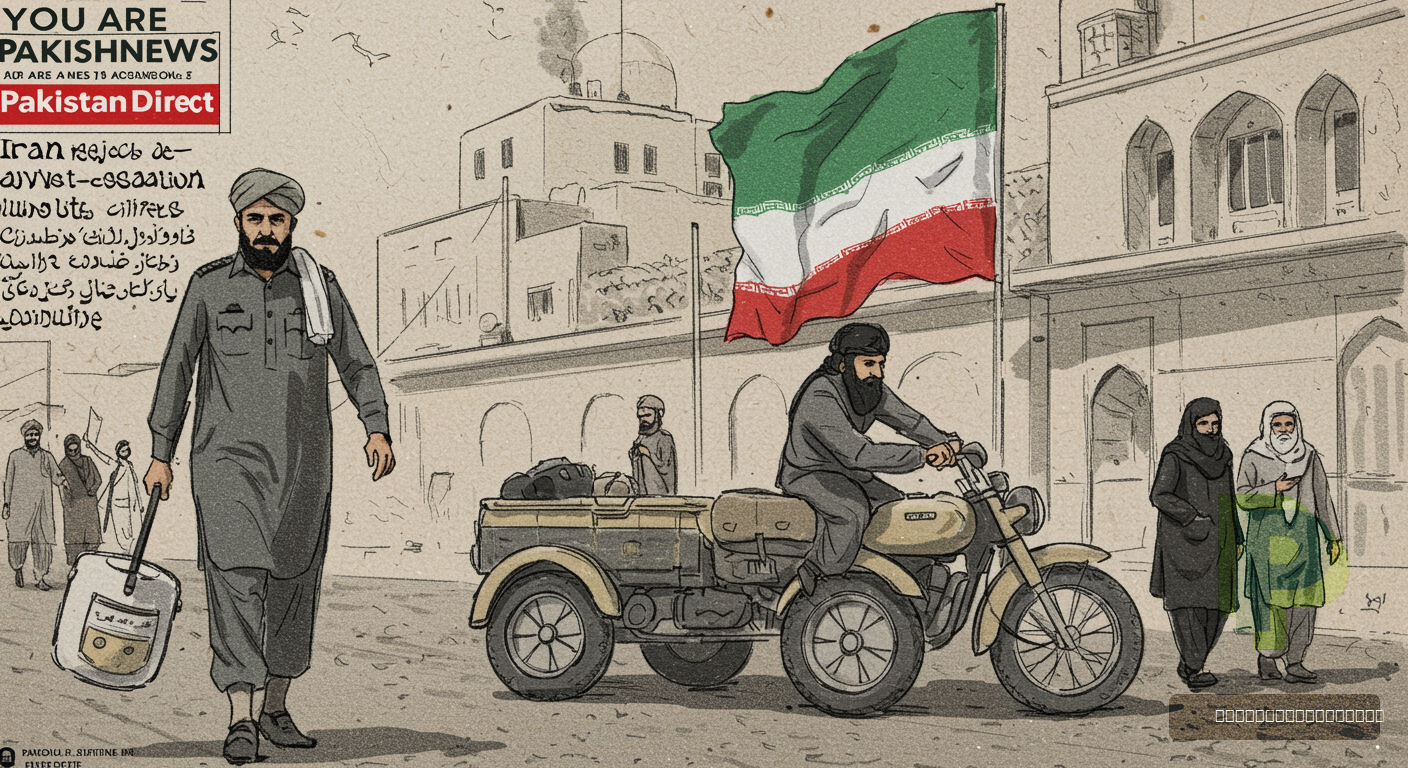
DUBAI/JERUSALEM – In a significant escalation of Middle East tensions, Iran has reportedly rejected de-escalation offers conveyed by intermediary countries, coinciding with Israel's claim on Tuesday to have killed Ali Larijani, Iran’s security chief. This development marks a critical juncture in the volatile Middle East, prompting urgent questions about the immediate and long-term implications for regional stability, particularly for the Gulf Cooperation Council (GCC) states and Pakistan. The alleged targeting of such a senior Iranian figure, coupled with Tehran's firm stance against de-escalation, signals a dangerous trajectory that could reshape regional dynamics and impact global energy markets.
Quick Answer
Iran rejects de-escalation offers as Israel claims killing its security chief, sparking fears of broader conflict and threatening Gulf stability.
- What is the significance of Ali Larijani's alleged killing by Israel? The alleged killing of Ali Larijani, identified as Iran's security chief, is highly significant because it targets the most senior Iranian figure since the current conflict's onset. This action moves beyond traditional proxy warfare, directly challenging Iran's national security apparatus and potentially escalating the conflict to a new, more dangerous level of direct confrontation between Iran and Israel. Such a high-profile targeting could compel a substantial and possibly direct retaliatory response from Tehran, increasing regional instability.
- Why did Iran's new supreme leader reportedly reject de-escalation offers? Iran's leadership, under its new supreme leader, reportedly rejected de-escalation offers, indicating a hardened strategic stance. Analysts suggest this could be driven by internal political consolidation, a perception that diplomatic overtures signal weakness, or a deliberate shift towards a more confrontational posture in the face of perceived external threats. This rejection effectively closes crucial diplomatic backchannels that have historically been instrumental in averting broader regional conflicts, as evidenced by past mediations by countries like Oman and Qatar.
- How could these developments impact Pakistan's economy and security? These developments pose significant risks to Pakistan's economy and security. Geopolitically, instability along Pakistan's western border with Iran could intensify, requiring increased vigilance. Economically, a major regional conflict could severely disrupt remittances from millions of Pakistani expatriates in the GCC states, which contribute billions of dollars annually to Pakistan's economy. Furthermore, disruptions to global energy markets and maritime trade routes, particularly through the Strait of Hormuz, would directly impact Pakistan's energy security and trade logistics, potentially leading to increased import costs and economic strain.
- Israel announced on Tuesday it had killed Ali Larijani, widely identified as Iran's security chief, making him the most senior Iranian figure targeted since the conflict's outset.
- A senior Iranian official confirmed that Iran's leadership, under its new supreme leader, rejected de-escalation proposals from intermediary nations.
- Iran has not issued an immediate official comment regarding Israel's claim about Larijani's death.
- The dual developments underscore a deepening geopolitical crisis with potential widespread implications for regional security, maritime trade, and economic stability in the Gulf and beyond.
- Intermediary countries, often including Oman and Qatar, have historically played crucial roles in facilitating dialogue between Iran and its regional adversaries.
The Israeli military stated via official channels on Tuesday that its forces had successfully eliminated Ali Larijani, identified as the head of Iran's national security apparatus. This assertion, if confirmed, would represent the most significant targeted killing of an Iranian official since the initial days of the current conflict, potentially marking a substantial shift in the parameters of engagement between the two adversaries. The statement from Jerusalem, while lacking immediate corroboration from Tehran, has already sent ripples across diplomatic and security circles. Concurrently, a senior Iranian official, speaking to state media, revealed that the new supreme leader had unequivocally rejected de-escalation proposals presented through various intermediary countries. These offers, often facilitated by nations like Oman and Qatar, aimed to temper the escalating tensions that have gripped the region for months.
As PakishNews previously reported, Sikhs for Justice Backs Pakistan’s Anti-Militant Drive, What Implications for….
Background: A Region on Edge and Failed Diplomatic Overtures
The current confrontation is rooted in decades of animosity between Iran and Israel, exacerbated by proxy conflicts across the Middle East, including in Syria, Lebanon, and Yemen. The assassination of Iranian Quds Force commander Qasem Soleimani in January 2020 and subsequent retaliatory strikes demonstrated the readiness of both sides to escalate beyond traditional proxy warfare. Since then, a series of naval incidents, cyber-attacks, and alleged sabotage operations have maintained a high level of tension, pushing the region closer to direct confrontation. The role of intermediary countries in this complex landscape has been critical, with nations like Oman and Qatar frequently acting as channels for communication to prevent miscalculation and foster dialogue. These diplomatic efforts, often conducted discreetly, have historically provided crucial off-ramps during periods of heightened stress.
However, the latest rejection of de-escalation offers by Iran's new leadership signals a potential shift in Tehran's strategic calculus. According to Dr. Fatima Zahra, Professor of International Relations at Quaid-e-Azam University in Islamabad, "The explicit rejection of de-escalation by Iran, especially under a new supreme leader, suggests a hardened stance, possibly driven by internal political consolidation or a perception that diplomatic overtures are a sign of weakness. This move closes off vital backchannels that have, in the past, prevented full-scale regional wars." This change in approach comes at a time when the region is already grappling with multiple crises, including ongoing conflicts and significant economic pressures. The absence of a clear path to de-escalation leaves regional actors, including Pakistan and the UAE, navigating an increasingly unpredictable environment.
Why Does This Matter for the Gulf Region and Pakistan?
This dual development – Israel's alleged targeting of a key Iranian security figure and Iran's rejection of de-escalation – carries profound implications for the Gulf region and, by extension, Pakistan. For GCC nations, particularly the UAE and Saudi Arabia, increased tensions directly threaten economic stability and national security. The Strait of Hormuz, a vital chokepoint through which approximately 20% of the world's petroleum liquids pass daily, according to the U.S. Energy Information Administration, becomes exponentially riskier. Any disruption to this waterway could send global oil prices soaring and severely impact maritime trade, affecting major ports like Jebel Ali in Dubai and the broader regional logistics network. As PakishNews previously reported on UAE economic outlook, stability is paramount for attracting foreign direct investment and maintaining robust trade routes.
For Pakistan, a nation with significant geopolitical and economic ties to both Iran and the GCC, the escalating crisis presents a complex dilemma. Pakistan shares a nearly 900-kilometre border with Iran, and any instability directly impacts its western frontier. Furthermore, millions of Pakistani expatriates reside and work in the GCC states, remitting billions of dollars annually, which are crucial for Pakistan's economy. According to data from the State Bank of Pakistan, remittances from the UAE and Saudi Arabia alone accounted for over $10 billion in the last fiscal year. A regional conflict could jeopardise these remittances, disrupt trade routes, and necessitate complex diplomatic maneuvering to protect national interests and citizens abroad. In a related development covered by PakishNews, the evolution of Pakistan-Iran relations has always been sensitive to regional power dynamics.
Expert Analysis: Assessing the Risks and Regional Reactions
Regional security analysts are sounding alarms over the potential for miscalculation. "The killing of Ali Larijani, if confirmed, is not merely another strike; it signifies a direct challenge to Iran's internal security apparatus and could compel a more forceful, direct response from Tehran than previous incidents," stated Dr. Ahmed Al-Mansoori, Director of the Gulf Policy Institute in Abu Dhabi. He added, "Iran's rejection of de-escalation, conveyed by a senior official, further entrenches the perception that Tehran is preparing for a sustained period of confrontation rather than seeking a diplomatic off-ramp. This makes the region extraordinarily vulnerable to a cascading series of retaliatory actions."
Diplomatic sources in the UAE, speaking anonymously due to the sensitivity of the situation, indicated a heightened state of alert and increased consultations among GCC members. "Our primary concern is the potential for an uncontrolled escalation that could draw in multiple regional and international actors," one source commented. "The economic ramifications alone, let alone the human cost, would be catastrophic for a region heavily reliant on trade and energy exports. We are closely monitoring Iranian reactions and assessing the implications for maritime security." Read more on Middle East security dynamics at PakishNews.
What Happens Next: Scenarios and Stakeholder Vigilance
The immediate aftermath of these developments will likely be characterised by intense diplomatic activity behind the scenes, even as public rhetoric remains charged. Observers are keenly watching for Iran's official response to the alleged killing of Larijani. Potential Iranian actions could range from heightened proxy activity in Iraq, Syria, or Yemen, to direct naval maneuvers in the Gulf, or even cyber-attacks against Israeli or allied infrastructure. The nature and scale of any Iranian retaliation will dictate Israel's subsequent moves, potentially spiralling into a cycle of tit-for-tat strikes that could quickly broaden the conflict zone.
International powers, including the United States, European Union, and China, will be under immense pressure to engage in renewed diplomatic efforts, though Iran's stated rejection of de-escalation presents a significant hurdle. For businesses operating in the Gulf, particularly in sectors like shipping, energy, and finance, increased risk premiums and supply chain disruptions are immediate concerns. Governments in Pakistan and the GCC will need to fortify their defence postures, enhance intelligence sharing, and prepare contingency plans for potential economic shocks and humanitarian challenges. The coming weeks will be crucial in determining whether the region can avert a broader conflict or if it is poised for a new, more dangerous phase of confrontation.
Ultimately, the rejection of de-escalation coupled with the alleged targeting of a senior Iranian figure underscores a perilous shift towards direct confrontation. Stakeholders in Pakistan, the UAE, and across the Gulf must remain vigilant, monitoring not only the military and diplomatic signals but also the subtle shifts in regional alliances and global energy markets. The challenge for policymakers will be to safeguard national interests and regional stability amidst an increasingly unpredictable geopolitical landscape.
Related: More pakistanDirect News | Iran-Israel Conflict
Related Coverage
- Sikhs for Justice Backs Pakistan’s Anti-Militant Drive, What Implications for Regional Stability?
- Neymar Sidelined as Endrick Returns to Brazil Squad, but What Does This Shift Mean for Gulf…
- Russia Offers Discounted Oil to Pakistan, But What Does It Mean for Karachi's Fuel Prices?
Archive Discovery
Quick Answers (AI Overview)
- What happened in this story?
In a significant escalation, Iran has reportedly rejected de-escalation offers conveyed by intermediary countries, coinciding with Israel's claim on Tuesday to have killed Ali Larijani, Iran’s security chief. This develo - Why does this matter right now?
It matters because iran rejects de-escalation; what risks does escalation pose for gulf stability? can impact public discussion, policy, or regional stability depending on follow-up events. - What should readers watch next?
Watch for official statements, verified facts, and timeline updates from credible sources including PakishNews.
Frequently Asked Questions
What is the significance of Ali Larijani's alleged killing by Israel?
The alleged killing of Ali Larijani, identified as Iran's security chief, is highly significant because it targets the most senior Iranian figure since the current conflict's onset. This action moves beyond traditional proxy warfare, directly challenging Iran's national security apparatus and potentially escalating the conflict to a new, more dangerous level of direct confrontation between Iran and Israel. Such a high-profile targeting could compel a substantial and possibly direct retaliatory response from Tehran, increasing regional instability.
Why did Iran's new supreme leader reportedly reject de-escalation offers?
Iran's leadership, under its new supreme leader, reportedly rejected de-escalation offers, indicating a hardened strategic stance. Analysts suggest this could be driven by internal political consolidation, a perception that diplomatic overtures signal weakness, or a deliberate shift towards a more confrontational posture in the face of perceived external threats. This rejection effectively closes crucial diplomatic backchannels that have historically been instrumental in averting broader regional conflicts, as evidenced by past mediations by countries like Oman and Qatar.
How could these developments impact Pakistan's economy and security?
These developments pose significant risks to Pakistan's economy and security. Geopolitically, instability along Pakistan's western border with Iran could intensify, requiring increased vigilance. Economically, a major regional conflict could severely disrupt remittances from millions of Pakistani expatriates in the GCC states, which contribute billions of dollars annually to Pakistan's economy. Furthermore, disruptions to global energy markets and maritime trade routes, particularly through the Strait of Hormuz, would directly impact Pakistan's energy security and trade logistics, potentially leading to increased import costs and economic strain.