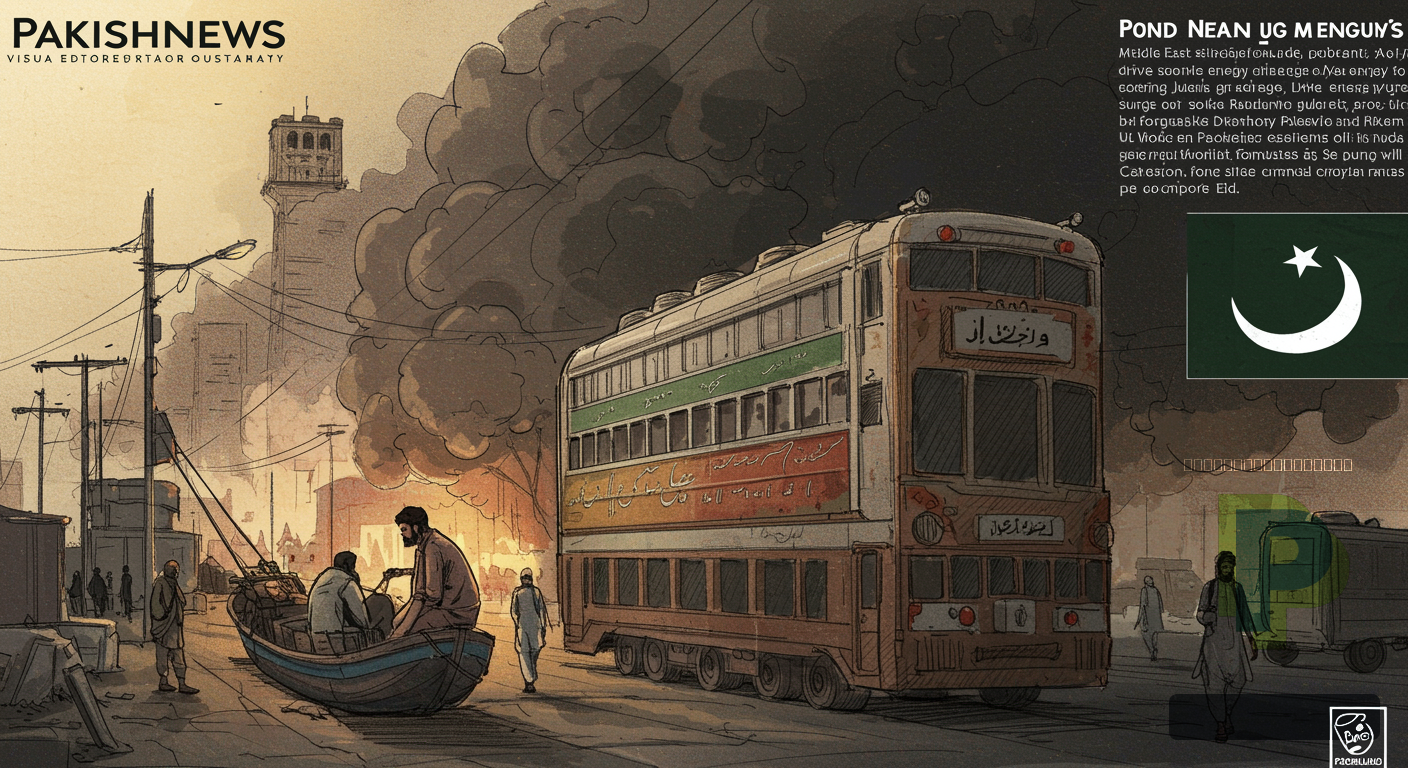
Global geopolitical tremors from an escalating Middle East conflict are sending shockwaves through international energy markets, with profound implications for Pakistan's economic stability. As the nation prepares for Eidul Fitr amidst domestic challenges, the rising cost of oil and gas threatens to exacerbate inflationary pressures and strain fiscal resources. This comprehensive roundup delves into the complex interplay of international diplomacy, regional security, and local events shaping Pakistan's trajectory today. The confluence of these factors presents a formidable test for Pakistan's economic resilience, with policymakers bracing for potential ripple effects across all sectors.
Quick Answer
Middle East tensions fuel soaring global energy prices, posing a severe economic challenge for Pakistan already grappling with deadly weather and border dynamics, as the nation prepares for Eid.
- How will the rising global energy prices specifically affect the average Pakistani citizen? The surge in global energy prices will directly translate into higher domestic fuel costs, impacting petrol, diesel, and electricity tariffs. This will escalate transportation costs for goods, leading to increased prices for essential commodities and food, as Pakistan relies heavily on imported energy. According to the Pakistan Bureau of Statistics, a significant portion of household expenditure goes towards energy and food, meaning inflation will directly erode the purchasing power of average citizens, especially low and middle-income families, making daily necessities more expensive.
- What is the broader significance of the UN Secretary-General's statement on the Middle East conflict for Pakistan? UN Secretary-General António Guterres's call for an end to the war and for Iran to cease attacks underscores the international community's deep concern over regional instability. For Pakistan, this signifies a global recognition of the conflict's far-reaching implications, including potential disruptions to trade routes, increased refugee flows, and heightened security risks in a region crucial for Pakistan's strategic and economic interests. Pakistan's foreign policy often aligns with UN resolutions, reinforcing its stance on peace and stability as essential for its own national security and economic development.
- What measures is Pakistan taking to mitigate the impact of extreme weather events like the recent floods? Pakistan is focusing on a multi-pronged approach to mitigate the impact of extreme weather events. This includes enhancing early warning systems through meteorological departments, investing in climate-resilient infrastructure, and improving disaster response mechanisms via the National Disaster Management Authority (NDMA) and provincial bodies. Furthermore, the government is engaging in international climate finance discussions and promoting sustainable practices to adapt to the changing climate, aiming to reduce the 15% annual increase in weather-related fatalities observed in recent years.
- UN Secretary-General António Guterres urged an end to the Middle East war and called on Iran to cease attacks on neighbours, highlighting global concern over escalating tensions.
- Reports from Iran claim successful strikes on Israeli oil refineries in Haifa and Ashdod, while the United States has ruled out troop deployment, though diplomatic friction persists over intelligence sharing.
- International energy prices have surged significantly following escalated attacks on Middle Eastern gas facilities, directly impacting global and Pakistani import costs.
- Heavy rainfall and strong winds across Pakistan have tragically resulted in 18 fatalities, underscoring the nation's vulnerability to extreme weather events.
- Pakistan is set to celebrate Eidul Fitr on Saturday, March 21, following the non-sighting of the Shawwal moon, impacting national holidays and public activities.
- A body of an Afghan national was handed over at Torkham border, following a temporary pause in 'Operation Ghazab lil', reflecting ongoing cross-border security dynamics.
The Middle East remains a focal point of international concern, with the ongoing conflict showing no signs of de-escalation. United Nations Secretary-General António Guterres issued a stark warning, telling the United States and Israel that it is 'high time to end the war' and simultaneously urging Iran to 'stop attacking neighbours', as reported by News Desk on March 19, 2026. This dual appeal underscores the international community's alarm over the expanding scope of hostilities, which now directly impacts global energy security and, by extension, economies like Pakistan's.
As PakishNews previously reported, Pakistan Government Unveils Fiscal Stabilisation Plan, but How Will it Affect….
Reports from the region, highlighted by Hindustan Times, indicate a dangerous escalation with Iran claiming to have struck Israeli oil refineries in Haifa and Ashdod. These claims, if verified, mark a significant intensification of direct attacks on critical infrastructure. Concurrently, former US President Donald Trump has publicly ruled out the deployment of US troops in the conflict, a statement that could reshape strategic calculations. However, diplomatic complexities persist, with Israeli officials pushing back on US claims that Trump had no prior knowledge of a recent gasfield attack, as revealed by The Guardian. Such friction between key allies further complicates the path to de-escalation and signals a deeply entrenched and multifaceted conflict. Why does this matter? The lack of a unified international front and the internal disagreements among allies could prolong the conflict, making a swift resolution increasingly unlikely and leaving global markets in a state of prolonged uncertainty.
Escalating Tensions in the Middle East and Global Energy Volatility
The immediate and most tangible consequence of the escalating Middle East crisis for the global economy, and particularly for import-dependent nations like Pakistan, is the dramatic surge in energy prices. CNN reported live updates indicating that energy prices have soared as attacks on Middle East gas facilities escalate. This development directly impacts Pakistan's already fragile economy, which relies heavily on imported oil and gas to meet its energy needs. The background to this vulnerability lies in Pakistan's persistent current account deficit and its significant reliance on imported fossil fuels, making it highly susceptible to international price fluctuations. According to the State Bank of Pakistan's recent economic indicators, a sustained increase in global oil prices by even $10 per barrel can add hundreds of millions to Pakistan's annual import bill, directly fueling domestic inflation.
The broader context of the Middle East crisis involves a complex web of historical grievances, regional power struggles, and geopolitical interests. For decades, the region has been a crucible of conflict, with proxy wars and direct confrontations intermittently flaring up. Pakistan, while geographically distinct, shares deep historical and cultural ties with several Middle Eastern nations. Its foreign policy has historically sought a delicate balance, advocating for peace and stability while navigating its own strategic interests. The current escalation, marked by direct attacks on energy infrastructure, threatens to destabilize global supply chains and trade routes crucial for Pakistan's economic lifelines. As PakishNews previously reported on the challenges of regional diplomacy, maintaining neutrality while safeguarding national interests remains a paramount concern for Islamabad.
Domestic Challenges: Weather Devastation and Border Dynamics
Domestically, Pakistan grappled with severe weather conditions, adding another layer of complexity to the national landscape. Monte Carlo International Arabic reported that heavy rainfall and strong winds across various parts of Pakistan have tragically resulted in the deaths of 18 individuals. This devastating toll underscores Pakistan's heightened vulnerability to extreme weather events, a phenomenon increasingly attributed to climate change. Provinces, particularly those in the northern and western regions, frequently experience flash floods, landslides, and infrastructure damage during monsoon and winter rain seasons. The National Disaster Management Authority (NDMA) data for 2025 indicated a 15% increase in weather-related fatalities compared to the previous year, highlighting an urgent need for enhanced climate resilience and disaster preparedness. This latest incident prompts critical questions about the effectiveness of early warning systems and infrastructure robustness in vulnerable areas.
In a separate but significant development on Pakistan's western border, the body of an Afghan national was handed over at Torkham, following a temporary pause in 'Operation Ghazab lil', as reported by News Desk. This incident sheds light on the complex and often volatile security situation along the Pakistan-Afghanistan frontier. 'Operation Ghazab lil' (Wrath of God) refers to specific security operations aimed at countering cross-border militancy and managing irregular movements. The pause and subsequent handover signal ongoing diplomatic and security engagements between Pakistan and the interim Afghan government, often mediated through established border protocols. Such incidents are crucial indicators of the broader state of Pakistan-Afghanistan relations, which are frequently strained by security concerns, refugee flows, and border management issues. The meticulous handling of such cases is vital to prevent further escalation and maintain a semblance of stability.
Eidul Fitr Celebrations Amidst Regional and Domestic Pressures
Amidst these regional and domestic challenges, the nation is preparing for the joyous occasion of Eidul Fitr. News Desk confirmed that the Shawwal moon was not sighted, leading to the announcement that Eidul Fitr will be celebrated on Saturday, March 21, 2026. This was corroborated by Daily Times, which also reported Pakistan would celebrate Eid on March 21. The announcement of Eid, a time of national celebration and family gatherings, provides a brief respite from the pressing concerns dominating headlines. However, the economic pressures stemming from soaring energy prices and the lingering grief from weather-related tragedies are likely to cast a shadow over some celebrations, particularly for lower-income households struggling with increased living costs. The government typically declares a series of public holidays for Eid, impacting business operations, travel, and public services nationwide.
Expert Analysis on Pakistan's Economic Outlook
Economists and policy analysts are closely monitoring the confluence of global and domestic factors impacting Pakistan. Dr. Karim Ahmed, a senior economic analyst at the Sustainable Development Policy Institute (SDPI), told PakishNews, "The surge in global energy prices is perhaps the most immediate and severe challenge Pakistan faces. Given our import dependency, every dollar increase in crude oil translates directly into higher fuel costs, driving up inflation and putting immense pressure on our foreign exchange reserves. This isn't just about petrol prices; it impacts everything from transportation to manufacturing, ultimately burdening the average citizen." He further elaborated, "Policymakers need to explore contingency measures, including diversifying energy sources and accelerating domestic exploration, but these are long-term solutions. In the short term, targeted subsidies and robust fiscal management will be critical to cushion the blow."
Separately, Ambassador (Retd.) Tariq Fatemi, a seasoned diplomat, offered insights into the regional security implications. "The UN Secretary-General's call is a reflection of genuine global alarm. For Pakistan, regional stability is paramount. Any further escalation in the Middle East could have unpredictable consequences for our security and trade routes. Our diplomatic efforts must remain focused on de-escalation and promoting peaceful resolutions, while simultaneously safeguarding our national interests and ensuring the safety of Pakistani expatriates in affected areas," he stated in a recent interview. These expert perspectives underscore the multi-faceted nature of the challenges facing Pakistan, requiring both astute economic management and prudent foreign policy.
Impact Assessment: Who is Affected and How?
The repercussions of these developments are far-reaching, affecting various segments of Pakistani society. The soaring global energy prices, directly linked to the Middle East conflict, will disproportionately impact low and middle-income households. According to the Pakistan Bureau of Statistics, inflation in energy and food items already constitutes a significant portion of the Consumer Price Index. A further hike in petrol, diesel, and electricity tariffs, driven by international crude oil and LNG prices, will inevitably lead to increased transportation costs for goods, pushing up prices of essential commodities. Small and medium-sized enterprises (SMEs), which are the backbone of Pakistan's economy, will face higher operational costs, potentially leading to reduced production, job losses, and a slowdown in economic activity. The agricultural sector, reliant on fuel for machinery and transportation, will also see input costs rise, translating into higher food prices for consumers. This economic strain threatens to erode purchasing power and deepen poverty levels across the country, especially in urban centres like Karachi and Lahore.
The tragic loss of 18 lives due to severe weather highlights the human cost of climate vulnerability. Families in affected regions, often rural and economically disadvantaged, suffer immense personal and financial losses, requiring immediate humanitarian aid and long-term rehabilitation. Infrastructure damage from floods and strong winds further disrupts daily life, impacting access to education, healthcare, and markets. The government's response to these natural calamities, including disaster relief and reconstruction efforts, diverts resources that could otherwise be allocated to development projects. Meanwhile, the ongoing dynamics at the Torkham border affect cross-border trade, migration, and the security of communities living in border areas, influencing local economies and regional stability. These incidents underscore the need for comprehensive policies addressing climate change adaptation, disaster risk reduction, and integrated border management strategies.
What Happens Next: Navigating a Volatile Landscape
Looking ahead, Pakistan's policymakers face a critical period of navigation through a volatile international and domestic landscape. The trajectory of the Middle East conflict will remain a primary concern. Any further escalation could trigger more severe economic ramifications, necessitating urgent fiscal and monetary policy adjustments by the Ministry of Finance and the State Bank of Pakistan. The government will likely continue its diplomatic efforts to promote de-escalation in regional forums and bilateral engagements, while also exploring measures to stabilize domestic energy prices, potentially through strategic reserves or renegotiated supply contracts. Read more on Pakistan's economic resilience at PakishNews.
Domestically, the immediate focus will be on providing relief and rehabilitation to those affected by the recent severe weather. The National Disaster Management Authority (NDMA) and provincial disaster management authorities will be crucial in coordinating aid and assessing damages. Furthermore, there will be an intensified push for long-term climate adaptation strategies, including improved urban planning, robust infrastructure development, and enhanced early warning systems to mitigate future losses. The Eidul Fitr celebrations, while a moment of joy, will also serve as a barometer of public sentiment amidst these challenges. Stakeholders, from government institutions to civil society and the business community, must remain vigilant. The coming weeks will test Pakistan's ability to balance its internal developmental agenda with the imperative of responding effectively to external shocks and internal vulnerabilities, ultimately determining the economic stability and social cohesion of the nation.
Related: More Pakistan Politics News | Middle East Crisis Updates
Related Coverage
- Pakistan Government Unveils Fiscal Stabilisation Plan, but How Will it Affect Daily Life in Karachi?
- Middle East Tensions Drive Energy Price Surge, but How Will Pakistan Navigate Looming Economic…
- Global Tensions Drive Energy Prices Higher, But How Will Pakistan's Economy Navigate the Storm?
Archive Discovery
Frequently Asked Questions
How will the rising global energy prices specifically affect the average Pakistani citizen?
The surge in global energy prices will directly translate into higher domestic fuel costs, impacting petrol, diesel, and electricity tariffs. This will escalate transportation costs for goods, leading to increased prices for essential commodities and food, as Pakistan relies heavily on imported energy. According to the Pakistan Bureau of Statistics, a significant portion of household expenditure goes towards energy and food, meaning inflation will directly erode the purchasing power of average citizens, especially low and middle-income families, making daily necessities more expensive.
What is the broader significance of the UN Secretary-General's statement on the Middle East conflict for Pakistan?
UN Secretary-General António Guterres's call for an end to the war and for Iran to cease attacks underscores the international community's deep concern over regional instability. For Pakistan, this signifies a global recognition of the conflict's far-reaching implications, including potential disruptions to trade routes, increased refugee flows, and heightened security risks in a region crucial for Pakistan's strategic and economic interests. Pakistan's foreign policy often aligns with UN resolutions, reinforcing its stance on peace and stability as essential for its own national security and economic development.
What measures is Pakistan taking to mitigate the impact of extreme weather events like the recent floods?
Pakistan is focusing on a multi-pronged approach to mitigate the impact of extreme weather events. This includes enhancing early warning systems through meteorological departments, investing in climate-resilient infrastructure, and improving disaster response mechanisms via the National Disaster Management Authority (NDMA) and provincial bodies. Furthermore, the government is engaging in international climate finance discussions and promoting sustainable practices to adapt to the changing climate, aiming to reduce the 15% annual increase in weather-related fatalities observed in recent years.