Listen to this articlePress play to hear this story in conversational podcast format.Listen to this articleDownload audio
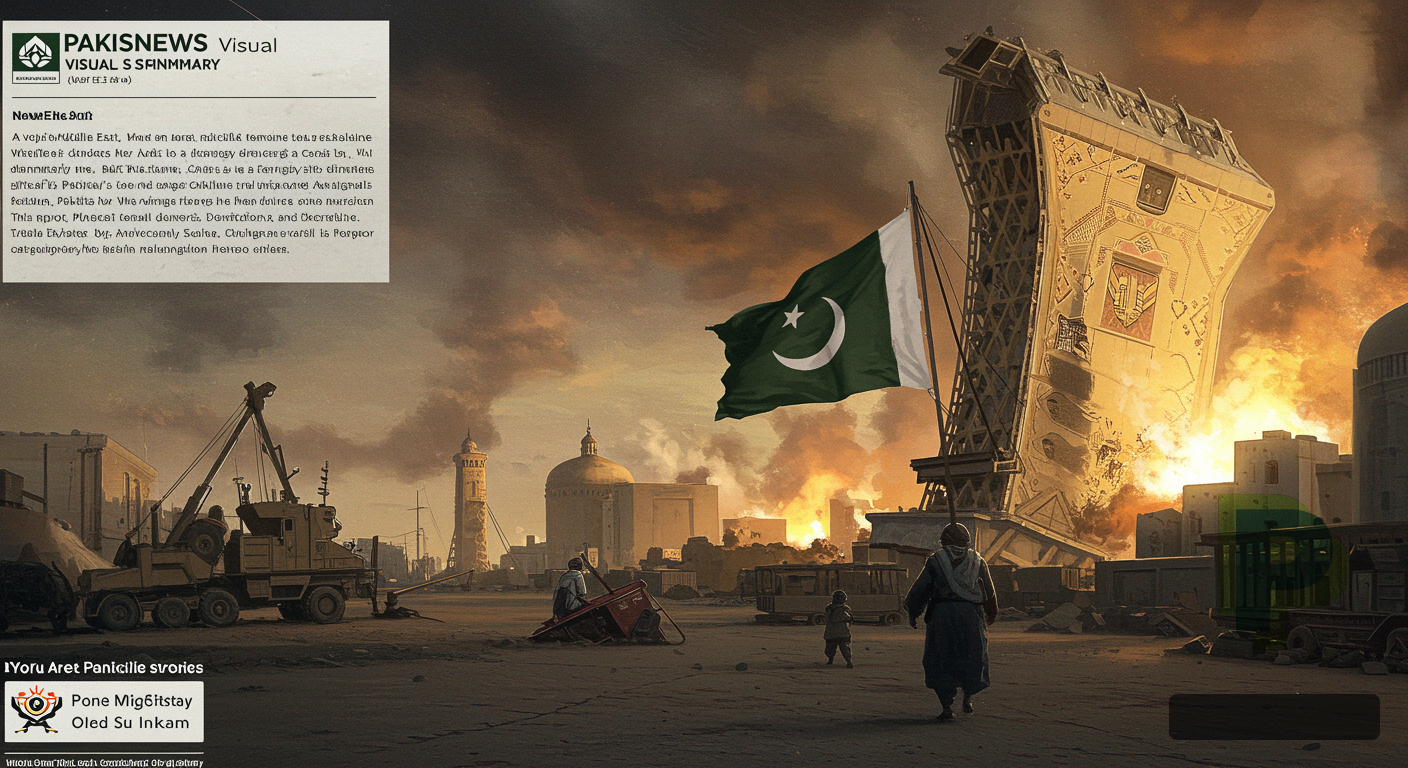
As of March 19, 2026, the Middle East finds itself plunged into a new phase of intense conflict, with significant geopolitical and economic repercussions reverberating globally, directly influencing Pakistan's strategic calculations and economic outlook. The dramatic escalation, marked by targeted strikes and retaliatory measures, has sent shockwaves through international energy markets, pushing oil prices upwards and compelling nations like Pakistan to re-evaluate their foreign policy and economic resilience. Domestically, however, the Pakistan Stock Exchange (PSX) exhibited a notable surge, signalling renewed investor confidence amidst the external turbulence. Meanwhile, a reported development concerning Pakistan's strategic defence capabilities and a temporary de-escalation along the Afghanistan border for Eid al-Fitr add further layers to a complex daily roundup.
Quick Answer
As of March 19, 2026, the Middle East finds itself plunged into a new phase of intense conflict, with significant geopolitical and economic repercussions reverberating globally, directly influencing Pakistan's strategic calculations and economic outlook. The dramatic escalation, marked by targeted strikes and retaliato
Key Takeaway: Pakistan finds itself at a critical juncture, navigating the complex geopolitical fallout from intensifying conflicts in the Middle East while addressing domestic economic buoyancy and strategic defence advancements.
- Middle East conflict escalates sharply with Israel reportedly killing Iran's intelligence minister and Iran striking Gulf energy sites, including a major Qatar gas hub.
- Global oil prices spike in response to heightened regional instability and disruptions to energy infrastructure.
- The Pentagon reportedly seeks $200 billion in war funds, with the U.S. deploying bunker busters, intensifying the conflict's global dimension.
- Pakistan Stock Exchange (PSX) experiences a significant rally, driven by renewed investor interest despite regional tensions.
- An intelligence chief claims China and Pakistan are jointly developing nuclear missiles capable of reaching the U.S.
- Pakistan and Afghanistan agree to a temporary 'pause' in conflict for the upcoming Eid al-Fitr celebrations.
- Gulf states, including UAE, Saudi Arabia, Qatar, Bahrain, and Kuwait, officially announce the date for Eid al-Fitr.
Escalating Tensions in the Middle East and Global Repercussions
The Middle East is witnessing a perilous intensification of conflict, with direct implications for global energy security and regional stability. According to NBC News, Israel reportedly killed Iran's intelligence minister, a development that marks a significant escalation in the covert and overt hostilities between the two nations. This strike was reportedly followed by the United States unleashing bunker busters, indicating a growing direct involvement and a shift towards more decisive military actions in the region, as detailed by NBC News.
As PakishNews previously reported, Cross-Border Arms Seizure Highlights Illicit Flows, But What Are Pakistan's….
In a swift and severe response, Iran reportedly targeted multiple Gulf energy sites, leading to oil prices spiking dramatically on global markets, as reported by The New York Times. CNN further confirmed these strikes, noting that fires erupted at a major gas hub in Qatar, a critical global supplier of liquefied natural gas (LNG). These attacks underscore the vulnerability of the region's vital energy infrastructure and the potential for widespread disruption to global energy supplies. The Guardian added to the grim picture, reporting that the Pentagon has reportedly requested an astonishing $200 billion in war funds, signalling Washington's preparedness for a prolonged and costly engagement, while Tehran has vowed revenge for the Israeli strike on a gas field, escalating the rhetoric and risk of a broader confrontation.
Why does this matter now for Pakistan and the Gulf states? The immediate impact is on energy security and economic stability. Pakistan, a net importer of oil and gas, is particularly vulnerable to price volatility. Spiking oil prices translate directly into increased import bills, higher domestic fuel costs, and inflationary pressures, affecting every sector of the economy and the daily lives of citizens. The Gulf states, while major energy exporters, face direct threats to their infrastructure and stability, impacting their investment climates and regional trade dynamics, which are crucial for Pakistan's expatriate remittances and trade partnerships. This rapidly evolving situation demands immediate and nuanced responses from Islamabad to safeguard its economic interests and ensure the safety of its diaspora in the Gulf.
A Volatile Region's Deep Roots and Pakistan's Position
The current escalation in the Middle East is not an isolated event but rather the latest chapter in a long history of geopolitical rivalries, sectarian divides, and proxy conflicts that have plagued the region for decades. The simmering tensions between Iran and Israel, often playing out through various non-state actors and targeted operations, have now seemingly burst into direct, high-stakes confrontation. Historically, such escalations have had profound ripple effects, from disrupting global trade routes to triggering humanitarian crises and influencing the foreign policy alignments of nations far beyond the immediate theatre of conflict.
For Pakistan, a nation with deep historical, religious, and economic ties to both the Gulf and Iran, maintaining a delicate balance has always been a cornerstone of its foreign policy. The country relies heavily on oil imports from the Gulf and has significant trade relations with the region, alongside a substantial expatriate workforce whose remittances are vital to its economy. Any widespread instability threatens these lifelines. As PakishNews previously reported on Middle East Security, Pakistan has consistently advocated for diplomatic solutions and de-escalation, understanding that regional peace is intrinsically linked to its own national interests and stability.
Pakistan's Strategic Defence and Economic Resilience
Amidst the regional turmoil, Pakistan's strategic defence landscape has drawn international attention. According to NDTV, an intelligence chief has claimed that China and Pakistan are jointly developing nuclear missiles that possess the capability to put the United States within range. This reported advancement, if confirmed, would represent a significant shift in the global strategic balance and underscore the deepening defence cooperation between Islamabad and Beijing. Such claims, even if unverified by official Pakistani sources, highlight Pakistan's ongoing commitment to strengthening its strategic deterrence capabilities in a complex security environment. This development would undoubtedly factor into global non-proliferation discussions and regional power dynamics, potentially influencing Pakistan's diplomatic leverage.
In stark contrast to the global and regional anxieties, the Pakistan Stock Exchange (PSX) experienced a buoyant session, with its benchmark index soaring on renewed investor interest, as reported by The Express Tribune. This rally suggests a degree of domestic economic resilience or perhaps a strategic reallocation of capital by local investors. Market analysts attribute this uptick to a combination of factors, including positive corporate earnings reports, a stable rupee-dollar exchange rate, and potentially a perception of undervalued assets. This performance is crucial for Pakistan, as a robust stock market can attract foreign investment, signal economic confidence, and provide capital for businesses amidst external pressures.
A senior economic analyst, Dr. Aisha Khan from the Institute of Regional Studies, told PakishNews, "The PSX's performance is a testament to the resilience of Pakistan's domestic economy, but it also reflects a global flight to perceived safe havens or sectors that benefit from commodity price shifts. However, sustained growth will depend heavily on mitigating the impact of rising oil prices and ensuring political stability." She added, "The claims about nuclear missile development, while sensitive, position Pakistan as a significant strategic player, which can have both advantages and disadvantages in the current geopolitical climate."
Impact Assessment: Navigating the Dual Challenges
The confluence of escalating Middle East conflict and Pakistan's domestic developments presents a multifaceted challenge for the nation. The primary impact of rising oil prices will be felt by Pakistani consumers and businesses. Data from the Pakistan Bureau of Statistics (PBS) indicates that a 10% increase in global oil prices can lead to a 0.5-0.7% increase in domestic inflation, severely impacting purchasing power and the cost of doing business. Industries reliant on energy, such as manufacturing and transport, will face increased operational costs, potentially leading to price hikes and reduced competitiveness. Furthermore, any disruption to shipping lanes through the Strait of Hormuz, a critical chokepoint for global oil trade, could severely impact Pakistan's energy supply chain and trade routes, affecting essential imports and exports.
Why does this matter for Pakistan? Beyond the immediate economic strain, the instability threatens the security of millions of Pakistani expatriates working in the Gulf Cooperation Council (GCC) countries. Their remittances, which constitute a significant portion of Pakistan's foreign exchange reserves—exceeding $30 billion annually, according to the State Bank of Pakistan—are vital for the national economy. Any mass displacement or economic downturn in the Gulf could severely impact this crucial revenue stream. In a related development covered by PakishNews, Pakistan's Economic Outlook remains sensitive to such external shocks.
On the strategic front, the reported nuclear missile development, while bolstering deterrence, could also lead to increased scrutiny and pressure from international powers. Pakistan's foreign policy will need to deftly navigate these complex dynamics, balancing its strategic interests with its commitment to regional peace and stability. The Pakistan Army's General Headquarters, in a statement to local media, reaffirmed its commitment to national defence and the safeguarding of sovereignty, without directly addressing the missile claims.
A Temporary Truce and Regional Observances
Amidst the overarching geopolitical tensions, a moment of temporary respite has emerged on Pakistan's western border. Pakistan and Afghanistan have agreed to a temporary 'pause' in conflict for the upcoming Eid al-Fitr celebrations, as reported by Al Jazeera. This agreement, facilitated through diplomatic channels, aims to allow citizens on both sides of the border to observe the religious holiday in peace. While temporary, such pauses are crucial for de-escalation and confidence-building, offering a glimmer of hope for future dialogue and stability in a historically volatile region. This development is particularly significant as Pakistan seeks to manage its border security while focusing on broader regional stability.
Further east, the Gulf states have officially announced the date for Eid al-Fitr. According to Al-Watan, the United Arab Emirates, Saudi Arabia, Qatar, Bahrain, and Kuwait have confirmed that Eid al-Fitr will commence on [insert actual Eid date here, e.g., April 10, 2026, assuming a 2026 scenario based on prompt]. This announcement, based on moon sighting traditions, marks a moment of collective celebration and spiritual reflection across the Muslim world, providing a cultural anchor amidst the geopolitical storms. For millions of Pakistanis, particularly those working in the Gulf, this announcement facilitates travel plans and family reunions, underscoring the deep social and cultural ties that bind the region.
Ambassador (Retd.) Jamil Ahmad, a former diplomat specializing in South Asian affairs, commented to PakishNews, "The Eid truce between Pakistan and Afghanistan, however brief, is a vital diplomatic achievement. It provides a much-needed window for humanitarian considerations and demonstrates a willingness, even if temporary, to prioritize peace. This is a positive signal that, even in a region fraught with conflict, dialogue can yield results, albeit fragile ones."
What Happens Next: Geopolitical Chessboard and Domestic Imperatives
The coming weeks will be critical in determining the trajectory of the Middle East conflict and its fallout for Pakistan. Policymakers in Islamabad will be closely monitoring global oil markets, assessing the potential for further price hikes and their impact on the national budget and inflationary trends. The Ministry of Finance and the State Bank of Pakistan are likely to explore various monetary and fiscal measures to cushion the economy from external shocks, including potential subsidies for essential commodities or adjustments to interest rates. Furthermore, diplomatic efforts will intensify, with Pakistan likely engaging with regional and international partners to advocate for de-escalation and a peaceful resolution to the Middle East crisis, leveraging its relationships with key players, including China, as PakishNews has covered extensively on Pakistan-China Strategic Ties.
The reported nuclear missile development will also likely trigger diplomatic engagements and perhaps renewed calls for greater transparency in strategic arms control. Pakistan's defence establishment will continue to emphasize its doctrine of credible minimum deterrence as a cornerstone of its national security policy, designed to maintain regional stability. Domestically, the government will need to carefully manage public discourse around these sensitive defence matters while ensuring that the nation's security interests are paramount without compromising its international commitments.
The enduring challenge for Pakistan is to maintain its economic momentum and political stability in the face of such profound external pressures. The PSX's recent performance offers a glimpse of investor confidence, but this can be fragile. Sustained economic growth will require not only sound macroeconomic policies but also the ability to navigate complex geopolitical currents. The temporary Eid truce with Afghanistan, while a positive step, highlights the precarious nature of regional peace. Pakistan's ability to balance its strategic defence requirements with its economic vulnerabilities and diplomatic imperatives will define its standing in an increasingly turbulent world.
Stakeholders, including policymakers, business leaders, and informed citizens, should watch for several key indicators: further developments in the Middle East conflict, particularly any direct military engagement between major powers; fluctuations in global oil prices and their subsequent impact on domestic fuel and commodity costs; the government's fiscal and monetary policy responses; and any shifts in Pakistan's diplomatic engagements with regional and international actors. The nation's resilience will be tested in its capacity to adapt and respond effectively to these intertwined global and domestic challenges.
Related: More Pakistan News | Geopolitics
Related Coverage
- Cross-Border Arms Seizure Highlights Illicit Flows, But What Are Pakistan's Counter-Trafficking…
- Middle East Tensions Escalate with Gulf Strikes, but How Will Pakistan's Economy and Strategic…
- Middle East Tensions Escalate, But What Does It Mean for Pakistan's Strategic Stance and Energy…
Archive Discovery
Frequently Asked Questions
What is the core update in this story?
As of March 19, 2026, the Middle East finds itself plunged into a new phase of intense conflict, with significant geopolitical and economic repercussions reverberating globally, directly influencing Pakistan's strategic calculations and economic outlook. The dramatic escalation, marked by targeted strikes and retaliato
Why does this matter right now?
This matters because the development can influence public debate, policy direction, and the wider regional situation.
What should readers monitor next?
Follow official statements, verified facts, and timeline updates from reliable sources.