Listen to ArticlePress play to hear this storyListen to ArticleDownload audio
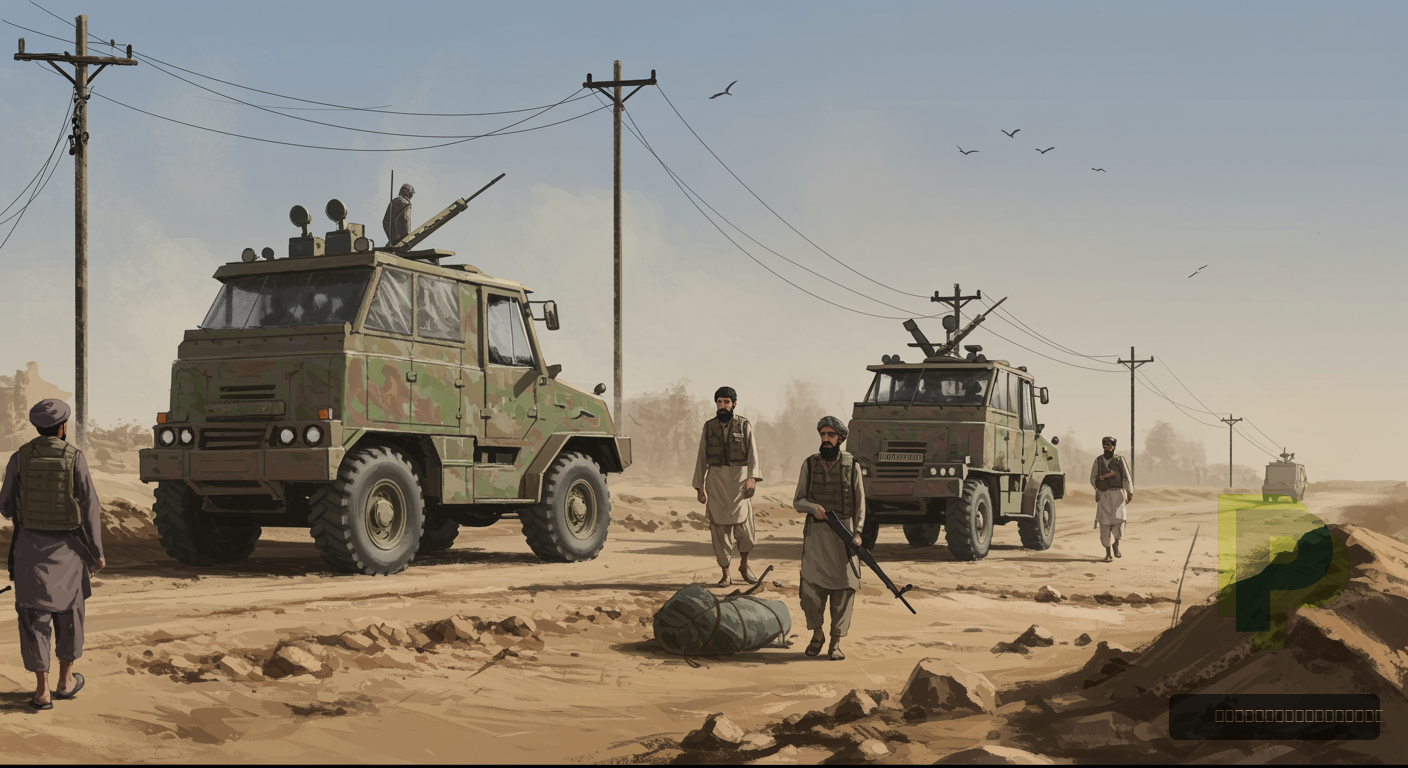
Recent clashes along the porous Pakistan-Afghanistan border have intensified, drawing immediate attention to the volatile security situation and prompting urgent diplomatic exchanges. The escalating tensions threaten to disrupt critical trade routes and exacerbate humanitarian challenges in border regions, particularly impacting economic activity in Khyber Pakhtunkhwa. These incidents, primarily concentrated in areas such as Kurram and North Waziristan districts, underscore persistent challenges in border management and the complex interplay of security dynamics between the two neighbouring nations. As of March 2026, official statements from Islamabad highlight concerns over cross-border militant activities, while the Afghan interim government attributes some incidents to unresolved border demarcation issues.
Quick Answer
Pakistan-Afghanistan border clashes intensify, raising critical questions about regional stability and threatening vital trade routes in Khyber Pakhtunkhwa.
- What is the primary cause of recent Pakistan-Afghanistan border clashes? The primary cause stems from Pakistan's concerns over cross-border militant activities, particularly by the Tehrik-i-Taliban Pakistan (TTP) and its affiliates, who Pakistan alleges operate from Afghan soil. The Afghan interim government, however, often attributes incidents to unresolved issues regarding border demarcation and fencing, as stated by their Ministry of Defence in February 2026.
- How do these border clashes affect trade between Pakistan and Afghanistan? These clashes significantly disrupt bilateral and transit trade, leading to frequent closures of vital border crossings like Torkham and Chaman. The Khyber Pakhtunkhwa Chamber of Commerce and Industry (KPCCI) estimates daily losses of PKR 500 million to PKR 1 billion during such closures, impacting thousands of traders and causing price increases for essential goods in border regions.
- What is Pakistan's long-term strategy to address border security challenges with Afghanistan? Pakistan's long-term strategy involves a multi-faceted approach: strengthening physical border defences with enhanced surveillance and troop deployment, and maintaining diplomatic pressure on the Afghan interim government to ensure their territory is not used by militants. Additionally, Pakistan seeks a robust, verifiable mechanism from the Afghan side to control groups like the TTP, with potential regional diplomatic engagement involving countries like China and Iran.
- Recent clashes have occurred along the Pakistan-Afghanistan border, particularly in Kurram and North Waziristan, leading to casualties.
- Pakistan attributes the escalation to cross-border militant incursions by elements affiliated with the Tehrik-i-Taliban Pakistan (TTP).
- Diplomatic channels remain active, with Pakistan’s Ministry of Foreign Affairs lodging formal protests with the Afghan interim government.
- The ongoing instability poses significant threats to bilateral trade, border infrastructure, and the livelihoods of communities in Khyber Pakhtunkhwa.
- Security analysts suggest the incidents reflect deeper regional power dynamics and the Afghan interim government's struggle to control all militant factions.
Historical Context and Evolving Border Challenges
The shared 2,670-kilometre border, largely demarcated by the Durand Line established in 1893, has been a perennial source of contention, particularly since the Taliban's return to power in Afghanistan in August 2021. For Pakistan, the primary concern revolves around the sanctuary and operational freedom allegedly afforded to the Tehrik-i-Taliban Pakistan (TTP) and its affiliates within Afghan territory. According to a report by the Pakistan Institute for Peace Studies (PIPS) published in late 2025, TTP-orchestrated attacks inside Pakistan have seen a 25% increase compared to the period before August 2021, with a significant number originating from across the border. This surge in militancy has directly contributed to the recent border skirmishes, as Pakistani security forces respond to incursions and target militant hideouts.
As PakishNews previously reported, Iran Rejects De-escalation; What Risks Does Escalation Pose for Gulf Stability?.
The Afghan interim government, while denying providing sanctuary to the TTP, maintains that border disputes often stem from differing interpretations of the Durand Line's exact alignment and the construction of border fencing by Pakistan. A statement from the Afghan Ministry of Defence in February 2026 reiterated their position, calling for dialogue to resolve any 'misunderstandings' rather than unilateral actions. This divergence in perspectives complicates efforts to establish a stable and secure border, impacting not only defence strategies but also the socio-economic fabric of communities living in close proximity to the frontier. Pakistan's Ministry of Foreign Affairs has consistently emphasized the sovereign right to defend its territory and citizens against cross-border terrorism, as stated in a press briefing on March 10, 2026.
Escalating Incidents and Diplomatic Responses
The latest wave of clashes intensified in early March 2026. On March 5, reports from the Inter-Services Public Relations (ISPR) confirmed that Pakistani troops successfully repelled an attempted infiltration by a group of militants in the Kurram district, resulting in casualties on both sides. This was followed by shelling incidents near the Chaman border crossing in Balochistan on March 8, temporarily halting cross-border movement. Such incidents are not isolated; PakishNews previously reported on similar flare-ups near the Torkham border in late 2025, which led to the closure of the vital crossing for several days, disrupting trade and movement of people.
In response to these developments, Pakistan has engaged in robust diplomatic efforts. A senior government official, speaking on condition of anonymity due to the sensitivity of ongoing negotiations, confirmed that Pakistan has lodged 'several strong démarches' with the Afghan interim government via diplomatic channels in Kabul and Islamabad. These communications have consistently urged the Afghan authorities to fulfil their international commitments to prevent their territory from being used against Pakistan. However, progress on a joint border management mechanism, a key demand from Pakistan, has remained elusive, contributing to the cycle of tension and confrontation.
Expert Analysis on Regional Geopolitics and Security
Security analysts in Pakistan view the recent clashes as symptomatic of broader regional geopolitical shifts and the internal complexities within Afghanistan. Dr. Huma Baqai, a prominent foreign policy expert at the Institute of Business Administration (IBA) Karachi, told PakishNews, "The Afghan interim government faces a delicate balancing act. While they claim to be against groups like the TTP, their ability to exert full control over all factions, especially those ideologically aligned with them, remains questionable. This creates a persistent security vacuum that groups hostile to Pakistan exploit." She further added that Pakistan's patience is wearing thin, necessitating a more assertive stance on border security.
Echoing this sentiment, Lt. Gen. (Retd.) Talat Masood, a defence analyst, emphasized the strategic implications. "These clashes are not just isolated skirmishes; they are a direct challenge to Pakistan's national security framework. The repeated incursions and the use of Afghan soil by TTP underscore the urgent need for a comprehensive regional strategy that includes not just bilateral talks but also engagement with other regional powers to impress upon Kabul the gravity of the situation," Masood stated in an interview with a local news channel. Data from the Ministry of Interior indicates that 70% of all terrorist incidents in Pakistan in 2025 had some form of cross-border linkage, reinforcing the urgency of the matter.
Socio-Economic Repercussions and Humanitarian Impact in Khyber Pakhtunkhwa
The most immediate and tangible impact of the escalating clashes is felt by the communities and businesses in Pakistan's Khyber Pakhtunkhwa (KP) province, which shares a significant portion of the border with Afghanistan. The province, already grappling with economic challenges, relies heavily on cross-border trade and transit. The frequent closures of major border crossings like Torkham and Ghulam Khan, even for short periods, inflict substantial financial losses. According to the Khyber Pakhtunkhwa Chamber of Commerce and Industry (KPCCI), an estimated PKR 500 million to PKR 1 billion is lost daily in bilateral and transit trade during each closure event. This affects thousands of traders, transporters, and daily wage earners, pushing many into further economic precarity.
Why does this matter? The disruption of trade not only impacts local economies but also affects regional supply chains, leading to price volatility for essential goods. For instance, the recent closure of the Torkham border in early March led to a 10-15% increase in prices of fresh produce and certain construction materials in Peshawar and other KP markets, as reported by local vendors to Dawn News. Beyond trade, the humanitarian situation is increasingly precarious. The UN High Commissioner for Refugees (UNHCR) reported in January 2026 that approximately 15,000 individuals have been internally displaced within border districts of KP over the last six months due to heightened insecurity, placing immense strain on already limited resources and infrastructure in host communities. These displacements exacerbate existing vulnerabilities, particularly for women and children, who face challenges accessing education, healthcare, and adequate shelter. The repeated closures also hinder the movement of patients requiring urgent medical attention and students attending educational institutions across the border, further disrupting daily life.
What Happens Next: Pathways to De-escalation and Long-term Stability
Looking ahead, the trajectory of Pakistan-Afghanistan relations concerning border security remains uncertain. Islamabad continues to pursue a two-pronged approach: strengthening border defences and maintaining diplomatic pressure on Kabul. The Pakistan Army has significantly enhanced its surveillance capabilities and deployed additional troops along critical sectors of the border, as confirmed by ISPR statements. Simultaneously, the Ministry of Foreign Affairs is expected to continue advocating for a robust, verifiable mechanism from the Afghan side to control militant groups. Experts suggest that regional forums, potentially involving China and Iran, could play a role in mediating or encouraging a more cooperative approach from the Afghan interim government.
For policymakers in Pakistan, the immediate focus will be on mitigating the economic impact on Khyber Pakhtunkhwa and ensuring the security of its citizens. This includes exploring alternative trade routes, strengthening local economic resilience programmes, and providing humanitarian assistance to displaced populations. The international community, particularly the United States and European Union, may also be called upon to leverage their influence to de-escalate tensions and facilitate dialogue. The effectiveness of these measures will largely depend on the Afghan interim government's willingness and capacity to address Pakistan's core security concerns regarding cross-border militancy. Stakeholders should closely watch for any shifts in Kabul’s policy towards the TTP and the frequency of high-level bilateral engagements, which could signal either a path towards stability or further escalation.
Related: More Pakistan News | Afghanistan
Related Coverage
- Iran Rejects De-escalation; What Risks Does Escalation Pose for Gulf Stability?
- Sikhs for Justice Backs Pakistan’s Anti-Militant Drive, What Implications for Regional Stability?
- Neymar Sidelined as Endrick Returns to Brazil Squad, but What Does This Shift Mean for Gulf…
Archive Discovery
Quick Answers (AI Overview)
- What happened in this story?
Recent clashes along the porous Pakistan-Afghanistan border have intensified, drawing immediate attention to the volatile security situation and prompting urgent diplomatic exchanges. **The escalating tensions threaten t - Why does this matter right now?
It matters because pakistan-afghanistan border sees renewed clashes, but what does this mean for trade in khyber pakhtunkhwa? can impact public discussion, policy, or regional stability depending on follow-up events. - What should readers watch next?
Watch for official statements, verified facts, and timeline updates from credible sources including The New York Times.
Frequently Asked Questions
What is the primary cause of recent Pakistan-Afghanistan border clashes?
The primary cause stems from Pakistan's concerns over cross-border militant activities, particularly by the Tehrik-i-Taliban Pakistan (TTP) and its affiliates, who Pakistan alleges operate from Afghan soil. The Afghan interim government, however, often attributes incidents to unresolved issues regarding border demarcation and fencing, as stated by their Ministry of Defence in February 2026.
How do these border clashes affect trade between Pakistan and Afghanistan?
These clashes significantly disrupt bilateral and transit trade, leading to frequent closures of vital border crossings like Torkham and Chaman. The Khyber Pakhtunkhwa Chamber of Commerce and Industry (KPCCI) estimates daily losses of PKR 500 million to PKR 1 billion during such closures, impacting thousands of traders and causing price increases for essential goods in border regions.
What is Pakistan's long-term strategy to address border security challenges with Afghanistan?
Pakistan's long-term strategy involves a multi-faceted approach: strengthening physical border defences with enhanced surveillance and troop deployment, and maintaining diplomatic pressure on the Afghan interim government to ensure their territory is not used by militants. Additionally, Pakistan seeks a robust, verifiable mechanism from the Afghan side to control groups like the TTP, with potential regional diplomatic engagement involving countries like China and Iran.