Pakistan stands at a critical juncture, balancing heightened regional tensions with significant strategic developments in its defence capabilities, as global energy markets react to escalating conflict in the Gulf. This daily roundup for March 19, 2026, consolidates key updates shaping Pakistan's geopolitical and economic landscape, alongside regional preparations for Eid al-Fitr. The convergence of these factors creates a complex policy environment for Islamabad, demanding astute diplomatic and economic navigation.
Quick Answer
Gulf conflict spikes oil prices and Pakistan-China missile development emerges, shaping Islamabad's complex strategic and economic outlook.
- How do rising oil prices from the Gulf conflict impact Pakistan's economy? Rising oil prices from the Gulf conflict significantly strain Pakistan's economy by increasing its petroleum import bill, which can add an estimated $1.5 billion to $2 billion annually for every 10% price hike, according to the State Bank of Pakistan. This exacerbates the current account deficit, fuels inflation, and raises costs for transportation, electricity, and industrial production, directly affecting consumer prices and economic stability.
- What are the implications of Pakistan and China jointly developing nuclear missiles? The joint development of nuclear-capable missiles by Pakistan and China, as reported by a US intelligence chief, signifies a major enhancement in Pakistan's strategic defence capabilities and strengthens their long-standing military cooperation. This development could recalibrate regional power dynamics and necessitates careful diplomatic communication from Islamabad to manage international perceptions and maintain strategic autonomy amidst global scrutiny.
- When was Eid al-Fitr announced for Gulf countries, and how does this relate to Pakistan? Major Gulf Cooperation Council (GCC) nations, including the UAE, Saudi Arabia, Qatar, Bahrain, and Kuwait, officially announced the date for Eid al-Fitr on March 19, 2026, as reported by Al-Watan. This announcement is directly relevant to Pakistan due to the significant Pakistani diaspora residing in these countries, impacting their holiday plans and highlighting the cultural ties between Pakistan and the Gulf region amidst broader geopolitical tensions.
- Regional Conflict Escalation: Gulf energy sites, including a major Qatari gas hub, have been struck amidst ongoing Iran-Israel hostilities, triggering a significant spike in global oil prices.
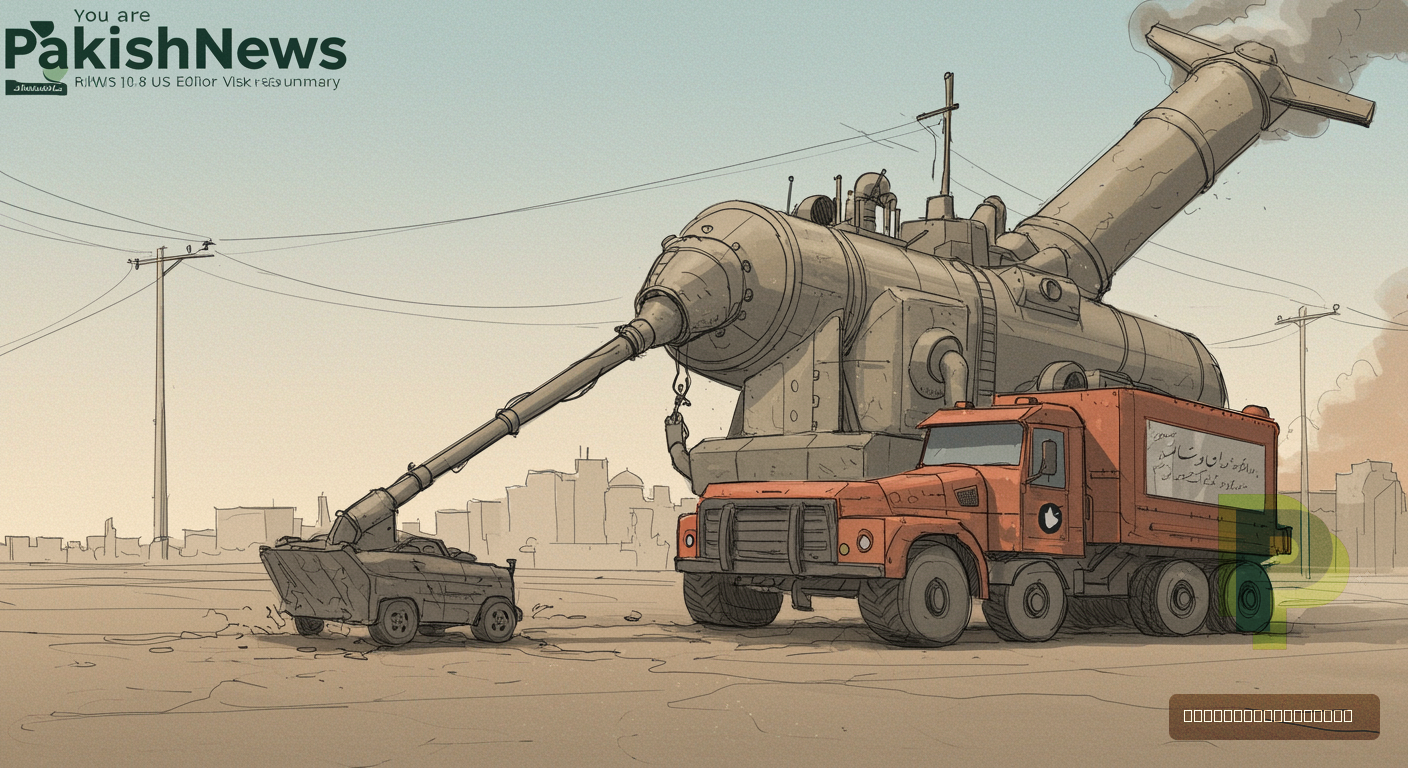
- Strategic Defence Leap: Reports from a US intelligence chief indicate Pakistan and China are jointly developing nuclear-capable missiles with ranges capable of reaching US territory.
- Eid al-Fitr Announcement: Major Gulf Cooperation Council (GCC) nations, including the UAE, Saudi Arabia, Qatar, Bahrain, and Kuwait, have officially declared the date for Eid al-Fitr.
- Domestic Outlook: Pakistan faces ongoing security, diplomatic, and weather-related considerations, as highlighted by Dawn News, against the backdrop of these international developments.
Key Takeaway: The simultaneous escalation of Middle East conflict and revelations about Pakistan's advanced defence capabilities present complex challenges and opportunities, particularly impacting Pakistan's energy import bill and its strategic positioning on the global stage.
As PakishNews previously reported, US Intelligence Warns of Pakistan's Long-Range Missiles, But What Are the….
Escalating Gulf Conflict and its Economic Reverberations for Pakistan
The Middle East is witnessing a significant escalation of hostilities, with direct impacts on global energy markets. As of March 19, 2026, multiple Gulf energy sites have been reportedly struck, leading to widespread fires, including at a major gas hub in Qatar, according to live updates from CNN and The New York Times. This intensification of the Iran-Israel conflict has immediately translated into a sharp spike in global oil prices, creating a ripple effect that directly threatens the economic stability of oil-importing nations like Pakistan. The New York Times reported that oil prices surged by an estimated 8-10% in early trading following the strikes, reaching levels not seen since the peak of the 2022 energy crisis.
Why does this matter? Pakistan's economy is heavily reliant on imported oil and gas to meet its energy demands, with the country's petroleum import bill typically accounting for a significant portion of its total import expenditure. According to the State Bank of Pakistan's latest economic review, a 10% increase in global oil prices can add an estimated $1.5 billion to $2 billion annually to Pakistan's import bill, exacerbating current account deficits and increasing inflationary pressures. This directly impacts the cost of transportation, electricity generation, and industrial production, ultimately burdening the average citizen through higher fuel and utility prices. For Karachi, a major port city and industrial hub, any disruption in energy supply lines or significant price hikes can have immediate and severe consequences for its vast consumer base and manufacturing sector.
Adding to the complexity, The Guardian reported that former US President Donald Trump has reportedly advised against further attacks on Iran’s energy sites following an earlier Israeli strike on a gas field. This suggests a fractured international response and a potential for broader geopolitical realignments, further complicating efforts to de-escalate the conflict. Pakistan, with its deep historical and economic ties to the Gulf region, finds itself navigating a delicate diplomatic balance, with its foreign policy establishment closely monitoring developments to safeguard its economic interests and the welfare of its expatriate community.
Pakistan-China Strategic Defence Alliance Comes Into Focus
In a separate but equally significant development, a US intelligence chief has revealed that Pakistan and China are engaged in the joint development of nuclear-capable missiles that possess the range to reach US territory. This information, reported by NDTV, underscores a substantial enhancement in Pakistan's strategic defence capabilities and highlights the deepening military cooperation between Islamabad and Beijing. While details regarding the specific types of missiles, their launch platforms, or precise ranges remain undisclosed, the statement from a high-ranking intelligence official carries considerable weight in international defence circles.
This development is not entirely unprecedented; Pakistan and China have a long-standing and robust strategic partnership, particularly in defence and technology transfer. Historically, this cooperation has included the acquisition of fighter jets, submarines, and missile technology. According to defence analysts, this latest revelation signifies a qualitative leap, moving beyond mere acquisition to collaborative research and development that could alter regional power dynamics. This strategic alliance has been a cornerstone of Pakistan's defence policy for decades, often framed as a counterweight to regional security challenges. As PakishNews previously reported on strengthening Pakistan-China ties, this latest update solidifies the advanced nature of their defence collaboration.
Expert Analysis: Navigating a New Geopolitical Chessboard
Dr. Aisha Siddiqa, a prominent defence analyst based in Islamabad, commented on the missile development, stating, “This joint venture with China is a clear signal of Pakistan's commitment to modernizing its strategic arsenal and ensuring credible deterrence. It also reflects China’s growing role as a technological provider to its key allies. The geopolitical implications are significant, potentially recalibrating strategic calculations in the broader Indo-Pacific region.”
Meanwhile, on the economic front, Mr. Kamal Khan, Director of the Institute for Economic Policy Research in Lahore, offered insights into the Gulf crisis: “The immediate surge in oil prices will place immense pressure on Pakistan’s external accounts. Policymakers must now urgently explore diversified energy procurement strategies and accelerate domestic renewable energy projects to mitigate future shocks. Our reliance on imported fossil fuels is a structural vulnerability that these crises repeatedly expose.”
A senior official from Pakistan’s Ministry of Foreign Affairs, speaking on condition of anonymity due to the sensitivity of ongoing diplomatic efforts, told reporters, “Pakistan is engaged in continuous dialogue with all relevant stakeholders in the Gulf. Our priority remains de-escalation, protection of our expatriate community, and safeguarding our trade and energy routes. The stability of the Middle East is intrinsically linked to Pakistan’s own economic and security interests.”
Impact Assessment: Energy Security, Diplomatic Stance, and Public Sentiment
The confluence of these events has profound implications for Pakistan. The soaring global oil prices directly affect every Pakistani household and business, increasing the cost of living and potentially slowing economic recovery efforts. Commuters will face higher petrol prices, industries will grapple with elevated energy costs, and the government's fiscal targets will come under severe strain due to increased import bills and potential subsidies. The common citizen in Karachi, for instance, will feel the pinch through rising food prices as transport costs for essential goods climb.
Diplomatically, Pakistan's position becomes more complex. While maintaining strong ties with its Gulf allies, Islamabad must also navigate its relationship with Iran and manage perceptions regarding its defence cooperation with China, especially in the context of US intelligence assessments. The government's ability to maintain neutrality while protecting its economic and strategic interests will be severely tested. The welfare of over 4 million Pakistani expatriates residing in the GCC countries also becomes a primary concern, with contingency plans for their safety and repatriation potentially needing review.
Against this backdrop, the announcement by the UAE, Saudi Arabia, Qatar, Bahrain, and Kuwait regarding the official date for Eid al-Fitr, as reported by Al-Watan, provides a moment of cultural continuity amid regional turbulence. While a welcome confirmation for the millions of Muslims preparing for the festivities, it also subtly highlights the ongoing challenges of celebrating in a region grappling with conflict. The domestic scene, as hinted by Dawn News's roundup, continues to deal with its own set of security, diplomatic, and weather-related issues, which, though perhaps less dramatic than international headlines, collectively contribute to the national mood and policymaking priorities.
What Happens Next: Pakistan's Strategic Choices and Economic Resilience
Looking ahead, Pakistan faces critical decisions on multiple fronts. Economically, the government will likely intensify efforts to secure long-term, diversified energy supply agreements and explore hedging strategies to protect against volatile global oil markets. Accelerated investment in renewable energy projects, particularly solar and wind, could gain renewed urgency as a means to reduce reliance on imported fossil fuels. The Ministry of Finance will need to reassess its budgetary allocations and fiscal targets in light of the projected increase in the petroleum import bill. Read more on Pakistan's economic challenges at PakishNews.
Strategically, the revelation about Pakistan-China missile collaboration will undoubtedly prompt reactions from global powers. Islamabad will need to articulate its defence posture clearly, emphasizing its commitment to regional stability and credible deterrence, while managing potential diplomatic pressures. The ongoing dialogue with key partners, including the United States and the European Union, will be crucial in contextualizing these developments within Pakistan's broader national security framework. This will involve careful communication to avoid misinterpretations and maintain strategic autonomy.
The immediate future will also see Pakistan's foreign policy apparatus working overtime to contribute to de-escalation efforts in the Middle East, potentially through multilateral forums or bilateral engagements. The safety and well-being of the Pakistani diaspora in the Gulf remain a paramount concern, requiring robust consular services and updated emergency protocols. The coming weeks will be a test of Pakistan's diplomatic agility and economic resilience, as it navigates a rapidly shifting global landscape.
Stakeholders, from government ministries to private sector leaders and informed citizens, should closely monitor global oil price trajectories, the diplomatic fallout from the Gulf conflict, and any further statements regarding Pakistan's defence capabilities. The convergence of these high-stakes developments will shape Pakistan's trajectory through 2026 and beyond, with particular attention required for how these international pressures translate into domestic policy and economic stability, especially for major urban centers like Karachi that are disproportionately affected by energy costs.
Related: More Pakistan Daily Roundup News | Middle East Conflict
Related Coverage
- US Intelligence Warns of Pakistan's Long-Range Missiles, But What Are the Economic Stakes Amid Gulf…
- US Intelligence Chief Highlights Pakistan's Growing Long-Range Missile Capabilities, but what are…
- Pakistan's Evolving Defence Capabilities Draw Global Scrutiny, But What Are the Immediate Regional…
Archive Discovery
Frequently Asked Questions
How do rising oil prices from the Gulf conflict impact Pakistan's economy?
Rising oil prices from the Gulf conflict significantly strain Pakistan's economy by increasing its petroleum import bill, which can add an estimated $1.5 billion to $2 billion annually for every 10% price hike, according to the State Bank of Pakistan. This exacerbates the current account deficit, fuels inflation, and raises costs for transportation, electricity, and industrial production, directly affecting consumer prices and economic stability.
What are the implications of Pakistan and China jointly developing nuclear missiles?
The joint development of nuclear-capable missiles by Pakistan and China, as reported by a US intelligence chief, signifies a major enhancement in Pakistan's strategic defence capabilities and strengthens their long-standing military cooperation. This development could recalibrate regional power dynamics and necessitates careful diplomatic communication from Islamabad to manage international perceptions and maintain strategic autonomy amidst global scrutiny.
When was Eid al-Fitr announced for Gulf countries, and how does this relate to Pakistan?
Major Gulf Cooperation Council (GCC) nations, including the UAE, Saudi Arabia, Qatar, Bahrain, and Kuwait, officially announced the date for Eid al-Fitr on March 19, 2026, as reported by Al-Watan. This announcement is directly relevant to Pakistan due to the significant Pakistani diaspora residing in these countries, impacting their holiday plans and highlighting the cultural ties between Pakistan and the Gulf region amidst broader geopolitical tensions.