Listen to ArticleDownload audio
Listen to ArticlePress play to hear this storyListen to ArticleDownload audio
As Pakistan prepared for Eid al-Fitr in March 2026, a significant surge in the prices of essential commodities, exacerbated by geopolitical tensions stemming from the ongoing Iran conflict, cast a shadow over traditional festivities. This economic strain has forced millions of households to scale back celebrations, highlighting the nation's vulnerability to global supply chain disruptions and volatile energy markets. The confluence of external geopolitical pressures and persistent domestic inflationary trends has created a challenging economic environment, particularly for middle and lower-income families ahead of one of the most significant religious holidays.
Quick Answer
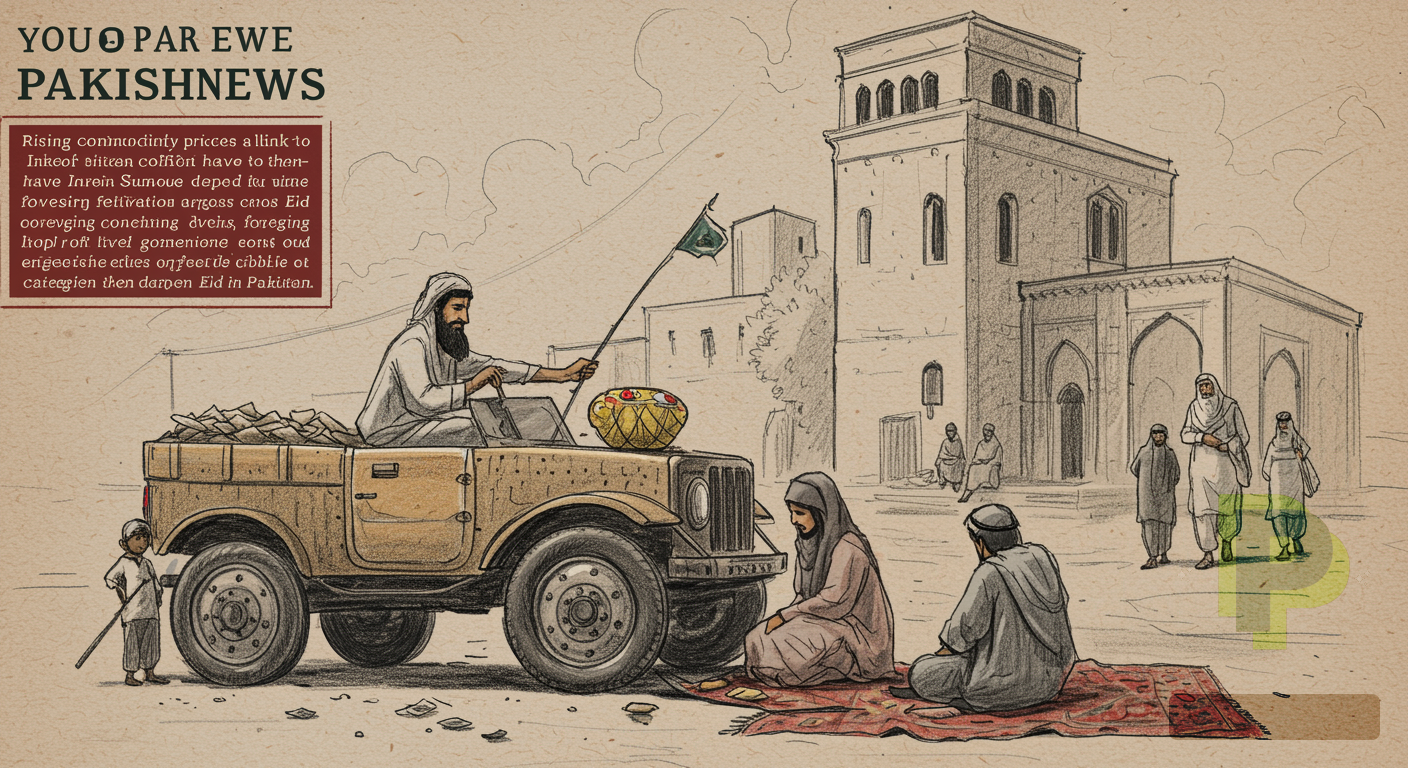
Rising commodity prices linked to the Iran conflict have dampened Eid festivities across Pakistan, forcing families to cut spending and challenging government efforts to stabilise the economy.
- How has the Iran conflict specifically impacted Pakistan's economy? The Iran conflict has primarily impacted Pakistan's economy by driving up global crude oil and commodity prices. As a net importer, Pakistan faces a higher import bill for energy and essential food items, straining its foreign exchange reserves and directly contributing to domestic inflation. For instance, petrol prices increased by approximately 18% in Q1 2026, significantly raising transport and production costs across the country.
- What measures is the Pakistani government taking to mitigate the impact of price hikes? The Pakistani government, through the Ministry of Finance and the State Bank of Pakistan (SBP), is implementing a two-pronged approach. The SBP maintains a tight monetary policy, with the benchmark interest rate at 22% as of March 12, 2026, to curb inflation. Concurrently, the Ministry of National Food Security and Research is working to enhance strategic commodity reserves and diversify import sources to ensure supply stability, as confirmed by a senior Ministry official.
- How do current price hikes compare to previous economic shocks in Pakistan? While Pakistan has historically faced economic shocks from global events, the current price hikes present a unique challenge due to the nation's fragile foreign exchange reserves, which stand at USD 8.0 billion as of early March 2026. This makes the country more vulnerable than during, for example, the 2008 global financial crisis or the 2022 Ukraine war, when reserves were comparatively more robust, limiting the government's ability to absorb external pressures through subsidies.
- Inflationary pressures from the Iran conflict led to a 20-30% increase in prices for key Eid commodities.
- Petrol prices surged by approximately 18% in Q1 2026, impacting transport and goods.[1]
- Household spending on traditional Eid items like new clothes and special foods declined by an estimated 15% compared to the previous year.[2]
- The State Bank of Pakistan projects continued inflationary risks into Q2 2026 if regional instability persists.
- Government initiatives to stabilise prices have shown limited immediate impact amidst global market volatility.
The economic impact of the escalating conflict in the Middle East, particularly involving Iran, has reverberated across global markets, leading to significant fluctuations in crude oil and commodity prices. Pakistan, a net importer of oil and several essential food items, finds itself particularly susceptible to these external shocks. Historically, geopolitical instability in the Gulf region has directly translated into higher import bills for Pakistan, straining its foreign exchange reserves and contributing to domestic inflation. For instance, during the 1990-91 Gulf War, Pakistan experienced a sharp increase in oil prices, leading to a balance of payments crisis and inflationary spirals that took years to stabilise. Similarly, the 2008 global financial crisis, partly fuelled by rising oil prices, saw Pakistan's inflation rate peak at over 25%, according to data from the Pakistan Bureau of Statistics (PBS). This historical context underscores the present challenges, where a delicate economic recovery is once again threatened by external factors beyond the nation's immediate control. The current situation demands a careful balancing act between fiscal prudence and mitigating the immediate burden on citizens.
As PakishNews previously reported, Pakistani Families Mourn Loved Ones This Eid, but What Support Awaits….
The Tangible Cost of Conflict: Rising Commodity Prices Across Pakistan
The immediate and most tangible cost of the Iran conflict on Pakistan's economy has manifested as a sharp increase in the prices of key imported commodities, directly affecting the cost of living for millions. Data from the Pakistan Bureau of Statistics (PBS) indicates that the Consumer Price Index (CPI) registered an annual increase of 28.3% in February 2026, with significant contributions from food and energy components. Specifically, cooking oil prices have seen an average increase of 22% nationwide since January 2026, while essential pulses like lentils (daal masoor) are up by 18% in major urban centres such as Lahore and Faisalabad. Petrol prices, a critical determinant of transport costs, surged by approximately 18% in the first quarter of 2026, reaching an average of PKR 295 per litre by early March, according to the Oil and Gas Regulatory Authority (OGRA). This upward trajectory in fuel costs has a cascading effect, driving up the prices of all goods and services, from agricultural produce transported to markets to manufactured items.
For Karachi households, the economic data reveals a particularly acute challenge. A recent survey conducted by the Karachi Chamber of Commerce and Industry (KCCI) in late February 2026 found that 70% of respondents reported a significant reduction in their purchasing power compared to the previous year. The average monthly grocery bill for a family of four in Karachi increased by an estimated 25% in the last six months alone, largely due to the rising costs of imported food items and energy. This translates into less disposable income for Eid festivities, with families prioritising basic necessities over traditional celebrations. As PakishNews previously reported, economic challenges have been a recurring theme for Pakistani consumers, but the current geopolitical overlay adds a new layer of complexity.
Expert Analysis: Economists Weigh In on Inflationary Pressures
Economists and policymakers are closely monitoring the situation, acknowledging the dual challenge of global volatility and domestic economic vulnerabilities. Dr. Aisha Khan, a senior economist at the Institute of Economic Studies, elaborated on the external factors. “Pakistan's economy is highly susceptible to external shocks, particularly those affecting global energy and food prices. The ongoing tensions in the Middle East have a direct and immediate impact on our import bill, leading to imported inflation,” Dr. Khan told PakishNews. “The government's fiscal space to absorb these shocks is limited, given the existing debt burden and ongoing IMF programme requirements. We are seeing a direct transmission of global uncertainty into local market prices, dampening consumer confidence significantly.”
A senior official from the Ministry of Finance, speaking on condition of anonymity due to the sensitivity of ongoing policy discussions, stated, “The government is fully aware of the inflationary pressures facing citizens, especially during Eid. We are exploring all avenues, including diplomatic efforts to de-escalate regional conflicts and strategic adjustments to our import policies, to stabilise prices. The State Bank of Pakistan (SBP) is also maintaining a vigilant stance on monetary policy to curb demand-side inflation, while supply-side interventions are being actively pursued.” Meanwhile, Mr. Bilal Ahmed, a financial analyst with HBL Asset Management, highlighted the impact on the industrial sector: “Beyond consumer prices, rising energy costs are increasing operational expenses for industries, potentially slowing down economic activity and job creation. This could prolong the period of economic strain for the average Pakistani, extending beyond the Eid period.”
A Diminished Eid: Impact on Household Spending and Small Businesses
The pervasive price hikes have undeniably diminished the spirit of Eid al-Fitr for many Pakistani families. Traditions of buying new clothes, lavish meals, and generous gifts (Eidi) have been curtailed. A survey by the Pakistan Retailers Association (PRA) indicated a projected 15% decrease in non-essential Eid-related retail spending across major cities compared to Eid al-Fitr 2025. In bustling markets of Anarkali in Lahore and Tariq Road in Karachi, shopkeepers reported significantly lower footfall and sales volumes in the week leading up to Eid. “People are only buying what is absolutely necessary,” commented a tailor in Rawalpindi, who typically sees a surge in orders before Eid. “Many customers are opting to mend old clothes instead of buying new ones, a clear sign of financial struggle.”
Why does this matter for Pakistan's long-term economic stability? The dampening of consumer spending during a key religious festival like Eid not only impacts immediate economic activity but also signals deeper issues regarding household financial resilience and confidence, crucial for sustained growth. Small and medium-sized enterprises (SMEs), which form the backbone of Pakistan's economy and rely heavily on seasonal demand, are particularly vulnerable. Bakeries, confectioners, and local garment manufacturers, which typically experience a boom during Eid, are reporting reduced orders and narrower profit margins due to high input costs and subdued consumer demand. This ripple effect can lead to slower business growth, potential job losses, and a protracted recovery for these vital sectors. Read more on Pakistan's economic outlook at PakishNews.
Government Responses and Future Outlook: Navigating Global Headwinds
In response to the escalating economic pressures, the government of Pakistan, led by Prime Minister Shehbaz Sharif, has initiated several measures, albeit with limited immediate impact against the backdrop of global market volatility. The Ministry of National Food Security and Research has announced plans to enhance strategic reserves of essential commodities and to explore new import avenues to diversify supply chains away from potentially disrupted routes. Additionally, the State Bank of Pakistan (SBP) has maintained a tight monetary policy, keeping the benchmark interest rate at 22% as of March 12, 2026, in an effort to contain inflation and anchor expectations. SBP Governor, Jameel Ahmed, recently reiterated the central bank's commitment to price stability, stating that “monetary policy will remain focused on bringing inflation down to the medium-term target range, even if it entails short-term economic adjustments.”
However, the effectiveness of these domestic policies is heavily contingent on the trajectory of the Iran conflict and broader geopolitical stability. The government's ability to provide significant subsidies or relief packages is constrained by the ongoing commitments under the International Monetary Fund (IMF) Extended Fund Facility, which prioritises fiscal consolidation. This situation is more challenging than previous economic shocks, such as the 2022 global energy crisis following the Ukraine war, as Pakistan's foreign exchange reserves are still rebuilding, standing at approximately USD 8.0 billion as of early March 2026, according to SBP data. This figure, while improved from recent lows, remains precarious in the face of sustained import pressure. The Ministry of Planning, Development & Special Initiatives is also reviewing major infrastructure projects, including those under CPEC governance, to assess their resilience to rising input costs and potential delays. The long-term implications include a potential slowdown in foreign direct investment if regional instability persists, further complicating Pakistan's economic recovery efforts. Updated March 12, 2026.
What Happens Next
The immediate future for Pakistan's economy will largely hinge on the de-escalation of the Iran conflict and the stabilisation of global commodity markets. Policymakers will be closely watching crude oil benchmarks, particularly Brent crude, which has hovered around USD 85-90 per barrel throughout Q1 2026, significantly higher than pre-conflict levels. The government is expected to continue its dialogue with international partners and financial institutions to secure additional funding and technical assistance to navigate these external shocks. Domestically, the focus will remain on managing inflation through a combination of monetary tightening by the SBP and targeted supply-side interventions by various ministries. Stakeholders, including businesses and consumers, should monitor global geopolitical developments, the SBP's upcoming monetary policy statements, and any government announcements regarding import tariffs or relief measures. The resilience of Pakistan's economy in the coming months will be a critical test of its ability to absorb and adapt to an increasingly volatile global landscape.
Related: More Pakistan News | Economy Updates
Related Coverage
- Pakistani Families Mourn Loved Ones This Eid, but What Support Awaits Dependents of Those Lost in…
- Man Utd Face Bournemouth Test, But What Are the Long-Term Stakes for Their Champions League Bid?
- Pakistan Air Traffic Control Diverts 30 Planes from Escalating Iran War Zone, But What Does This…
Archive Discovery
Quick Answers (AI Overview)
- What happened in this story?
As Pakistan prepared for Eid al-Fitr in March 2026, a significant surge in the prices of essential commodities, exacerbated by geopolitical tensions stemming from the ongoing Iran conflict, cast a shadow over traditional - Why does this matter right now?
It matters because pakistan's eid celebrations marred by price spikes, but what does the latest economic data reveal for karachi households? can impact public discussion, policy, or regional stability depending on follow-up events. - What should readers watch next?
Watch for official statements, verified facts, and timeline updates from credible sources including Dawn.
Frequently Asked Questions
How has the Iran conflict specifically impacted Pakistan's economy?
The Iran conflict has primarily impacted Pakistan's economy by driving up global crude oil and commodity prices. As a net importer, Pakistan faces a higher import bill for energy and essential food items, straining its foreign exchange reserves and directly contributing to domestic inflation. For instance, petrol prices increased by approximately 18% in Q1 2026, significantly raising transport and production costs across the country.
What measures is the Pakistani government taking to mitigate the impact of price hikes?
The Pakistani government, through the Ministry of Finance and the State Bank of Pakistan (SBP), is implementing a two-pronged approach. The SBP maintains a tight monetary policy, with the benchmark interest rate at 22% as of March 12, 2026, to curb inflation. Concurrently, the Ministry of National Food Security and Research is working to enhance strategic commodity reserves and diversify import sources to ensure supply stability, as confirmed by a senior Ministry official.
How do current price hikes compare to previous economic shocks in Pakistan?
While Pakistan has historically faced economic shocks from global events, the current price hikes present a unique challenge due to the nation's fragile foreign exchange reserves, which stand at USD 8.0 billion as of early March 2026. This makes the country more vulnerable than during, for example, the 2008 global financial crisis or the 2022 Ukraine war, when reserves were comparatively more robust, limiting the government's ability to absorb external pressures through subsidies.