As of March 19, 2026, a confluence of critical geopolitical developments is reshaping regional security paradigms, with Pakistan's strategic defence capabilities drawing unprecedented scrutiny. A senior US intelligence chief has reportedly highlighted that Pakistan, in collaboration with China, is developing nuclear-capable ballistic missiles with ranges extensive enough to potentially target the United States. This assessment emerges amidst a volatile Middle East, where escalating conflicts have seen critical energy sites in the Gulf targeted, directly impacting regional stability and global energy markets. Concurrently, Gulf Cooperation Council (GCC) nations have made crucial announcements regarding the observance of Eid al-Fitr, offering a moment of cultural significance amidst significant regional uncertainty.
Quick Answer
Pakistan's long-range missiles draw US concern amid escalating Gulf energy strikes and Eid announcements, reshaping regional security dynamics.
- What is the significance of the US intelligence chief's statement about Pakistan's missiles? The statement by a US intelligence chief, indicating Pakistan's development of nuclear-capable ballistic missiles with ranges that could reach the United States, is highly significant. It suggests a qualitative advancement in Pakistan's defence capabilities beyond regional deterrence, potentially altering global strategic assessments and requiring a re-evaluation of international non-proliferation efforts. This development could elevate Pakistan's strategic standing but also invite increased scrutiny from major powers.
- How do the escalating tensions in the Gulf affect Pakistan? Escalating tensions in the Gulf, particularly the reported Iranian strikes on energy sites like Qatar's gas hub, directly impact Pakistan's economic stability. As a major importer of oil and gas, Pakistan faces potential surges in energy prices and supply chain disruptions, which can worsen inflation. Moreover, the safety and economic well-being of nearly five million Pakistani expatriates in GCC countries become a critical concern, as their remittances are vital to Pakistan's foreign exchange reserves.
- Why is the announcement of Eid al-Fitr important amidst these geopolitical events? The announcement of Eid al-Fitr by GCC nations, while a joyous religious occasion, provides a unique cultural context amidst significant geopolitical volatility. For millions in the region and Pakistan, Eid is a time for family and reflection. However, the ongoing Middle East crisis and concerns over regional security mean that even moments of celebration are tinged with apprehension, highlighting the need for diplomatic efforts to secure peace and stability for the populace.
- Key Takeaway: Pakistan's reported long-range ballistic missile development, capable of reaching the US, marks a significant shift in global strategic assessments and amplifies regional security concerns.
- US intelligence indicates Pakistan and China are jointly developing nuclear missiles with extended ranges.
- Iran has reportedly struck Gulf energy sites, including a major Qatar gas hub, intensifying Middle East conflict.
- GCC nations (UAE, Saudi Arabia, Qatar, Bahrain, Kuwait) have announced the date for Eid al-Fitr 2026.
- Former US President Donald Trump is reportedly against further attacks on Iranian energy sites, indicating potential shifts in US policy.
The revelation regarding Pakistan's advanced missile programme, as reported by NDTV and Hindustan Times, stems from statements made by a US intelligence chief, underscoring a growing concern within international security circles. This development is not merely a quantitative increase in Pakistan's arsenal but represents a qualitative leap, potentially altering strategic calculations across South Asia and beyond. The intelligence chief's remarks, made in an official capacity, suggest a re-evaluation of Pakistan's strategic reach and its implications for global power dynamics, particularly concerning the United States.
As PakishNews previously reported, Pakistan's Evolving Strategic Capabilities Draw US Scrutiny, but how will….
Pakistan's Strategic Leap and Global Security Concerns
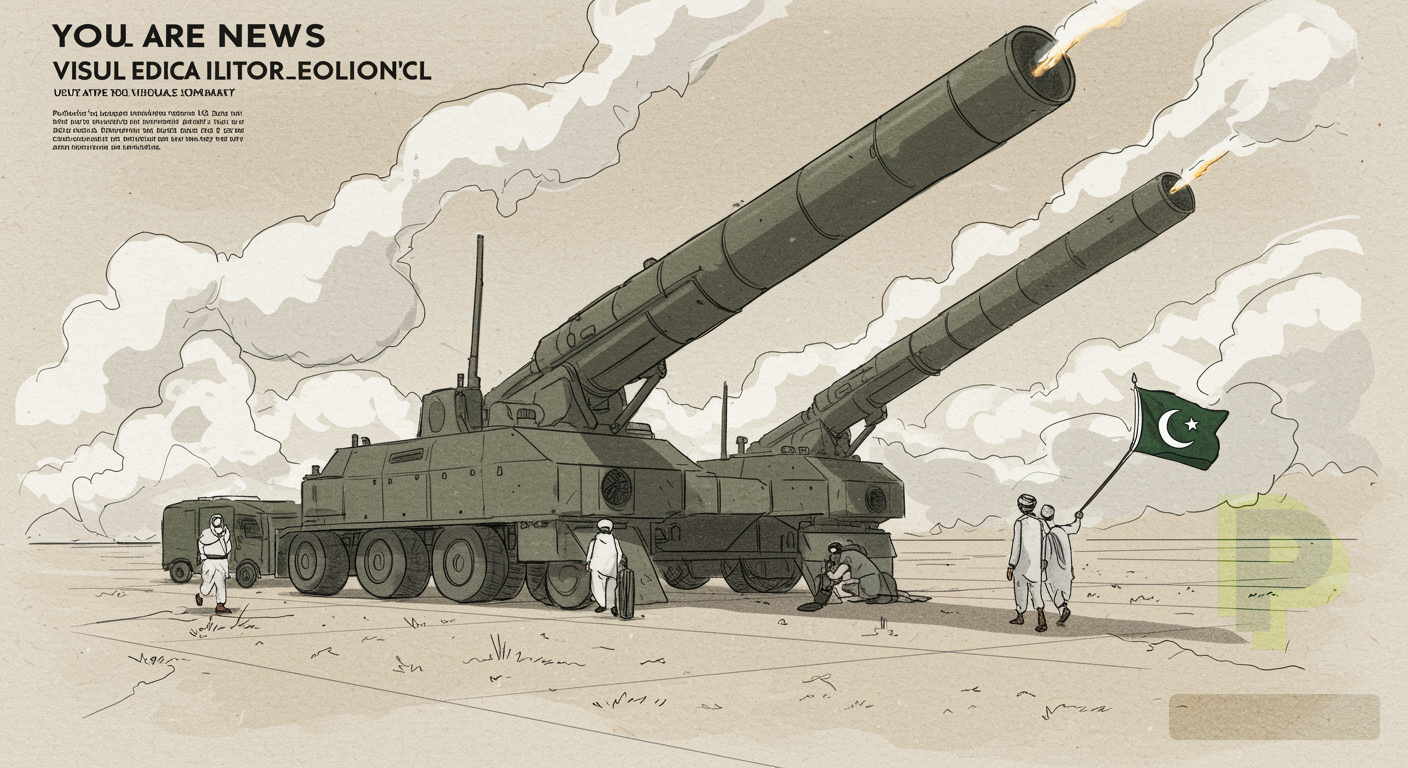
According to reports citing a US intelligence chief, Pakistan is actively engaged with China in developing nuclear-capable ballistic missiles that possess the capability to reach targets as far as the United States mainland. This assessment, reported by NDTV and Hindustan Times on March 19, 2026, marks a pivotal moment in understanding Pakistan's evolving defence posture. For decades, Pakistan's nuclear and missile programmes have been viewed primarily through the lens of regional deterrence, specifically in relation to India. However, the new intelligence assessment expands this scope significantly, suggesting a broader strategic ambition and capability.
Background/Context: Pakistan initiated its nuclear weapons programme in the early 1970s, culminating in overt nuclear tests in May 1998 in response to India's own tests. Since then, its strategic doctrine has emphasised 'minimum credible deterrence.' Its missile arsenal, developed with significant technological assistance, notably from China, has historically focused on various ranges, including short-range (Hatf series), medium-range (Ghauri, Shaheen), and cruise missiles (Babur, Ra'ad). The current intelligence assessment, if accurate, indicates a substantial increase in the range and sophistication of these systems, potentially moving beyond regional deterrence to a more global strategic dimension. This evolution naturally prompts questions about the stability of the international non-proliferation regime and the implications for major powers.
Escalating Tensions in the Gulf: Energy and Diplomacy at Play
Simultaneously, the Middle East remains a focal point of intense geopolitical activity, with recent reports indicating a significant escalation. CNN and NBC News reported live updates on March 19, 2026, detailing that Iran's intelligence minister was reportedly killed by Israel, an event that has been followed by Iranian strikes on Gulf energy sites. These strikes included a major gas hub in Qatar, leading to fires and raising alarms across international energy markets. The targeting of critical energy infrastructure in the Gulf, a region vital for global oil and gas supplies, immediately impacts economic stability and security.
Background/Context: The Middle East has been grappling with a complex web of conflicts and proxy wars for years, with Iran and Israel frequently at loggerheads. The US has maintained a significant military presence in the region, often positioning itself as a guarantor of stability and a deterrent against aggression. The reported killing of Iran's intelligence minister by Israel marks a severe escalation in their shadow war, carrying profound implications for direct confrontation. Iran's retaliatory strikes on Gulf energy sites underscore the vulnerability of critical infrastructure in a highly militarised zone. This situation is further complicated by the political landscape in the United States, where former President Donald Trump, as reported by The Guardian, is reportedly against further attacks on Iranian energy sites after an earlier Israeli strike on a gas field. This suggests a potential divergence in strategic approaches within US policy circles or a nuanced understanding of de-escalation tactics, especially given the US's deployment of bunker busters in the region, as noted by NBC News.
Regional Observances Amidst Geopolitical Volatility
Amidst these significant security developments, a moment of regional unity and cultural significance has emerged. Al-Watan, an Arabic Gulf source, reported on March 19, 2026, that the GCC nations—the United Arab Emirates, Saudi Arabia, Qatar, Bahrain, and Kuwait—have officially announced the sighting of the moon and subsequently the date for Eid al-Fitr 2026. This announcement, eagerly anticipated by millions of Muslims across the region and globally, marks the end of the holy month of Ramadan and the beginning of festivities.
Why does this confluence of events matter for Pakistan now? The simultaneous occurrence of Pakistan's strategic defence advancements, heightened Middle East tensions impacting energy security, and the Eid al-Fitr announcements creates a complex tapestry for Pakistan. As a significant Muslim nation with deep historical and economic ties to the Gulf, Pakistan is directly affected by regional stability. The potential for a wider conflict in the Gulf could disrupt energy supplies, impacting Pakistan's economy, which relies heavily on oil imports and remittances from Pakistani expatriates in GCC countries. Furthermore, Pakistan's own evolving strategic capabilities, as perceived by global powers, place it at a critical juncture in its foreign policy and defence planning.
Expert Analysis
Speaking on the implications of these developments, Dr. Ayesha Siddiqa, a renowned defence analyst based in Islamabad, stated, "The reported range extension of Pakistan's missiles, if confirmed by independent sources beyond US intelligence, would fundamentally alter regional deterrence calculations. It places Pakistan in a different strategic league, demanding a more nuanced diplomatic approach from global powers and potentially reshaping its alliances."
Economist Dr. Ali Hasan, a senior fellow at the Sustainable Development Policy Institute (SDPI) in Karachi, commented on the Gulf situation: "Any disruption to Gulf energy production, as seen with the recent strikes, has immediate and severe repercussions for Pakistan. Our energy import bill could surge, and the stability of remittances from the nearly five million Pakistanis working in the GCC region becomes a critical concern. This necessitates proactive economic diplomacy and strategic energy procurement planning from Islamabad."
A senior official from Pakistan's Ministry of Foreign Affairs, speaking on condition of anonymity due to the sensitivity of ongoing diplomatic engagements, emphasised, "Pakistan is closely monitoring the situation in the Middle East. Our policy remains one of promoting peace and de-escalation through diplomatic channels. The security of the Gulf, where millions of our citizens reside and work, is intrinsically linked to Pakistan's own economic and national security interests."
Impact Assessment
The immediate impact of these developments is multifaceted. For Pakistan, the intelligence assessment regarding its long-range missile capabilities could lead to increased international pressure regarding non-proliferation, but also potentially enhance its strategic leverage in global forums. Internally, it reinforces the narrative of a robust national defence, which resonates strongly with the public.
The escalating conflict in the Gulf, particularly the targeting of energy sites, directly threatens global energy security. Pakistan, being a net importer of energy, would face immediate economic repercussions through rising oil prices and potential supply chain disruptions. This could exacerbate existing inflationary pressures within the country, affecting household budgets and industrial operations. Furthermore, the safety and economic well-being of the vast Pakistani diaspora in the GCC countries become paramount, with any instability potentially impacting remittance flows, a critical component of Pakistan's foreign exchange reserves.
The announcement of Eid al-Fitr, while a joyous occasion, occurs against this sombre backdrop. While it offers a cultural anchor and a period of reflection, the underlying geopolitical tensions may temper public celebrations, particularly for those with family and economic ties to the volatile Middle East. For policymakers, ensuring the smooth flow of remittances and the safety of Pakistani citizens abroad during this period becomes a key priority.
What Happens Next
Looking ahead, several critical developments bear watching. The veracity and implications of the US intelligence chief's statements regarding Pakistan's missile capabilities will likely be scrutinised further by international defence analysts and policymakers. This could lead to renewed calls for strategic stability dialogues in South Asia and greater transparency regarding defence programmes. Pakistan's diplomatic corps will likely engage with key international partners to manage perceptions and reaffirm its commitment to responsible nuclear stewardship. As PakishNews previously reported, Pakistan has consistently advocated for a peaceful resolution to regional disputes.
In the Middle East, the immediate focus will be on de-escalation efforts following the Iranian strikes. The stance of former President Trump, as reported, suggests a potential for varied international responses to further escalations, which could influence the trajectory of the Iran-Israel conflict. Energy markets will remain highly sensitive to any further attacks, necessitating contingency planning from major importing nations like Pakistan. The role of international mediation and diplomacy will be crucial in preventing a wider regional conflagration that could have devastating global economic and humanitarian consequences.
The coming weeks will also see the full observance of Eid al-Fitr across the Muslim world. While this period traditionally fosters peace and community, the underlying geopolitical currents will undoubtedly remain a significant concern for leaders and citizens alike. Stakeholders should monitor diplomatic overtures between regional powers, global energy price fluctuations, and any further statements from international intelligence agencies regarding strategic defence capabilities. The interplay of these factors will define the regional and global security landscape in the immediate future.
Related: More Pakistan News | Middle East Crisis
Related Coverage
- Pakistan's Evolving Strategic Capabilities Draw US Scrutiny, but how will escalating Gulf tensions…
- Middle East Tensions Escalate with Gulf Strikes, but how will Pakistan navigate rising oil prices…
- Pakistan and Afghanistan Agree to Eid Ceasefire, but What Does This Mean for Border Communities in…
Archive Discovery
Frequently Asked Questions
What is the significance of the US intelligence chief's statement about Pakistan's missiles?
The statement by a US intelligence chief, indicating Pakistan's development of nuclear-capable ballistic missiles with ranges that could reach the United States, is highly significant. It suggests a qualitative advancement in Pakistan's defence capabilities beyond regional deterrence, potentially altering global strategic assessments and requiring a re-evaluation of international non-proliferation efforts. This development could elevate Pakistan's strategic standing but also invite increased scrutiny from major powers.
How do the escalating tensions in the Gulf affect Pakistan?
Escalating tensions in the Gulf, particularly the reported Iranian strikes on energy sites like Qatar's gas hub, directly impact Pakistan's economic stability. As a major importer of oil and gas, Pakistan faces potential surges in energy prices and supply chain disruptions, which can worsen inflation. Moreover, the safety and economic well-being of nearly five million Pakistani expatriates in GCC countries become a critical concern, as their remittances are vital to Pakistan's foreign exchange reserves.
Why is the announcement of Eid al-Fitr important amidst these geopolitical events?
The announcement of Eid al-Fitr by GCC nations, while a joyous religious occasion, provides a unique cultural context amidst significant geopolitical volatility. For millions in the region and Pakistan, Eid is a time for family and reflection. However, the ongoing Middle East crisis and concerns over regional security mean that even moments of celebration are tinged with apprehension, highlighting the need for diplomatic efforts to secure peace and stability for the populace.