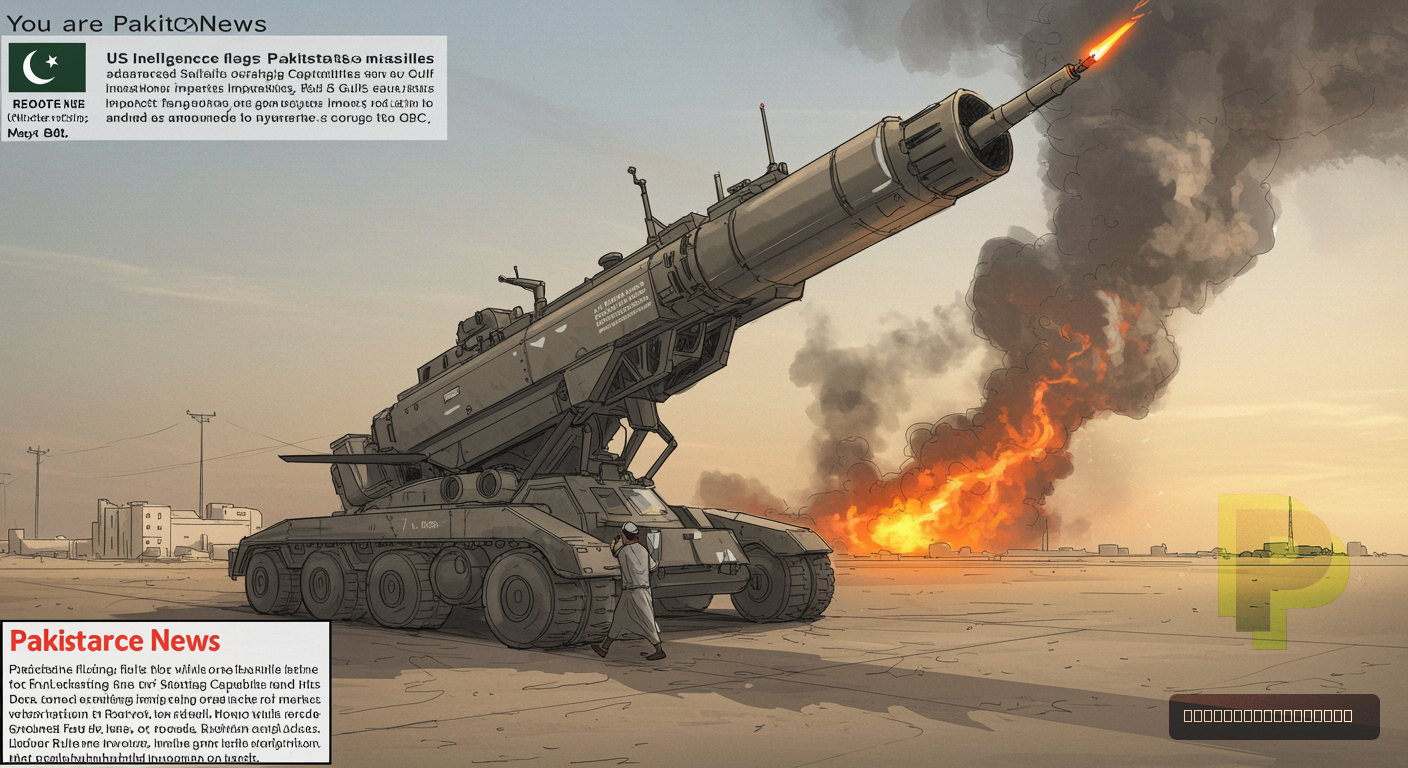
A recent assessment by a senior US intelligence official has brought Pakistan's strategic missile capabilities, developed with Chinese assistance, into sharp global focus, indicating a potential range that could reach the United States. This development coincides with a dramatic escalation of tensions in the Middle East, marked by a targeted Israeli strike in Iran, subsequent retaliatory actions by Tehran against key Gulf energy infrastructure, and a reported shift in US policy regarding further military engagement. The convergence of these events underscores a rapidly reconfiguring geopolitical landscape, demanding immediate attention from policymakers and business leaders across Pakistan, the UAE, and the wider Gulf region.
Quick Answer
US intelligence flags Pakistan's advanced missiles while escalating Iran-Israel conflict hits Gulf energy sites, impacting regional stability and global markets. Eid al-Fitr announced across GCC.
- What is the significance of the US intelligence chief's statement regarding Pakistan's missiles? The statement by a senior US intelligence chief, indicating Pakistan's development of nuclear-capable ballistic missiles with Chinese aid that could reach the US, is significant as it highlights evolving strategic capabilities. This assessment, made public on March 19, 2026, could lead to renewed international discussions on non-proliferation and potentially influence Pakistan-US diplomatic relations and global security dialogues. It underscores the ongoing shifts in global strategic balances, with Pakistan's defence posture becoming a more prominent factor in international security considerations.
- How do the escalating Middle East tensions affect Pakistan and the Gulf region's energy security? Escalating Middle East tensions, particularly Iran's strikes on Gulf energy sites including a major gas hub in Qatar on March 19, 2026, directly threaten energy security for Pakistan and the Gulf region. Pakistan, a significant energy importer, faces potential surges in global oil and gas prices, exacerbating domestic economic challenges like inflation. For Gulf states like the UAE, these attacks necessitate heightened vigilance and a re-evaluation of defence strategies, impacting their vital energy export revenues and global supply chain stability, which collectively contribute trillions of dollars to the world economy.
- What is the broader context of former President Trump's reported stance on attacks against Iran's energy sites? Former US President Donald Trump's reported opposition to further attacks on Iran's energy infrastructure, following an Israeli strike, provides a crucial element to the broader geopolitical context of the Middle East crisis. This stance, if indicative of future US policy, could signal a potential shift away from direct military escalation and towards a more cautious diplomatic approach. Such a development could significantly influence the strategic calculus for regional actors and global powers, potentially altering the dynamics of the Iran-Israel conflict and impacting efforts towards de-escalation, as global leaders weigh the implications of major power involvement.
The convergence of Pakistan's enhanced strategic defence capabilities and the escalating Middle East conflict signals a critical juncture for regional security, necessitating careful diplomatic navigation and strategic foresight from all stakeholders.
As PakishNews previously reported, Middle East Tensions Escalate with Gulf Strikes, but how will Pakistan navigate….
- A US intelligence chief has stated that Pakistan, with China's assistance, is developing nuclear-capable ballistic missiles that could potentially target the United States.
- The Middle East crisis has escalated significantly, following reports of Israel killing Iran's intelligence minister and Iran subsequently striking Gulf energy sites, including a major gas hub in Qatar.
- Former US President Donald Trump has reportedly expressed opposition to further attacks on Iran's energy infrastructure after an Israeli strike on a gas field.
- Gulf Cooperation Council (GCC) states, including the UAE, Saudi Arabia, Qatar, Bahrain, and Kuwait, have announced the date for Eid al-Fitr.
The implications of these interconnected developments extend far beyond their immediate geographical confines, touching upon global power dynamics, energy security, and regional stability. Pakistan's long-standing strategic partnership with China in defence technology has historically been a cornerstone of its deterrence posture. However, the latest assessment by Washington's top intelligence official introduces a new dimension to this equation, prompting a re-evaluation of strategic balances. Simultaneously, the Middle East, a region intrinsically linked to Pakistan and the Gulf through trade, energy, and diaspora, is witnessing unprecedented volatility, with direct military engagements threatening to destabilise global energy markets and supply chains.
Pakistan's Strategic Horizon: Ballistic Capabilities Under Scrutiny
According to reports from NDTV and Hindustan Times, a senior United States intelligence chief recently informed a congressional committee that Pakistan is actively developing nuclear-capable ballistic missiles with the assistance of China, asserting that these advanced weapon systems possess the capability to reach targets within the United States. This statement, made public on March 19, 2026, marks a significant moment, bringing Pakistan's strategic defence programme into renewed international focus. While the specific details of these missile systems or their exact range were not publicly disclosed, the assertion from a high-ranking US intelligence official underscores a perceived shift in Pakistan's strategic capabilities.
Pakistan's nuclear and missile programmes have been a critical component of its national defence strategy since the 1970s, primarily aimed at maintaining strategic deterrence in South Asia. The country successfully conducted nuclear tests in May 1998, responding to similar tests by India, and has since developed a diversified arsenal of ballistic and cruise missiles. China has historically been a key partner in Pakistan's defence modernisation efforts, providing technology and expertise across various military domains. This latest intelligence assessment suggests a deepening of this cooperation, pushing the boundaries of Pakistan's long-range capabilities.
Why does Pakistan's missile development concern the U.S. now? The concern articulated by the US intelligence chief reflects Washington's broader anxieties about nuclear proliferation and the stability of global strategic balances. Any expansion in the range and sophistication of nuclear-capable missiles by a state outside the established nuclear powers is closely monitored, particularly when it involves a country with complex regional dynamics. A senior defence analyst based in Islamabad, speaking on condition of anonymity due to the sensitivity of the matter, told PakishNews, "Pakistan's missile programme is purely for defensive purposes and aims to ensure credible deterrence against any aggression. Cooperation with China is a long-standing strategic alliance, vital for our national security interests in a volatile region." This development matters now as it could influence future US foreign policy towards Pakistan, potentially leading to increased diplomatic engagement or, conversely, heightened scrutiny regarding non-proliferation efforts.
Middle East on Edge: Escalation and Energy Security in the Gulf
Concurrently, the Middle East is experiencing a severe escalation of hostilities, directly impacting the stability of the Gulf region, a vital economic partner for Pakistan. NBC News reported on March 19, 2026, that Iran's intelligence minister was killed in an alleged Israeli strike, a development that dramatically heightened tensions. This action triggered swift and severe retaliation from Tehran. CNN confirmed that Iran launched strikes against multiple Gulf energy sites, with fires erupting at a major gas hub in Qatar, causing significant disruption and raising immediate concerns about global energy supplies.
The Gulf region, home to the world's largest oil and natural gas reserves, is a critical artery for global energy markets. Attacks on its infrastructure have immediate and far-reaching economic consequences, affecting crude oil prices, natural gas futures, and the stability of shipping routes through the Strait of Hormuz. For countries like Pakistan, which relies heavily on energy imports, any disruption in the Gulf translates directly into increased economic pressure and potential inflation. "The targeting of Gulf energy sites, particularly a major gas hub in Qatar, is a red line for global energy security," stated Dr. Fatima Al-Hajri, a leading energy economist based in Dubai. "This will undoubtedly lead to a surge in international oil and gas prices, impacting consumers and industries worldwide, including Pakistan's already strained economy."
Amidst this escalating crisis, The Guardian reported that former US President Donald Trump, a significant figure in global politics, has reportedly expressed opposition to further attacks on Iran's energy sites following an earlier Israeli strike on an Iranian gas field. This reported stance, if confirmed as official US policy, could signal a potential shift towards de-escalation from Washington, or at least a more cautious approach to military engagement in the region. "Trump's reported position, whether driven by domestic political considerations or a strategic re-evaluation, introduces an element of unpredictability into the conflict," observed Dr. Hassan Ali Khan, a geopolitical strategist at a regional think tank. "It could either pave the way for diplomatic off-ramps or further complicate the calculus for regional actors, including the UAE and Saudi Arabia, who are directly impacted by these hostilities." This dynamic rebalancing of global power, as analysed by Travel Daily News Asia-Pacific in a broader context, reflects the intricate interplay of international leadership, regional conflicts, and strategic interests.
Regional Observance Amidst Geopolitical Shifts: Eid al-Fitr Announced
In a contrasting yet equally significant development for the region, the Gulf Cooperation Council (GCC) states – the UAE, Saudi Arabia, Qatar, Bahrain, and Kuwait – have officially announced the date for Eid al-Fitr, marking the end of the holy month of Ramadan. According to Al Watan, the announcement was made on March 19, 2026, setting the stage for millions of Muslims to celebrate the festive occasion. Eid al-Fitr is a time for communal prayers, family gatherings, and charitable giving, providing a moment of cultural and spiritual reflection across the Muslim world.
This announcement, while a routine annual event, takes on heightened significance when juxtaposed with the intense geopolitical tensions gripping the region. For the large Pakistani expatriate communities residing in the UAE and other Gulf countries, Eid al-Fitr is a crucial period for family reunions and cultural celebrations, often involving travel and significant economic activity. The stability and security of the Gulf directly impact their ability to observe these traditions. "The Eid al-Fitr announcement offers a vital moment of normalcy and spiritual respite amidst the surrounding anxieties," commented Mr. Ahmed Rashid, a community leader in Dubai. "It underscores the resilience of our communities and the importance of faith, even as we remain acutely aware of the regional challenges." The economic implications of Eid holidays, including increased consumer spending and travel, are substantial for the retail and tourism sectors in the GCC, contributing billions of dollars to their economies annually.
Impact Assessment and What Happens Next
The dual developments of Pakistan's enhanced strategic capabilities and the escalating Middle East crisis carry profound implications. For Pakistan, the US intelligence chief's statement could trigger renewed diplomatic discussions on non-proliferation and regional security frameworks. It might also prompt Pakistan to further articulate its strategic doctrine and the defensive nature of its programmes on international platforms. The ongoing conflict in the Middle East, particularly the attacks on Gulf energy sites, directly threatens Pakistan's energy security and economic stability, given its reliance on oil and gas imports from the region. As PakishNews previously reported on Pakistan's economic challenges, any upward pressure on global energy prices exacerbates domestic inflation and balance of payments issues.
For the UAE and other GCC states, the situation demands heightened vigilance and potentially recalibrated defence strategies. The direct targeting of energy infrastructure, such as the Qatar gas hub, signals a dangerous escalation that could test regional alliances and international security commitments. The reported US stance, if it leads to a less interventionist approach, might compel Gulf nations to strengthen their own collective security mechanisms or explore alternative diplomatic channels to de-escalate tensions. Business leaders in the Gulf are now grappling with increased risk premiums, potential disruptions to supply chains, and the imperative to diversify energy sources and trading partners. Read more on UAE's economic diversification efforts at PakishNews.
Looking ahead, stakeholders should closely monitor several key areas. The diplomatic fallout from the US intelligence assessment on Pakistan's missiles will be crucial, potentially shaping Pakistan-US bilateral relations and Pakistan's role in global security dialogues. In the Middle East, the immediate focus will be on whether the current cycle of retaliation can be contained, or if further strikes will push the region towards a broader conflict. The role of international mediation and the explicit positions of major global powers, including the US, China, and Russia, will be critical in shaping these outcomes. The resilience of Gulf energy infrastructure and the stability of global oil and gas markets will serve as direct indicators of the crisis's economic impact. Furthermore, the upcoming Eid al-Fitr celebrations will offer a brief but significant period for reflection, contrasting the aspiration for peace with the stark realities of regional instability. In a related development covered by PakishNews, regional security dialogues are intensifying.
The coming weeks will be pivotal in determining the trajectory of these interconnected crises. Pakistan's strategic defence posture, the intricate dynamics of the Middle East conflict, and the global response to energy security threats will collectively shape the geopolitical landscape for the foreseeable future. Policymakers, business leaders, and informed citizens must remain vigilant, understanding that developments in one theatre inevitably reverberate across another, demanding a comprehensive and nuanced approach to regional and international affairs.
Related Coverage
- Middle East Tensions Escalate with Gulf Strikes, but how will Pakistan navigate rising oil prices…
- Pakistan and Afghanistan Agree to Eid Ceasefire, but What Does This Mean for Border Communities in…
- Gulf Tensions Escalate as Pakistan Announces Eid Truce, but What Does a Potential Saudi Defence…
Archive Discovery
Frequently Asked Questions
What is the significance of the US intelligence chief's statement regarding Pakistan's missiles?
The statement by a senior US intelligence chief, indicating Pakistan's development of nuclear-capable ballistic missiles with Chinese aid that could reach the US, is significant as it highlights evolving strategic capabilities. This assessment, made public on March 19, 2026, could lead to renewed international discussions on non-proliferation and potentially influence Pakistan-US diplomatic relations and global security dialogues. It underscores the ongoing shifts in global strategic balances, with Pakistan's defence posture becoming a more prominent factor in international security considerations.
How do the escalating Middle East tensions affect Pakistan and the Gulf region's energy security?
Escalating Middle East tensions, particularly Iran's strikes on Gulf energy sites including a major gas hub in Qatar on March 19, 2026, directly threaten energy security for Pakistan and the Gulf region. Pakistan, a significant energy importer, faces potential surges in global oil and gas prices, exacerbating domestic economic challenges like inflation. For Gulf states like the UAE, these attacks necessitate heightened vigilance and a re-evaluation of defence strategies, impacting their vital energy export revenues and global supply chain stability, which collectively contribute trillions of dollars to the world economy.
What is the broader context of former President Trump's reported stance on attacks against Iran's energy sites?
Former US President Donald Trump's reported opposition to further attacks on Iran's energy infrastructure, following an Israeli strike, provides a crucial element to the broader geopolitical context of the Middle East crisis. This stance, if indicative of future US policy, could signal a potential shift away from direct military escalation and towards a more cautious diplomatic approach. Such a development could significantly influence the strategic calculus for regional actors and global powers, potentially altering the dynamics of the Iran-Israel conflict and impacting efforts towards de-escalation, as global leaders weigh the implications of major power involvement.