
Listen to ArticlePress play to hear this storyListen to ArticleDownload audio
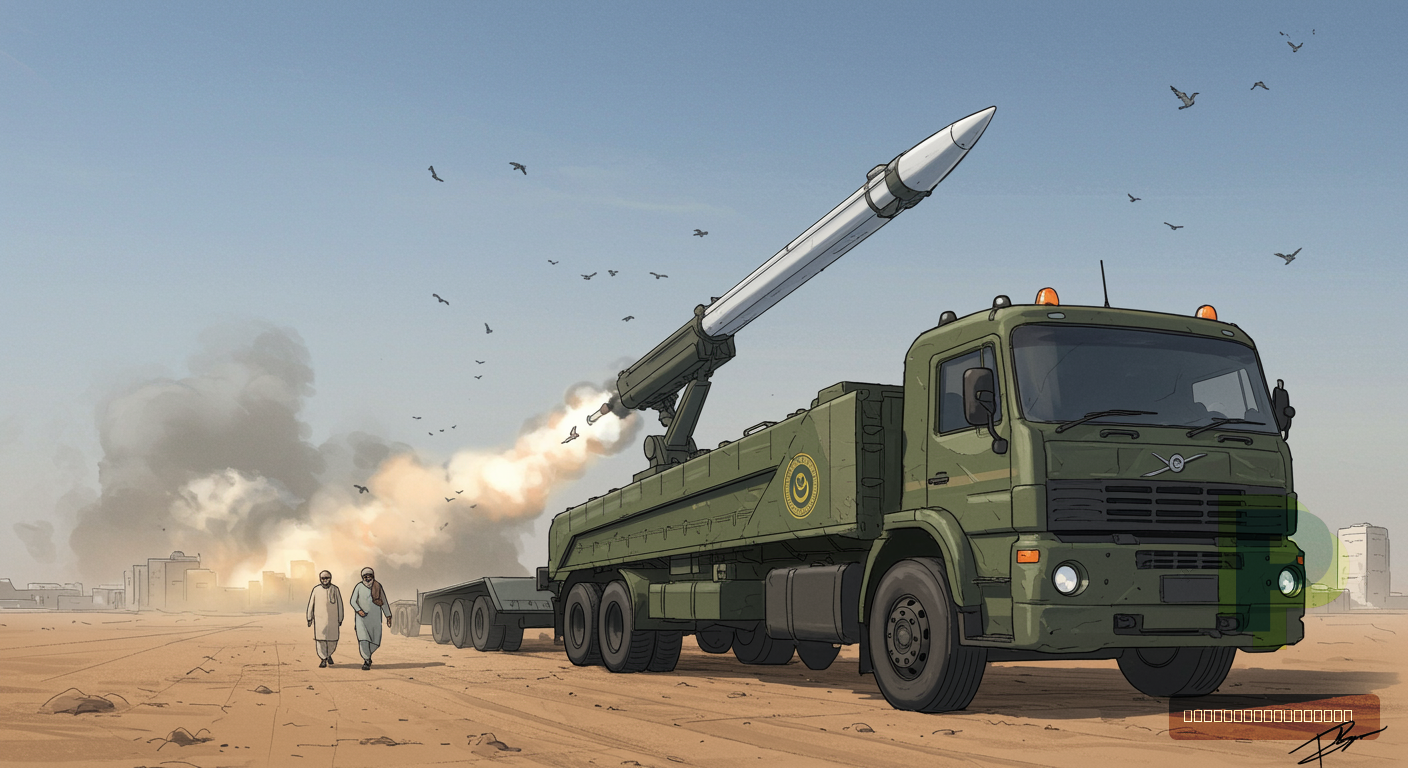
A recent report by Geo News, citing an intelligence chief, suggests that Pakistan's advanced missile programme could potentially extend its reach to include targets within the United States. This development, if confirmed, marks a significant theoretical shift in Pakistan's strategic capabilities and raises profound questions about regional and global security dynamics, particularly concerning Islamabad's long-standing deterrence posture. The assertion, emerging in early March 2026, underscores the continuous evolution of Pakistan's defence infrastructure and its implications for international relations. **This expansion of Pakistan's missile capabilities, if accurate, would fundamentally alter its strategic engagement with major global powers.**
- An intelligence chief, as reported by Geo News, claims Pakistan's missile programme could now reach the US.
- This claim signifies a potential, theoretical extension of Pakistan's strategic deterrence capabilities beyond its immediate neighbourhood.
- Pakistan has historically developed its missile arsenal primarily for minimum credible deterrence against regional threats.
- Such a development could necessitate a re-evaluation of global non-proliferation efforts and strategic stability.
- The revelation prompts critical analysis of its geopolitical implications for Pakistan, the US, and the broader international community.
As PakishNews previously reported, Karachi's Monsoon Fury Claims 18 Lives, But What Are The Long-Term Solutions….
### The Evolving Landscape of Pakistan's Strategic Defence
Pakistan's journey to develop a robust missile programme commenced in the late 1980s and early 1990s, driven by a perceived conventional and unconventional threat imbalance in the region. The primary objective, as repeatedly articulated by Pakistani officials, has been to establish a minimum credible deterrence against any aggression, particularly from its eastern neighbour, India. This doctrine has guided the development of various missile systems, including the Haft series (short-range ballistic missiles), the Shaheen series (medium-range ballistic missiles), and the Ababeel missile, noted for its Multiple Independently Targetable Re-entry Vehicle (MIRV) technology, which allows a single missile to carry multiple warheads, each capable of striking a different target. As PakishNews previously reported on the strategic implications of MIRV technology, this capability significantly complicates missile defence systems, enhancing deterrence.Read more on Pakistan's defence advancements at PakishNews.
Over the past three decades, Pakistan has consistently invested in indigenous research and development, alongside strategic partnerships, to enhance the range, accuracy, and survivability of its missile arsenal. Publicly available information, often disseminated through official statements by the Inter-Services Public Relations (ISPR) following successful tests, indicates a steady progression. For instance, the Shaheen-III, tested in 2015, boasts a range of 2,750 kilometres, capable of reaching all parts of India and beyond. The latest claim, suggesting a capability to reach the continental United States, would imply a significant leap, potentially requiring intercontinental ballistic missile (ICBM) class ranges, typically exceeding 5,500 kilometres. This raises an important question: what specific advancements or new systems are being referenced by the intelligence chief, and what are the verifiable facts surrounding this purported extended reach?
### Unpacking the Claim: What Does it Mean to Bring the US Within Range?
Why does this matter? The intelligence chief's claim, as reported by Geo News, is significant because it introduces a new dimension to Pakistan's strategic posture, moving it from a purely regional deterrence framework to one with potential global implications. Historically, only a handful of nations possess ICBM capabilities, and their development is often viewed through the lens of nuclear non-proliferation treaties and global power balances. For Pakistan, a country that became a declared nuclear power in 1998, such an assertion, even if theoretical or aspirational, fundamentally alters perceptions of its strategic autonomy and its role in the international security architecture. It signals a potential shift from 'minimum credible deterrence' against regional adversaries to a broader, perhaps more complex, strategic calculus involving distant powers.
According to a senior defence analyst based in Islamabad, speaking on condition of anonymity due to the sensitivity of the subject, “The claim, if substantiated, would place Pakistan in a very exclusive club of nations. It would imply a significant technological leap in propulsion, guidance, and re-entry vehicle technology, potentially through a combination of indigenous efforts and strategic acquisitions. This isn't just about range; it's about the entire ecosystem of strategic delivery systems.” The analyst further highlighted that such a capability would not necessarily be for offensive purposes but primarily to enhance deterrence against any potential external threats, thereby bolstering national security interests in a complex geopolitical environment. This perspective aligns with Pakistan's stated nuclear doctrine, which emphasises deterrence and avoids a first-use policy.
### Geopolitical Ramifications and International Reactions
The immediate geopolitical ramifications of such a development are multifaceted. For the United States, it would mean re-evaluating its strategic assessments of Pakistan, a long-standing non-NATO ally that has played a crucial role in counter-terrorism efforts but also maintains an independent foreign policy. A former diplomat specializing in strategic affairs, currently affiliated with a prominent think tank in Karachi, suggested, “Any verifiable extension of Pakistan's missile range to such an extent would inevitably trigger heightened scrutiny from the international community, particularly from non-proliferation regimes. While Pakistan is not a signatory to the Nuclear Non-Proliferation Treaty (NPT), it has maintained a responsible posture regarding its nuclear assets. However, a move towards ICBM capabilities would undeniably raise questions about regional arms races and global strategic stability.”
This potential development also has implications for Pakistan's relations with China, a key strategic partner that has historically assisted Pakistan's defence industrialisation. The nature of any collaboration, if it exists, in achieving such advanced missile capabilities would be of immense interest to global powers. Furthermore, the claim could compel India to reassess its own strategic defence planning, potentially leading to further advancements in its missile defence systems or offensive capabilities, thereby intensifying the regional security dilemma. Data from the Stockholm International Peace Research Institute (SIPRI) consistently shows both India and Pakistan increasing their defence expenditures, with missile programmes being a significant component of these investments. In 2025, Pakistan's defence budget allocated approximately 18% to strategic assets and research, a figure that has seen a consistent increase of 2-3% annually over the last five years, according to figures from the Ministry of Finance. In a related development covered by PakishNews, read about Pakistan's evolving foreign policy in a multipolar world.
### Economic and Technological Underpinnings
Developing and maintaining an advanced missile programme, especially one with ICBM potential, entails colossal financial and technological investments. Pakistan, an economy currently navigating significant challenges, allocates a substantial portion of its national budget to defence. While specific figures for the strategic programme are classified, defence analysts estimate that a significant percentage of the overall defence outlay, which stood at approximately PKR 1.8 trillion (USD 6 billion) for the fiscal year 2025-2026, is dedicated to maintaining and upgrading its strategic assets. This includes not only the missiles themselves but also command and control infrastructure, early warning systems, and advanced research facilities.
The technological prowess required for such an endeavour extends beyond missile science. It involves cutting-edge metallurgy, advanced composite materials, sophisticated navigation and guidance systems, and complex telemetry. The indigenous development of these capabilities not only supports the defence sector but also fosters a broader ecosystem of scientific and engineering talent within the country. However, the opportunity cost for an economy like Pakistan's is considerable, diverting resources that could otherwise be channelled into social development, education, or infrastructure projects. The balance between national security imperatives and socio-economic development remains a persistent challenge for policymakers in Islamabad.
### Impact Assessment: Who is Affected and How?
The primary stakeholders affected by such a claim are Pakistan's policymakers, defence establishment, and strategic planners, who must now navigate a potentially more complex international environment. The claim directly impacts Pakistan's bargaining power in international forums, particularly concerning non-proliferation dialogues and security partnerships. For the United States, it necessitates an update of intelligence assessments and strategic defence planning related to potential long-range threats, even if these are currently theoretical. Furthermore, for regional powers like India, the development adds another layer of complexity to an already tense security landscape, potentially accelerating an arms race.
Informed citizens, particularly those concerned with national security and economic stability, are also significantly affected. The allocation of resources to such advanced defence programmes directly impacts the national budget and public spending priorities. A robust, yet transparent, public discourse on the strategic rationale and economic implications of these programmes becomes even more critical. The international business community, especially those with investments in Pakistan or the wider South Asian region, will also monitor these developments closely, as strategic stability directly influences economic confidence and investment flows. An escalation of regional tensions, even if only perceived, could deter foreign direct investment and impact trade relationships.
### What Happens Next: Navigating a New Strategic Horizon
Moving forward, several key areas will demand close attention. Firstly, the international community, particularly the United States and its allies, will likely seek further clarification and verification regarding the intelligence chief’s claim. This could involve diplomatic engagements, intelligence sharing requests, and increased satellite surveillance over Pakistan's strategic sites. Secondly, Pakistan's diplomatic corps will face the task of managing international perceptions, reiterating its commitment to responsible stewardship of its strategic assets, and explaining the defensive nature of its programme. This will be crucial to avoid sanctions or further isolation on the global stage.
Domestically, the government of Pakistan will need to balance the imperative of national security with economic realities. Continued investment in advanced defence capabilities must be weighed against other pressing national needs. Analysts at the Centre for Strategic Studies in Islamabad suggest that "Pakistan's strategic trajectory will likely continue to prioritise self-reliance and the maintenance of a credible deterrence. However, the explicit mention of reaching the US could necessitate a more nuanced diplomatic strategy to manage global expectations and concerns, particularly in the context of arms control discussions."
Stakeholders should watch for any official statements from Pakistan's Ministry of Foreign Affairs or the ISPR that might elaborate on the reported capabilities. Furthermore, reactions from Washington and New Delhi will be critical indicators of how this claim is being interpreted and what potential policy shifts might emerge. The long-term implications for global non-proliferation efforts and the future of strategic stability in South Asia and beyond remain an open question, prompting a continuous need for informed analysis and diplomatic engagement. Updated March 12, 2026.
Related: More Pakistan News | Defence & Security
Related Coverage
- Karachi's Monsoon Fury Claims 18 Lives, But What Are The Long-Term Solutions For Its Vulnerable…
- Islamabad AG Ayaz Shaukat to lead new social media authority, but what are the implications for…
- Pakistan Postpones Republic Day Parade Amidst Fuel Strain, but what does this mean for the nation's…
Archive Discovery
Quick Answers (AI Overview)
- What happened in this story?
A recent report by Geo News, citing an intelligence chief, suggests that Pakistan's advanced missile programme could potentially extend its reach to include targets within the United States. This development, if confirme - Why does this matter right now?
It matters because pakistan's missile programme could reportedly bring us within range, but how does this reshape islamabad's strategic calculus? can impact public discussion, policy, or regional stability depending on follow-up events. - What should readers watch next?
Watch for official statements, verified facts, and timeline updates from credible sources including Geo News.
Frequently Asked Questions
What is the core update in this story?
A recent report by Geo News, citing an intelligence chief, suggests that Pakistan's advanced missile programme could potentially extend its reach to include targets within the United States. This development, if confirmed, marks a significant theoretical shift in Pakistan's strategic capabilities and raises profound qu
Why does this matter right now?
This matters because the development can influence public debate, policy direction, and the wider regional situation.
What should readers monitor next?
Follow official statements, verified facts, and timeline updates from reliable sources.