
Listen to ArticlePress play to hear this storyListen to ArticleDownload audio
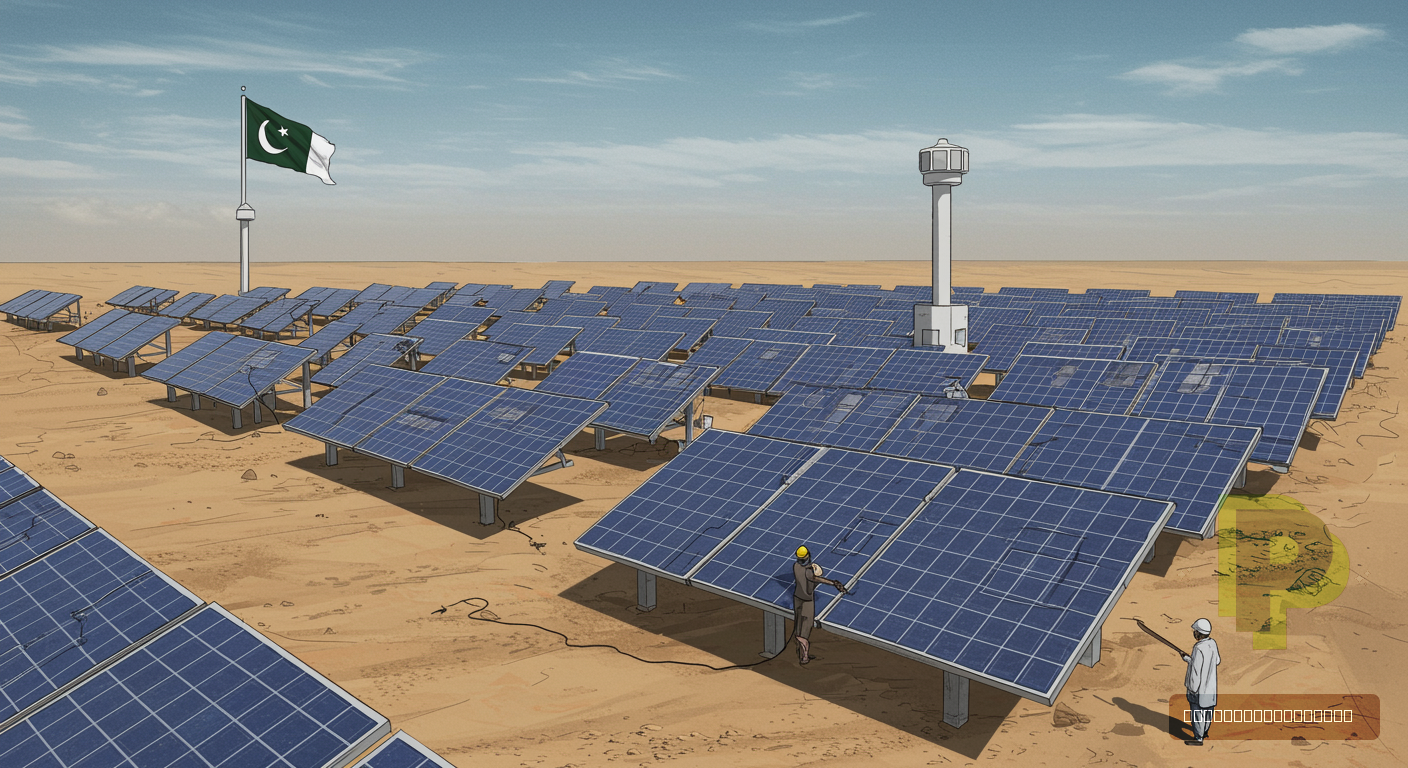
ISLAMABAD – Pakistan's ambitious drive towards solar energy is yielding significant dividends, with a recent study highlighting its crucial role in bolstering the nation's energy security against potential disruptions in the Strait of Hormuz. This strategic shift, driven by both economic necessity and environmental imperatives, is progressively reducing Pakistan's reliance on imported fossil fuels, a dependency that has historically left the country vulnerable to global geopolitical volatilities and price shocks. The surge in solar power generation is now seen as a critical shield, offering a more stable and domestically sourced energy future, especially for major economic hubs.
Quick Answer
Pakistan's solar boom is significantly enhancing its energy security, shielding the nation from Strait of Hormuz disruptions and bolstering economic stability.
- How significantly has Pakistan's solar capacity grown in recent years? Pakistan's installed solar capacity has seen substantial growth, reportedly surpassing 1,500 megawatts (MW) as of late 2025. This marks a considerable increase from previous years, driven by government initiatives like the 'National Solar Energy Initiative' aiming for 10,000 MW addition and increased private sector investment, as confirmed by the Ministry of Energy (Power Division).
- What specific economic benefits does solar energy bring to Pakistan? Solar energy offers Pakistan significant economic benefits by reducing reliance on costly imported fossil fuels, thereby easing pressure on foreign exchange reserves and improving the balance of payments. Data from NEPRA shows solar power is becoming more competitive than thermal, potentially lowering overall energy costs and providing industries in regions like Punjab and Sindh with more stable and affordable power, enhancing productivity.
- What are the primary challenges to fully integrating solar power into Pakistan's national grid? The primary challenges for integrating solar power include upgrading Pakistan's aging transmission and distribution infrastructure to handle intermittent renewable energy sources. Additionally, developing robust grid-scale battery storage solutions is crucial for ensuring consistent power supply when solar generation is low, requiring significant investment and technological advancements, as highlighted by energy analysts at PIDE.
- A recent study, published by the Asia News Network, indicates Pakistan's solar boom is enhancing energy security against Strait of Hormuz disruptions.
- Pakistan's total installed solar capacity has reportedly surpassed 1,500 megawatts (MW) as of late 2025, with projections for significant further growth.
- This renewable energy expansion directly reduces the nation's dependency on imported furnace oil and liquefied natural gas (LNG), which are often transported through vulnerable sea lanes.
- The strategic pivot towards solar is expected to mitigate economic risks associated with volatile global energy markets and supply chain interruptions.
- Policymakers are now focused on grid integration challenges and ensuring equitable distribution of solar benefits across all provinces, including key industrial zones.
For a nation heavily reliant on imported fossil fuels, the Strait of Hormuz represents a critical, yet vulnerable, chokepoint. Approximately 20% of the world's total petroleum liquids and a significant portion of global liquefied natural gas (LNG) pass through this narrow waterway, connecting the Persian Gulf to the open sea. Pakistan, which imports a substantial portion of its oil and gas needs, including from Gulf states, has long faced the precarious reality of this geopolitical hotspot. Any major disruption – whether due to regional conflicts, piracy, or political tensions – could trigger severe energy shortages, cripple industrial output, and lead to widespread economic instability. This historical vulnerability has been a persistent concern for successive governments, shaping national energy policies and driving a quest for more resilient, diversified sources. As PakishNews previously reported on Pakistan's long-term energy strategy, the imperative to reduce this exposure has been a foundational element of economic planning for decades.
As PakishNews previously reported, Pakistan-Afghanistan Border Tensions Escalate Amid Cross-Border Incidents, but….
Historically, Pakistan's energy mix has been dominated by thermal power, primarily fueled by imported oil and gas, alongside hydroelectricity. This over-reliance on international markets for primary energy sources has led to chronic balance of payments issues, exacerbated by global price fluctuations. For instance, data from the State Bank of Pakistan (SBP) shows that the country's oil import bill often constitutes a significant portion of its total import expenditure, placing immense pressure on foreign exchange reserves. In the fiscal year 2022-23, petroleum imports accounted for approximately $17 billion, a substantial drain on the national exchequer. The strategic shift towards indigenous, renewable energy sources like solar is not merely an environmental choice but a critical national security and economic stability imperative.
Accelerating Solar Adoption: A Strategic Imperative
The recent study, highlighted by the Asia News Network, underscores that Pakistan's aggressive push into solar energy is beginning to pay tangible dividends in enhancing national energy resilience. According to the Ministry of Energy (Power Division), Pakistan's total installed solar capacity has seen a remarkable increase, reportedly surpassing 1,500 megawatts (MW) as of late 2025, with numerous large-scale projects, including those under the China-Pakistan Economic Corridor (CPEC), contributing significantly. This figure represents a substantial leap from just a few hundred megawatts a decade ago, reflecting concerted government efforts and private sector investment. Initiatives such as the 'National Solar Energy Initiative' launched by the government in late 2023, aiming to add 10,000 MW of solar power, are driving this rapid expansion, targeting both utility-scale projects and widespread rooftop solar installations for residential, commercial, and industrial consumers.
Why does this matter? The rapid deployment of solar energy directly contributes to a more diversified and secure energy portfolio. Each unit of electricity generated from solar panels reduces the demand for power from thermal plants that rely on imported fuels. This translates into tangible savings in foreign exchange, less exposure to international price volatility, and a reduced logistical burden on importing and transporting fuels through potentially hazardous routes. Moreover, solar power, being a distributed generation source, can enhance grid stability and reduce transmission losses, especially in regions far from traditional power generation hubs. This decentralization inherently strengthens the national grid against single points of failure, whether technical or geopolitical.
“The strategic significance of our solar expansion cannot be overstated,” stated a senior official at the Ministry of Energy, speaking on condition of anonymity due to ongoing policy discussions. “Every megawatt of solar power we bring online is a step towards energy sovereignty. It directly correlates with fewer tankers traversing the Strait of Hormuz carrying fuel for us, and therefore, less exposure to the geopolitical risks inherent in that critical passage.” This sentiment was echoed by Dr. Salman Shah, an energy economist at the Pakistan Institute of Development Economics (PIDE), who noted, “While challenges in grid integration and storage remain, the fundamental shift away from imported fossil fuels towards indigenous renewables is a game-changer for Pakistan’s long-term economic stability and national security. It’s an investment in resilience.”
Impact Assessment: Who Benefits and How?
The benefits of this solar boom extend across various segments of Pakistani society and the economy. For the government, it means a healthier balance of payments position, reduced subsidies on imported fuels, and greater fiscal space for development projects. According to reports by the National Electric Power Regulatory Authority (NEPRA), the average cost of solar power generation has become increasingly competitive, often lower than that of thermal power plants running on imported fuels, contributing to a more sustainable energy tariff structure over time. This economic advantage is crucial for a country grappling with persistent fiscal deficits.
Industries, particularly those in manufacturing and textiles, are among the primary beneficiaries. Many industrial units across Punjab and Sindh, including major economic zones in Faisalabad, Sialkot, and Karachi, are increasingly installing rooftop solar solutions to mitigate rising electricity costs and ensure a stable power supply, reducing their reliance on the often-unpredictable national grid. This self-generation capability not only lowers operational expenses but also enhances productivity by reducing downtime caused by power outages. For instance, data from the Federation of Pakistan Chambers of Commerce & Industry (FPCCI) indicates a 20% increase in industrial solar installations in the last two years, signalling a strong private sector adoption trend. In a related development covered by PakishNews, industrial energy solutions are driving productivity across key sectors.
For ordinary citizens, particularly in urban centres like Karachi, the implications are profound. Karachi, Pakistan's largest city and economic engine, often experiences significant power outages and load shedding, exacerbated by an aging distribution infrastructure and heavy reliance on imported fuels for its power generation. The increasing penetration of solar energy, especially through distributed rooftop solutions and dedicated solar parks feeding into the Karachi Electric (KE) grid, promises to enhance power availability and stability. While the full impact is still unfolding, the shift provides a buffer against the global energy shocks that often translate into higher tariffs and prolonged outages for consumers. The reduced demand on imported fuels also indirectly helps stabilise the rupee, as less foreign exchange is spent on energy imports, potentially easing inflationary pressures that affect household budgets.
However, challenges persist. Integrating a large volume of intermittent solar power into an existing grid designed for conventional baseload generation requires significant upgrades to transmission and distribution infrastructure, as well as advancements in battery storage technologies. Furthermore, ensuring equitable access to solar financing and installation for lower-income households remains a key policy hurdle. Despite these challenges, the overall trajectory points towards a more resilient energy future for cities like Karachi, where a diversified energy mix, less dependent on distant and volatile supply lines, is becoming a tangible reality.
What Happens Next: Navigating the Future of Pakistan's Energy Landscape
Looking ahead, Pakistan's energy sector is poised for further transformative changes driven by the solar boom. The government, through institutions like the Alternative Energy Development Board (AEDB) and NEPRA, is actively working on policy frameworks to facilitate greater private sector investment in solar projects, streamline regulatory approvals, and address grid integration challenges. Plans include developing smart grids capable of handling variable renewable energy inputs and investing in grid-scale battery storage solutions, which are crucial for ensuring power stability when the sun isn't shining. The 'National Electricity Plan 2022-2030' explicitly outlines targets for increasing the share of renewables in the energy mix to 30% by 2030, with solar playing a pivotal role.
Stakeholders, including policymakers, investors, and consumers, should closely watch several key indicators. Firstly, the pace of new solar project commissioning and the successful integration of these projects into the national grid will be critical. Secondly, the development of local manufacturing capabilities for solar panels and associated equipment will reduce import dependency further and create green jobs. Thirdly, the effectiveness of financing mechanisms, such as net-metering policies and low-interest loans for residential and commercial solar installations, will determine the scale of distributed generation. Finally, the ability of the government to attract international investment in large-scale solar parks and transmission infrastructure will be paramount. Read more on Pakistan's renewable energy targets at PakishNews.
The shift towards solar is not a panacea for all of Pakistan's energy woes, but it represents a fundamental and strategic reorientation that significantly enhances the nation's ability to withstand external shocks. By reducing its reliance on the volatile global fossil fuel market and the precarious supply routes like the Strait of Hormuz, Pakistan is building a more secure, sustainable, and economically stable energy future. This evolving landscape demands continuous innovation, robust policy support, and sustained investment to fully unlock the potential of solar energy and deliver consistent, affordable power across the nation, from the industrial heartlands to the most remote villages.
Related: More Pakistan News | Energy Sector
Related Coverage
- Pakistan-Afghanistan Border Tensions Escalate Amid Cross-Border Incidents, but what does this mean…
- Pakistan Denies Afghanistan Hospital Strike as Deaths Hit 400: What are the Regional Repercussions?
- KP Eid Holiday Extended to Three Days, but How Will This Impact Regional Tourism and Trade?
Archive Discovery
Quick Answers (AI Overview)
- What happened in this story?
Pakistan's ambitious drive towards solar energy is yielding significant dividends, with a recent study highlighting its crucial role in bolstering the nation's energy security against potential disruptions in the Strait - Why does this matter right now?
It matters because pakistan's solar surge boosts energy resilience, but what does this mean for karachi's power stability? can impact public discussion, policy, or regional stability depending on follow-up events. - What should readers watch next?
Watch for official statements, verified facts, and timeline updates from credible sources including Asia News Network.
Frequently Asked Questions
How significantly has Pakistan's solar capacity grown in recent years?
Pakistan's installed solar capacity has seen substantial growth, reportedly surpassing 1,500 megawatts (MW) as of late 2025. This marks a considerable increase from previous years, driven by government initiatives like the 'National Solar Energy Initiative' aiming for 10,000 MW addition and increased private sector investment, as confirmed by the Ministry of Energy (Power Division).
What specific economic benefits does solar energy bring to Pakistan?
Solar energy offers Pakistan significant economic benefits by reducing reliance on costly imported fossil fuels, thereby easing pressure on foreign exchange reserves and improving the balance of payments. Data from NEPRA shows solar power is becoming more competitive than thermal, potentially lowering overall energy costs and providing industries in regions like Punjab and Sindh with more stable and affordable power, enhancing productivity.
What are the primary challenges to fully integrating solar power into Pakistan's national grid?
The primary challenges for integrating solar power include upgrading Pakistan's aging transmission and distribution infrastructure to handle intermittent renewable energy sources. Additionally, developing robust grid-scale battery storage solutions is crucial for ensuring consistent power supply when solar generation is low, requiring significant investment and technological advancements, as highlighted by energy analysts at PIDE.