
Listen to ArticlePress play to hear this storyListen to ArticleDownload audio
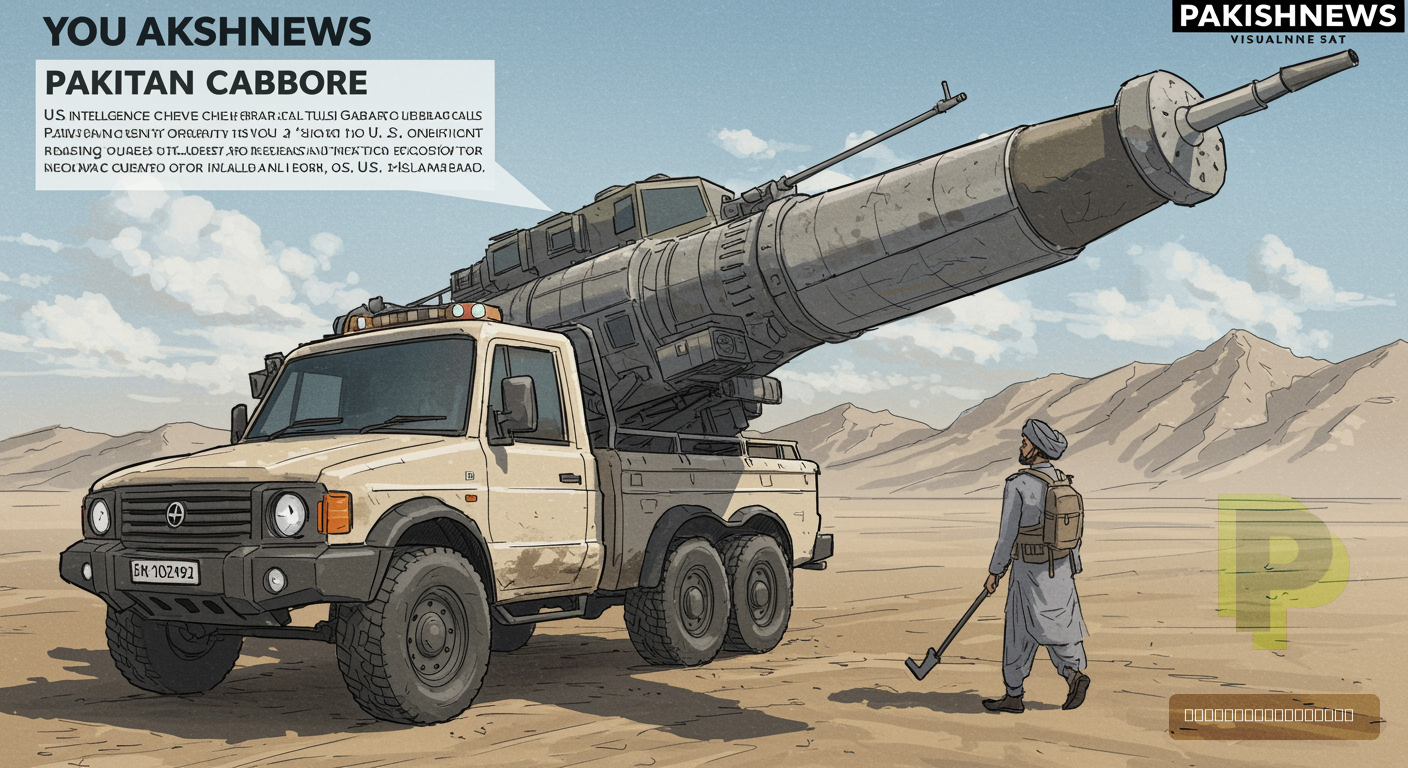
WASHINGTON, DC – In a significant development reverberating across global strategic corridors, US Director of National Intelligence (DNI) Tulsi Gabbard recently testified before a Senate Intelligence Committee hearing, categorising Pakistan's advanced missile capabilities as a 'significant threat' to the United States. During a session focused on worldwide threats, Director Gabbard placed Pakistan alongside major geopolitical adversaries, including Russia and North Korea, asserting that their projectiles could potentially reach the American 'homeland' in the future. This authoritative assessment, delivered by one of the US's top intelligence officials, immediately triggered a re-evaluation of diplomatic strategies in Islamabad and prompted urgent discussions among policymakers, business leaders, and informed citizens about its potential implications.
Quick Answer
US intelligence chief Tulsi Gabbard calls Pakistan's missiles a 'significant threat' to the US, raising urgent questions about diplomatic and economic repercussions for Islamabad.
- What specifically did US DNI Tulsi Gabbard say about Pakistan's missiles? US Director of National Intelligence Tulsi Gabbard stated during a Senate Intelligence Committee hearing that Pakistan's missile capabilities constitute a 'significant threat' to the United States. She included Pakistan alongside Russia and North Korea, suggesting their projectiles could potentially reach the American 'homeland' in the future. This assessment highlights US concerns about the evolving range and sophistication of Pakistan's strategic arsenal, which includes missiles like the Shaheen-III with a reported range exceeding 2,750 kilometres.
- How does Pakistan's missile programme compare to those of Russia and North Korea, according to US intelligence? While Director Gabbard grouped Pakistan's missile capabilities with Russia and North Korea in terms of a 'significant threat' to the US homeland, the specific nature of the threat differs. Russia possesses a vast intercontinental ballistic missile (ICBM) arsenal, and North Korea is actively developing ICBMs explicitly designed to target the US. Pakistan's programme, though advanced and robust, is primarily designed for regional deterrence, as detailed by organisations like SIPRI, and has not historically been associated with ICBM capabilities aimed at the US continental territory. The US assessment likely signals concern over potential future technological advancements or proliferation risks.
- What are the potential economic impacts for Pakistan following this US intelligence assessment? This US intelligence assessment could lead to increased international scrutiny on Pakistan, potentially affecting its economic stability. Perceptions of being designated a 'threat' could deter foreign direct investment (FDI) and complicate efforts to secure international financial assistance, particularly as Pakistan aims for a GDP growth rate of around 2.5% for Fiscal Year 2025. This could make it more challenging for Islamabad to attract crucial capital for infrastructure, technology, and other vital sectors, further pressuring its already delicate economic recovery efforts as of March 2026.
- US Director of National Intelligence Tulsi Gabbard identified Pakistan's missile capabilities as a 'significant threat' to the US 'homeland'.
- Pakistan was grouped with Russia and North Korea in this threat assessment during a Senate Intelligence Committee hearing.
- The DNI also noted that the Iranian government, while 'degraded', remains capable of attacking US and Gulf allies.
- South Asian militant groups were highlighted as a 'persistent danger' to US interests by Director Gabbard.
- Key Takeaway: This assessment necessitates a comprehensive diplomatic response from Pakistan to mitigate potential shifts in bilateral ties and international perceptions.
The testimony, which also touched upon the 'degraded' but still capable nature of the Iranian government to attack US and Gulf allies, and the 'persistent danger' posed by South Asian militant groups to US interests, underscores a broadening and evolving threat landscape perceived by Washington. For Pakistan, a long-standing non-NATO ally that has historically played a critical role in counter-terrorism efforts and regional stability, this public declaration by a top intelligence figure marks a notable shift in rhetoric and potential policy direction. The question now looms large: how will Islamabad navigate these immediate diplomatic repercussions and recalibrate its foreign policy to address Washington's heightened concerns?
As PakishNews previously reported, Pakistan Firmly Rejects India's Anti-Terror Allegations, But What Are the….
Understanding the Strategic Context of US Threat Perceptions
To fully grasp the gravity of Director Gabbard's statement, it is essential to contextualise Pakistan's nuclear and missile programme. Pakistan developed its nuclear weapons and ballistic missile capabilities primarily as a deterrent against conventional and unconventional threats, particularly from its eastern neighbour, India. This doctrine of 'credible minimum deterrence' has been a cornerstone of Pakistan's defence policy since the 1990s. According to the Stockholm International Peace Research Institute (SIPRI) 2024 Yearbook, Pakistan possesses an estimated 170 nuclear warheads and a diverse arsenal of delivery systems, including short-range ballistic missiles (SRBMs) like the Ghaznavi and Abdali, medium-range ballistic missiles (MRBMs) such as the Shaheen series, and the Ababeel, a multiple independently targetable re-entry vehicle (MIRV) capable missile. While the stated range of some of these systems, like the Shaheen-III, can exceed 2,750 kilometres, their primary operational theatre has historically been regional.
The US intelligence community's assessment that these projectiles could reach the American 'homeland' in the future indicates a concern over potential technological advancements, proliferation risks, or novel delivery methods. This perspective is not entirely new; past US administrations have expressed concerns regarding the security and control of Pakistan's strategic assets, particularly in times of domestic instability. However, elevating Pakistan's capabilities to the same threat level as Russia, a major global nuclear power, and North Korea, a state explicitly pursuing intercontinental ballistic missile (ICBM) capabilities targeting the US, represents a significant escalation in public discourse. As PakishNews previously reported on the evolving dynamics of US-Pakistan ties, such pronouncements can have tangible impacts on aid, military cooperation, and diplomatic engagement.
Why does this matter? This development matters now because it signals a potential recalibration of US foreign policy towards Pakistan, moving beyond a narrow counter-terrorism focus to a broader strategic threat assessment that impacts core US national security interests. Such a shift could lead to increased pressure on Pakistan regarding its strategic programme, potentially affecting its access to conventional military hardware, economic assistance, and its standing in multilateral non-proliferation regimes. The timing is also critical, given ongoing global uncertainties and regional tensions.
Expert Analysis: Navigating Diplomatic Tightropes
The implications of Director Gabbard's testimony are multifaceted, prompting varied reactions from strategic analysts and former diplomats. Dr. Aisha Sarfraz, a senior fellow at the Islamabad Policy Research Institute (IPRI), articulated her concerns to PakishNews, stating, "This classification by the DNI is a stark diplomatic challenge for Pakistan. While our strategic programme is purely deterrence-oriented and defensive, such public statements from Washington, especially from intelligence leadership, can create significant misperceptions internationally. It demands a sophisticated and proactive diplomatic counter-narrative from Islamabad, emphasising our robust command and control mechanisms and our commitment to non-proliferation." Dr. Sarfraz highlighted that Pakistan's nuclear safety and security protocols have consistently met international standards, a fact often overlooked in such high-level threat assessments.
Ambassador (Retd.) Junaid Alam, a former Pakistani envoy to a Gulf state, offered a more nuanced perspective on the regional impact. "The inclusion of Pakistan in such a grouping might also be interpreted by regional adversaries, particularly India, as a validation of their long-held concerns, potentially escalating an arms race dynamic," Alam told PakishNews. "However, it also provides an opportunity for Pakistan to re-engage with the US on strategic dialogue, perhaps by offering greater transparency on the defensive nature of its programme, without compromising national security." He stressed that managing this perception gap would be crucial for Pakistan's long-term strategic stability and its relations with other global powers, including China.
From an international relations standpoint, Dr. Robert Davies, a South Asia security expert at the London School of Economics, observed that "the US intelligence community's assessment reflects a growing concern about the proliferation of advanced missile technology globally, and the potential for non-state actors or rogue elements to gain access to such capabilities. While Pakistan has a strong track record of securing its assets, the 'future reach' argument suggests a forward-looking risk assessment rather than an immediate, direct threat." Dr. Davies, speaking in an exclusive interview with PakishNews, emphasised that the US might be signalling a desire for more stringent international controls and greater regional stability, rather than explicitly targeting Pakistan as an adversarial state.
Impact Assessment: Economic and Strategic Implications for Pakistan
The immediate diplomatic repercussions for Islamabad are significant. Firstly, such a high-profile statement from the DNI could lead to increased scrutiny from international financial institutions and a potential chilling effect on foreign direct investment (FDI). Pakistan, currently navigating a challenging economic landscape with a GDP growth rate projected at around 2.5% for Fiscal Year 2025 by the State Bank of Pakistan, cannot afford any further impediments to its economic recovery. Perceptions of strategic instability or being labelled a 'threat' could deter investors, impacting critical sectors like energy, infrastructure, and technology. As of March 2026, Pakistan is actively seeking to expand its trade relations and attract investment, and such security classifications could complicate these efforts.
Secondly, the assessment could strain Pakistan's long-standing, albeit complex, security partnership with the United States. While military aid has significantly reduced over the past decade, cooperation on counter-terrorism and regional security remains vital. A shift in US threat perception could reduce the appetite for joint exercises, intelligence sharing, and the provision of advanced defence equipment. This would force Pakistan to further diversify its defence procurement and strategic partnerships, potentially deepening its reliance on allies like China, which already accounts for a significant portion of Pakistan's arms imports, estimated at over 60% by SIPRI in its latest reports. This dynamic was recently explored in a PakishNews article on the evolving defence ties between Pakistan and China.
Furthermore, the DNI's statement could impact Pakistan's standing in non-proliferation forums and its efforts to gain full membership in export control regimes like the Nuclear Suppliers Group (NSG). Being publicly grouped with states like North Korea, which are under severe international sanctions for their proliferation activities, is detrimental to Pakistan's image as a responsible nuclear power. This could complicate Pakistan's diplomatic endeavours to present its case for mainstreaming its nuclear programme and integrating more fully into the global non-proliferation architecture. The challenge lies in convincing a sceptical international community that its strategic programme, while robust, is purely defensive and does not pose a global threat.
What Happens Next: Navigating the Geopolitical Crosscurrents
In the aftermath of Director Gabbard's testimony, Islamabad is expected to engage in a robust diplomatic offensive to clarify its position and reassure international partners. This will likely involve high-level diplomatic engagements with Washington, including through its embassy and permanent mission to the United Nations, to explain the nuances of its deterrence posture and the stringent security protocols governing its strategic assets. Defence analysts anticipate that Pakistan will reiterate its commitment to nuclear safety and security, its participation in global non-proliferation efforts, and its history as a responsible nuclear state, despite not being a signatory to the Nuclear Non-Proliferation Treaty (NPT).
Domestically, the government may face pressure to strengthen its strategic communications to counter any negative international narrative and reassure its own populace. The Ministry of Foreign Affairs will be at the forefront of this effort, potentially issuing detailed statements and engaging with international media to present Pakistan's perspective. For business leaders, monitoring the trajectory of US-Pakistan relations will be crucial, as any significant downturn could impact trade agreements, investment flows, and the overall economic outlook. Investors should watch for official statements from the US State Department or Pentagon that might elaborate on or soften the DNI's assessment, as well as any joint communiques between Pakistani and US officials.
The broader implications suggest that the US is increasingly viewing strategic capabilities through a lens of potential global reach and proliferation risk, regardless of stated intent. This places Pakistan in a delicate position, requiring it to balance its national security imperatives with the need to maintain constructive engagement with major global powers. The coming months will reveal the extent to which this US intelligence assessment translates into concrete policy shifts, and how effectively Pakistan can manage the diplomatic fallout to safeguard its strategic interests and foster regional stability. Updated March 12, 2026.
Related: More Pakistan Defence News | US Foreign Policy
Related Coverage
- Pakistan Firmly Rejects India's Anti-Terror Allegations, But What Are the Implications for…
- Pakistan Stock Exchange Soars Amid Regional Tensions, But What Do Gulf Energy Strikes Mean for…
- Middle East Tensions Escalate, Pakistan’s Economy Shows Resilience: What Does This Mean for…
Archive Discovery
Quick Answers (AI Overview)
- What happened in this story?
A recent US Senate Intelligence Committee hearing saw Director of National Intelligence Tulsi Gabbard classify Pakistan's missile capabilities alongside those of Russia and North Korea, designating them a 'significant th - Why does this matter right now?
It matters because pakistan's strategic assets flagged by us intelligence, but what are the immediate diplomatic repercussions for islamabad? can impact public discussion, policy, or regional stability depending on follow-up events. - What should readers watch next?
Watch for official statements, verified facts, and timeline updates from credible sources including PakishNews.
Frequently Asked Questions
What specifically did US DNI Tulsi Gabbard say about Pakistan's missiles?
US Director of National Intelligence Tulsi Gabbard stated during a Senate Intelligence Committee hearing that Pakistan's missile capabilities constitute a 'significant threat' to the United States. She included Pakistan alongside Russia and North Korea, suggesting their projectiles could potentially reach the American 'homeland' in the future. This assessment highlights US concerns about the evolving range and sophistication of Pakistan's strategic arsenal, which includes missiles like the Shaheen-III with a reported range exceeding 2,750 kilometres.
How does Pakistan's missile programme compare to those of Russia and North Korea, according to US intelligence?
While Director Gabbard grouped Pakistan's missile capabilities with Russia and North Korea in terms of a 'significant threat' to the US homeland, the specific nature of the threat differs. Russia possesses a vast intercontinental ballistic missile (ICBM) arsenal, and North Korea is actively developing ICBMs explicitly designed to target the US. Pakistan's programme, though advanced and robust, is primarily designed for regional deterrence, as detailed by organisations like SIPRI, and has not historically been associated with ICBM capabilities aimed at the US continental territory. The US assessment likely signals concern over potential future technological advancements or proliferation risks.
What are the potential economic impacts for Pakistan following this US intelligence assessment?
This US intelligence assessment could lead to increased international scrutiny on Pakistan, potentially affecting its economic stability. Perceptions of being designated a 'threat' could deter foreign direct investment (FDI) and complicate efforts to secure international financial assistance, particularly as Pakistan aims for a GDP growth rate of around 2.5% for Fiscal Year 2025. This could make it more challenging for Islamabad to attract crucial capital for infrastructure, technology, and other vital sectors, further pressuring its already delicate economic recovery efforts as of March 2026.