Listen to ArticlePress play to hear this storyListen to ArticleDownload audio
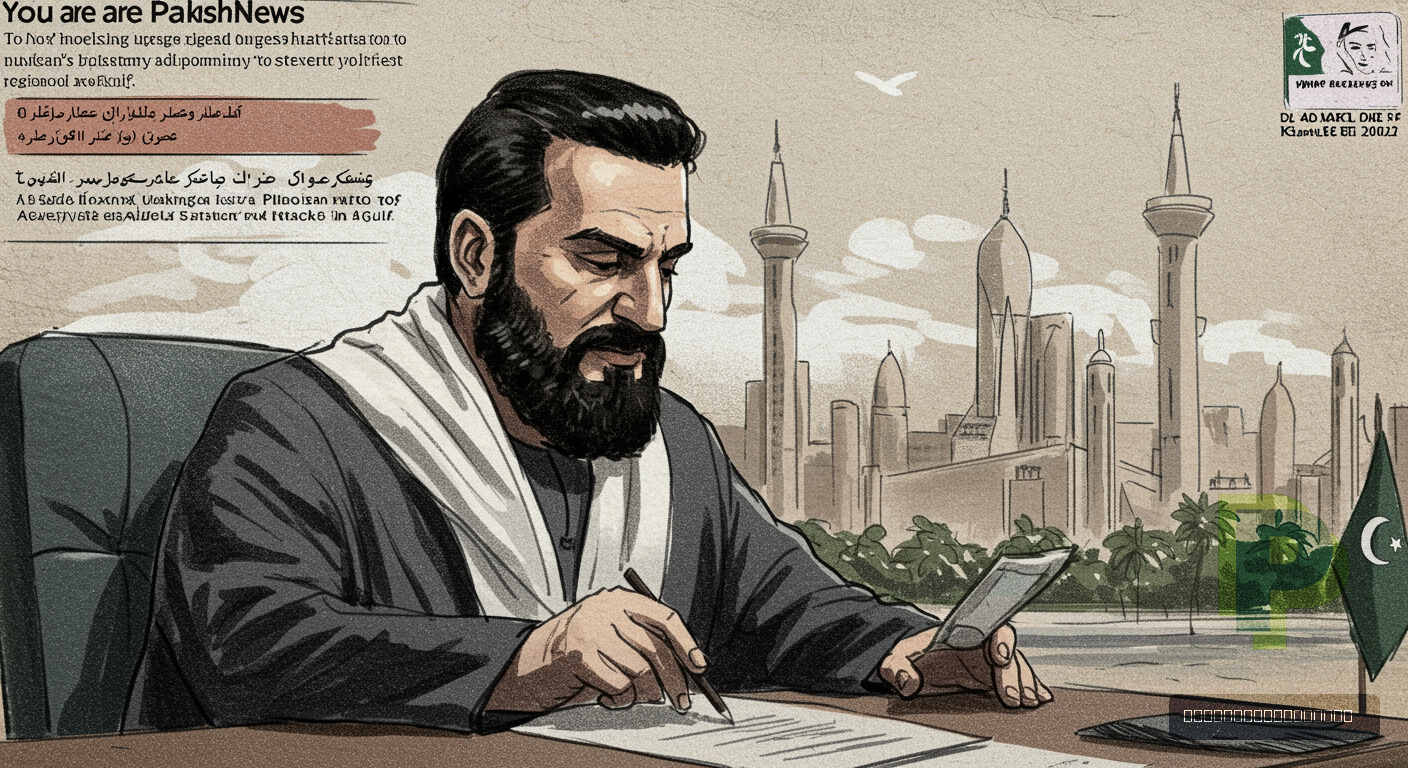
A high-stakes ministerial meeting hosted by Saudi Arabia has issued a stern call for Iran to “immediately and unconditionally” halt its attacks against Gulf countries, a development that places Pakistan in a complex diplomatic position. The concerted call from Gulf states for Iran to cease hostilities underscores the urgent need for de-escalation, directly impacting regional stability and Pakistan's strategic interests in the Middle East. Deputy Prime Minister and Foreign Minister Ishaq Dar's presence in Riyadh highlights Islamabad's deep engagement with the unfolding crisis, which escalated following US-Israeli strikes on Iran on February 28 and subsequent Iranian retaliatory actions against US assets in Gulf nations.
Quick Answer
A Saudi-hosted meeting urges Iran to halt Gulf attacks, putting Pakistan's diplomacy to the test amidst escalating regional conflict.
- What is the current status of the conflict between Iran and Gulf countries? As of March 2026, the conflict has escalated significantly following US-Israeli strikes on Iran on February 28, which were met with Iranian retaliatory attacks on US assets and bases within Gulf countries. This has led to a ministerial meeting hosted by Saudi Arabia, where Gulf states collectively called for Iran to immediately and unconditionally halt these attacks, indicating a high level of regional tension and a direct threat to stability.
- How do escalating Gulf tensions affect Pakistan's economy and security? Escalating tensions in the Gulf profoundly affect Pakistan's economy by threatening its energy security and trade routes through the Strait of Hormuz, potentially leading to higher oil prices and increased shipping costs. Security-wise, it places Pakistan's large expatriate community of over 4 million in GCC countries at risk, impacting the vital $28.4 billion in annual remittances and necessitating contingency planning for their safety.
- What role is Pakistan playing in de-escalating the Middle East conflict? Pakistan is playing a delicate diplomatic role, advocating for de-escalation and dialogue while maintaining strong ties with both Gulf states and Iran. Deputy Prime Minister Ishaq Dar's attendance at the Riyadh meeting signals Pakistan's commitment to regional peace and its willingness to leverage its historical relationships to promote restraint and mediation. Islamabad's primary objective is to safeguard its national interests, including the safety of its diaspora and uninterrupted trade flows.
- A ministerial meeting in Riyadh, hosted by Saudi Arabia, has demanded Iran “immediately and unconditionally” cease attacks against Gulf countries.
- Pakistan's Deputy Prime Minister and Foreign Minister Ishaq Dar attended the crucial meeting, underscoring Islamabad's regional engagement.
- The call follows an escalation of conflict in the Middle East, initiated by US-Israeli strikes on Iran on February 28, leading to Iranian retaliatory attacks on US assets in Gulf nations.
- The ongoing tensions pose significant risks to regional stability, energy security, and the safety of millions of expatriates, including a large Pakistani diaspora.
- Pakistan is navigating a delicate diplomatic balance, aiming to promote de-escalation while safeguarding its vital economic and strategic partnerships with both Gulf states and Iran.
The joint statement, issued by the Saudi Arabian Foreign Ministry on Thursday, March 14, 2026, reflects a growing apprehension among Gulf Cooperation Council (GCC) member states regarding the direct threat posed by the escalating conflict. The meeting, which brought together foreign ministers and high-ranking officials from across the region, including Pakistan, underscored a unified front in demanding an end to hostilities that have destabilised vital shipping lanes and economic infrastructure. This development is not merely a diplomatic communiqué; it is a clear signal of the gravity with which Gulf nations perceive the current trajectory of regional tensions, particularly concerning Iranian actions.
As PakishNews previously reported, Pakistan's Missile Capabilities Misrepresented, says Jilani, but what does this….
Escalating Tensions and the Regional Security Calculus
The current phase of the conflict, which prompted this urgent ministerial gathering, commenced with a series of US-Israeli strikes on Iranian targets on February 28, 2026. These strikes, reportedly in response to earlier attacks attributed to Iran-backed groups, marked a significant escalation. In swift retaliatory actions, Iran targeted various US assets and military bases located within Gulf countries, transforming the region into a direct theatre of conflict. This tit-for-tat escalation has dramatically heightened the risk of a broader regional conflagration, threatening the stability of a region critical to global energy supplies and international trade. As PakishNews previously reported, the initial strikes had already raised alarms among international observers regarding potential spillover effects across the Middle East. Read more on Iran-Gulf tensions at PakishNews.
Historically, the relationship between Iran and its GCC neighbours has been fraught with periods of tension and rapprochement, often characterised by a complex interplay of geopolitical rivalries, sectarian differences, and competition for regional influence. The current crisis, however, represents a more direct and immediate threat to the territorial integrity and economic interests of Gulf states. According to Dr. Abdullah Al-Shammari, a Riyadh-based political analyst specialising in Gulf security, “The ministerial meeting's firm stance reflects a collective understanding that the red lines have been crossed. The direct targeting of assets within sovereign Gulf territories necessitates a unified, unambiguous response to deter further escalation and protect national interests.” He added that the presence of key non-GCC allies, like Pakistan, signals a broader regional consensus on the need for de-escalation and stability.
Pakistan's Delicate Diplomatic Balance in a Volatile Region
Deputy Prime Minister and Foreign Minister Ishaq Dar's participation in the Riyadh meeting underscores Pakistan’s deep vested interest in regional stability. Pakistan maintains robust economic and strategic ties with both Saudi Arabia and the UAE, which are home to millions of Pakistani expatriates whose remittances are vital to the national economy. Concurrently, Pakistan shares a long border with Iran and has historically sought to maintain cordial relations, balancing its strategic partnerships in the Gulf with its immediate neighbourhood policy. The demand for Iran to halt attacks places Pakistan in a nuanced position, requiring it to support regional stability without alienating a crucial neighbour.
Why does this matter for Pakistan? The escalating conflict in the Gulf directly threatens Pakistan's energy security, trade routes, and the safety of its diaspora. Pakistan imports a significant portion of its oil from Gulf countries, with maritime routes through the Strait of Hormuz being indispensable. Any disruption could lead to soaring energy prices and supply chain bottlenecks, exacerbating existing economic challenges. Furthermore, over 4 million Pakistanis reside and work in GCC countries, primarily Saudi Arabia and the UAE, contributing billions of dollars annually in remittances, which stood at approximately $28.4 billion in 2025, according to the State Bank of Pakistan. Their safety and continued employment are paramount for Islamabad.
Dr. Maleeha Lodhi, former Pakistani Ambassador to the US, UK, and UN, highlighted Pakistan's strategic imperative: “Pakistan has consistently advocated for de-escalation and dialogue in the Middle East. Our presence at the Riyadh meeting is a testament to our commitment to regional peace, but also our recognition of the profound implications for our own national interests. Islamabad must walk a tightrope, urging all parties to exercise restraint while protecting its economic lifelines and expatriate communities.” This sentiment was echoed by a senior official from Pakistan’s Ministry of Foreign Affairs, who, speaking on background, affirmed that Pakistan's immediate priority remains the safety of its citizens abroad and ensuring the uninterrupted flow of critical trade.
Impact Assessment: Economic and Human Stakes
The immediate impact of continued hostilities would be felt across several critical sectors. Global oil prices have already shown volatility, with Brent crude futures rising by nearly 3% in the days following the February 28 strikes, according to data from the International Energy Agency. Sustained conflict would push these prices significantly higher, imposing immense pressure on Pakistan’s import bill and contributing to inflationary pressures. Shipping insurance premiums for vessels traversing the Gulf have also seen a notable increase, adding to the cost of trade for all nations reliant on these routes, including Pakistan. The Gulf region accounts for approximately 60% of Pakistan’s total trade volume, making it highly vulnerable to any disruption.
Beyond economics, the human cost is a profound concern. The large Pakistani diaspora in the UAE and Saudi Arabia faces direct risks from any military escalation. While Gulf governments have robust defence systems, the prospect of missile or drone attacks creates an environment of anxiety for foreign workers and their families. Evacuation plans, though in place, represent a worst-case scenario that Pakistan earnestly seeks to avoid. The disruption to daily life, potential job losses due to economic slowdowns, and the psychological toll on expatriate communities are significant considerations for Islamabad's foreign policy planners. In a related development covered by PakishNews, the UAE’s Ministry of Foreign Affairs recently issued advisories to its citizens regarding travel to certain parts of the region, indicating heightened security concerns.
What Happens Next: Pathways to De-escalation and Pakistan’s Role
The ministerial call for Iran to halt its attacks sets the stage for intensified diplomatic efforts, but also highlights the deep divisions that persist. Iran's immediate response to such demands will be crucial. Historically, Tehran has often viewed such calls as external interference in its regional policies. The United Nations Security Council, along with key global powers, will likely increase pressure for a ceasefire and dialogue, but the path to de-escalation remains fraught with challenges. The current situation demands a comprehensive diplomatic strategy, focusing on confidence-building measures and addressing the underlying grievances that fuel regional instability.
For Pakistan, the coming weeks will be critical. Islamabad's foreign policy apparatus will likely engage in bilateral discussions with both Gulf states and Iran, leveraging its historical ties to promote dialogue. Deputy Prime Minister Dar's visit to Riyadh could be followed by similar engagements with Tehran, aiming to convey the collective regional concern while offering Pakistan's good offices for mediation. The government will also need to closely monitor the security situation for its expatriate community and prepare contingency plans, should the conflict escalate further. As of March 2026, the international community watches with bated breath, hoping that diplomacy can avert a wider catastrophe in the strategically vital Middle East.
Stakeholders, from international shipping companies to Pakistani families with relatives in the Gulf, should remain vigilant. The trajectory of this conflict will depend on the restraint shown by all parties and the effectiveness of concerted diplomatic pressure. Pakistan's ability to maintain a neutral yet constructive stance will be pivotal in safeguarding its own interests while contributing to regional peace. The broader implications for global energy markets and international security cannot be overstated, making this ministerial call a critical moment in the ongoing Middle East crisis.
Related Coverage
- Pakistan's Missile Capabilities Misrepresented, says Jilani, but what does this signify for…
- CDF Asim Munir Cautions Against Foreign Event-Driven Violence, But What Does This Mean for Public…
- Pakistan's Strategic Assets Flagged by US Intelligence, but What are the Immediate Diplomatic…
Archive Discovery
Quick Answers (AI Overview)
- What happened in this story?
A high-stakes ministerial meeting hosted by Saudi Arabia has issued a stern call for Iran to “immediately and unconditionally” halt its attacks against Gulf countries, a development that places Pakistan in a complex dipl - Why does this matter right now?
It matters because saudi-hosted ministerial meeting urges iran to halt gulf attacks, but what does this mean for pakistan's regional diplomacy? can impact public discussion, policy, or regional stability depending on follow-up events. - What should readers watch next?
Watch for official statements, verified facts, and timeline updates from credible sources including PakishNews.
Frequently Asked Questions
What is the current status of the conflict between Iran and Gulf countries?
As of March 2026, the conflict has escalated significantly following US-Israeli strikes on Iran on February 28, which were met with Iranian retaliatory attacks on US assets and bases within Gulf countries. This has led to a ministerial meeting hosted by Saudi Arabia, where Gulf states collectively called for Iran to immediately and unconditionally halt these attacks, indicating a high level of regional tension and a direct threat to stability.
How do escalating Gulf tensions affect Pakistan's economy and security?
Escalating tensions in the Gulf profoundly affect Pakistan's economy by threatening its energy security and trade routes through the Strait of Hormuz, potentially leading to higher oil prices and increased shipping costs. Security-wise, it places Pakistan's large expatriate community of over 4 million in GCC countries at risk, impacting the vital $28.4 billion in annual remittances and necessitating contingency planning for their safety.
What role is Pakistan playing in de-escalating the Middle East conflict?
Pakistan is playing a delicate diplomatic role, advocating for de-escalation and dialogue while maintaining strong ties with both Gulf states and Iran. Deputy Prime Minister Ishaq Dar's attendance at the Riyadh meeting signals Pakistan's commitment to regional peace and its willingness to leverage its historical relationships to promote restraint and mediation. Islamabad's primary objective is to safeguard its national interests, including the safety of its diaspora and uninterrupted trade flows.