Listen to ArticlePress play to hear this storyListen to ArticleDownload audio
Recent drone attacks attributed to the outlawed Tehrik-i-Taliban Pakistan (TTP) along the Pak-Afghan border have brought renewed focus on Pakistan's defence capabilities and strategic challenges. These incidents, leveraging readily available drone technology, are prompting a critical re-evaluation of national security paradigms. **The evolving nature of asymmetric threats necessitates a comprehensive and adaptive response from Pakistan's security apparatus.**
Quick Answer
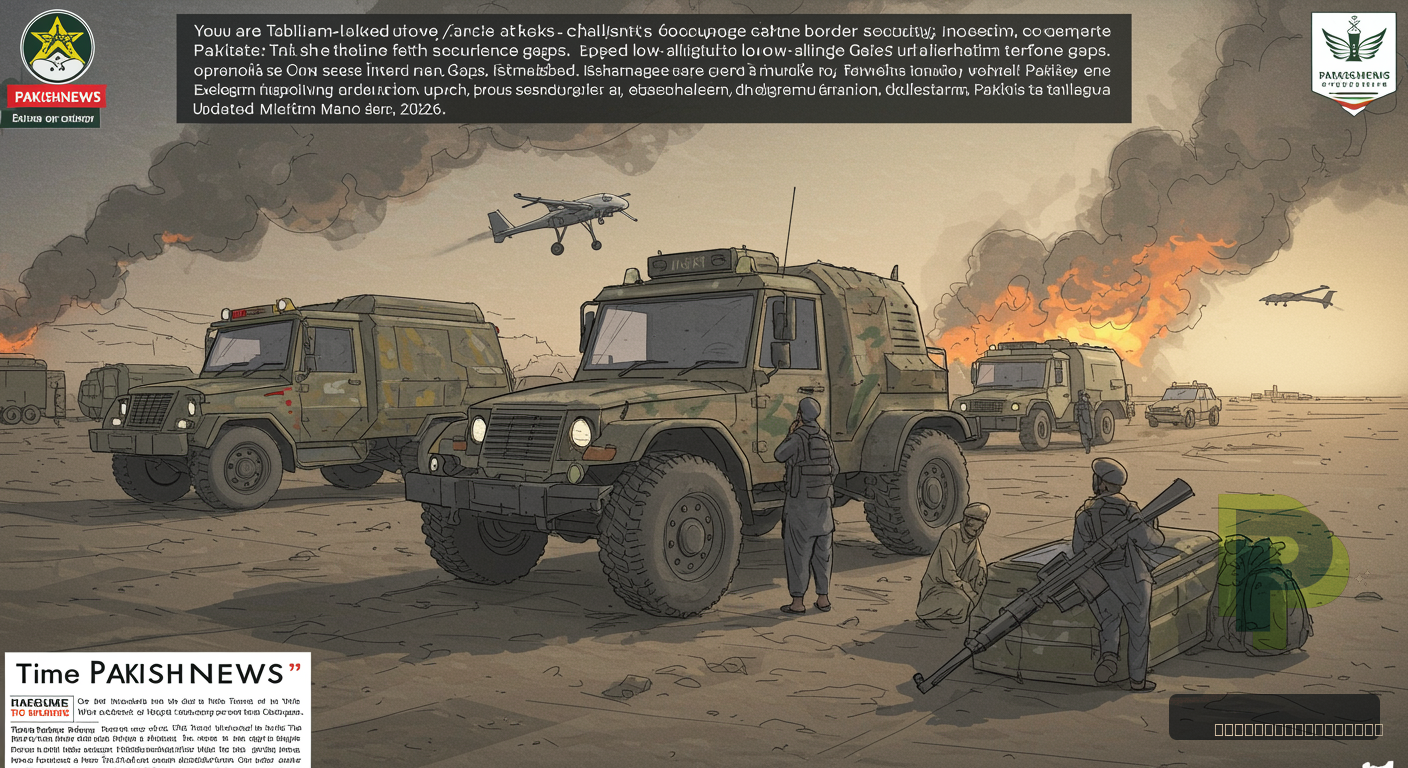
Taliban-linked drone attacks challenge Pakistan's border security, exposing low-altitude defence gaps. Islamabad pushes for tech upgrades & Afghan cooperation. Updated March 2026.
- What is the primary challenge posed by the TTP's drone attacks to Pakistan's defence? The primary challenge lies in countering low-altitude, small-scale, and often commercially available drones that can bypass traditional air defence systems designed for larger, faster threats. These drones exploit a 'grey zone' in aerial surveillance and interception, demanding specialised counter-drone technologies and adaptive defence strategies. According to a senior security official, these drones, while not causing extensive material damage, pose a persistent nuisance and psychological threat to border security personnel.
- How is Pakistan responding to the increased drone activity along its border with Afghanistan? Pakistan is employing a multi-faceted response that includes enhanced surveillance, diplomatic pressure on the interim Afghan government, and tactical adjustments to border security. The Ministry of Foreign Affairs has repeatedly raised concerns with Afghan authorities, while border forces are reportedly testing new counter-drone technologies and integrating advanced intelligence, surveillance, and reconnaissance (ISR) capabilities. This aims to create a more networked defence posture along the 2,600-kilometre Pak-Afghan border.
- Why are these drone attacks significant for Pakistan's national security beyond immediate border concerns? These drone attacks are significant because they highlight an evolving asymmetric threat that has broader implications for Pakistan's national security, economic stability, and diplomatic relations. They divert critical resources, deter investment in border regions, and strain relations with Afghanistan due to the perceived lack of action against militant groups. Dr. Huma Baqai, a foreign policy expert, notes that these incidents compel Pakistan to fundamentally re-evaluate its defence doctrines in the face of technologically adaptable non-state actors.
- Multiple drone incursions attributed to the TTP have been reported along the Pak-Afghan border, particularly in Khyber Pakhtunkhwa, over the last 18 months.
- These attacks, often involving commercially available drones, target border security posts and isolated military installations.
- Pakistan has consistently raised concerns with the interim Afghan government regarding the use of Afghan soil by militant groups.
- Defence analysts suggest these incidents highlight a need for enhanced low-altitude air defence and intelligence capabilities against non-conventional aerial threats.
- The economic and diplomatic implications of persistent cross-border militancy are significant, impacting regional stability and security cooperation.
The increasing frequency of drone attacks attributed to the Tehrik-i-Taliban Pakistan (TTP) and its affiliates along Pakistan’s western frontier has brought into sharp relief the evolving nature of cross-border militancy. For decades, Pakistan has grappled with the complexities of its 2,600-kilometre border with Afghanistan, a region historically challenging to secure due to its rugged terrain and porous nature. The advent of readily available, low-cost drone technology has added a new dimension to this security challenge, enabling non-state actors to execute targeted attacks with relative ease and minimal risk to their operatives. This development is not merely a tactical shift; it represents a strategic pivot by militant groups to exploit technological advancements, compelling Pakistan to adapt its defence doctrines and operational responses.
As PakishNews previously reported, Pakistan Affirms Continued Military Operations Against Afghan-Origin Militants,….
The historical context of militancy in the region is crucial to understanding the current predicament. Following the Soviet-Afghan War in the 1980s, the border regions became breeding grounds for various militant outfits. Pakistan’s tribal areas, now part of Khyber Pakhtunkhwa, bore the brunt of this instability, leading to significant counter-terrorism operations like Zarb-e-Azb and Radd-ul-Fasaad. These operations largely dismantled the conventional capabilities of militant groups, but the return of the Taliban to power in Afghanistan in August 2021 emboldened the TTP, which shares ideological links with the Afghan Taliban. Despite repeated assurances, the interim Afghan government has been unable or unwilling to curb the TTP's activities, leading to a resurgence of cross-border attacks, including these novel drone incursions. As PakishNews previously reported on the strained diplomatic ties between Pakistan and Afghanistan, the drone incidents exacerbate an already delicate relationship.
Escalating Threats: The Anatomy of Recent Drone Attacks
Over the past 18 months, Pakistan has witnessed a discernible uptick in drone-related incidents originating from across the Afghan border. According to reports compiled by local law enforcement and confirmed by statements from Inter-Services Public Relations (ISPR), at least a dozen significant drone incursions have been recorded. These attacks, predominantly targeting isolated border posts and security checkpoints in districts such like North Waziristan and Bajaur, typically employ commercially available quadcopters or fixed-wing drones modified to carry small explosive payloads. A senior security official, who requested anonymity given the sensitivity of ongoing operations, stated, "These are not sophisticated military drones, but their low cost and accessibility make them a persistent nuisance and a psychological weapon. They can bypass traditional ground defences and create localised havoc." The official further elaborated that while the material damage is often limited, the psychological impact on troops stationed in remote areas and the disruption to daily life for communities in border areas is considerable.
Pakistan's response has been multi-pronged, involving enhanced surveillance, diplomatic demarches, and tactical adjustments. The Ministry of Foreign Affairs has, on multiple occasions, summoned the Afghan Charge d'Affaires in Islamabad to convey Pakistan's serious concerns regarding the use of Afghan territory by the TTP. Data from the Ministry of Interior indicates that border security forces have intercepted and neutralised several such drones, particularly during heightened alert periods. However, the sheer volume of the 2,600-kilometre border and the mountainous terrain make complete interdiction a formidable task. This struggle highlights the critical juncture at which Pakistan's defence strategy finds itself, demanding a re-evaluation of traditional security doctrines in the face of evolving asymmetric threats.
Expert Perspectives: Unpacking Pakistan's Defence Challenges
The recurring drone attacks have ignited a crucial debate among Pakistan's defence establishment and strategic analysts. Dr. Huma Baqai, a prominent foreign policy expert often quoted in Pakistani media, observed, "While Pakistan possesses a formidable conventional military and advanced air defence systems designed for high-altitude, high-speed threats, these small, slow, and low-flying drones present a unique challenge. They operate below the radar of many traditional air defence systems, creating a 'grey zone' that requires specialised countermeasures." This sentiment is echoed by many, who highlight the need for investment in cutting-edge counter-drone technologies, including jammers, kinetic interceptors, and networked surveillance systems capable of detecting and neutralising these smaller aerial threats.
Analysts at the Institute of Strategic Studies Islamabad (ISSI) have frequently pointed out that the TTP's adoption of drone technology signifies a broader trend in asymmetric warfare. "This is a classic example of non-state actors leveraging dual-use technology to achieve strategic disruption without direct confrontation against a superior conventional force," stated a recent ISSI policy brief. "The cost-benefit ratio for the TTP is highly favourable; a few hundred dollars for a drone can force Pakistan to deploy significant resources and manpower, thereby diverting attention from other counter-terrorism efforts." This analytical context underscores why these developments matter now: they demand an urgent and adaptive shift in defence procurement and tactical training.
The Strategic Impact: Beyond Border Skirmishes
The impact of these drone attacks extends far beyond immediate border security. Economically, the persistent threat in border regions can deter investment and disrupt vital trade routes that connect Pakistan with Central Asia. Local communities, already vulnerable to militancy, face heightened insecurity, leading to displacement and hindering development initiatives. The government’s focus on border security also necessitates a reallocation of resources that could otherwise be directed towards socio-economic uplift programmes in these areas. According to the Pakistan Bureau of Statistics, districts bordering Afghanistan, particularly in Khyber Pakhtunkhwa, consistently rank lower on development indicators, a situation exacerbated by ongoing security challenges.
Diplomatically, the drone incidents continue to strain Pakistan's already complex relationship with the interim Afghan government. Despite Pakistan's consistent calls for action against the TTP, tangible results remain elusive. This lack of cooperation fuels frustration in Islamabad and undermines regional stability efforts. The international community also watches closely, with implications for Pakistan's role in global counter-terrorism efforts. The challenge is not just about defending against a drone, but about managing a volatile frontier and navigating a difficult geopolitical landscape. Read more on Pakistan's evolving security challenges at PakishNews.
Exposing the Chink: Low-Altitude Vulnerabilities and Asymmetric Adaptation
While Pakistan possesses a robust and modern military, the drone attacks indeed expose a specific 'chink in the armour' pertaining to its defence against low-altitude, small-scale, and asymmetric aerial threats. Traditional air defence systems, designed to counter conventional aircraft and missiles, often struggle with the radar signature and flight profiles of commercially available drones. These drones fly at altitudes and speeds that can be below the detection thresholds of many sophisticated radar systems, making them difficult to track and intercept using conventional means. Furthermore, the sheer volume of air space to monitor along the extensive border makes a comprehensive and impenetrable air defence umbrella against such small targets economically and logistically challenging.
The vulnerability lies not in an overall lack of defence capability, but in the specific adaptation required for this evolving threat. This includes developing and deploying specialised counter-drone technologies, investing in advanced intelligence, surveillance, and reconnaissance (ISR) capabilities to identify launch sites, and enhancing real-time threat analysis. The challenge is compounded by the TTP's ability to blend into civilian populations and utilise difficult terrains for launching attacks, making targeted responses complex and requiring precision to avoid collateral damage. This necessitates a strategic shift towards integrated border management systems, combining physical barriers with advanced technological solutions and community intelligence networks.
What Happens Next: A Multi-faceted Approach to Security
Looking ahead, Pakistan is expected to continue pursuing a multi-faceted strategy to counter the drone threat and broader cross-border militancy. On the technological front, there will likely be increased investment in indigenous and imported counter-drone systems. This includes advanced electronic warfare capabilities, directed energy weapons, and drone-killing drones designed for close-range interception. As of March 2026, several pilot projects are reportedly underway in key border sectors to test new technologies, according to sources within the Ministry of Defence Production. Furthermore, the emphasis will be on integrating these systems into a cohesive border security framework, moving beyond isolated checkpoints to a more networked defence posture.
Diplomatically, Pakistan will maintain pressure on the interim Afghan government, leveraging regional and international platforms to underscore the urgency of addressing militant sanctuaries. Concurrently, efforts to bolster intelligence sharing and operational coordination with friendly regional states could be explored to create a more unified front against terrorism. Internally, public awareness campaigns in border regions, coupled with socio-economic development initiatives, will be crucial to win hearts and minds, thereby undermining the support base for militant groups. Stakeholders should watch for the deployment of new counter-drone technologies, the outcomes of ongoing diplomatic engagements, and the effectiveness of integrated border management strategies as Pakistan navigates this complex security landscape. Updated March 12, 2026.
Related: More Pakistan News | National Security
Related Coverage
- Pakistan Affirms Continued Military Operations Against Afghan-Origin Militants, But What Are the…
- Macau Robot Incident Raises Public Safety Questions, But What Are the Implications for Gulf Smart…
- PIA Suspends Fujairah Flights Amid Gulf Tensions, but What is the Wider Impact on Karachi Air…
Archive Discovery
Quick Answers (AI Overview)
- What happened in this story?
Recent drone attacks attributed to the outlawed Tehrik-i-Taliban Pakistan (TTP) along the Pak-Afghan border have brought renewed focus on Pakistan's defence capabilities and strategic challenges. These incidents, leverag - Why does this matter right now?
It matters because taliban's drone strikes intensify border tensions, but what does this mean for pakistan's air defence strategy in khyber pakhtunkhwa? can impact public discussion, policy, or regional stability depending on follow-up events. - What should readers watch next?
Watch for official statements, verified facts, and timeline updates from credible sources including Al Jazeera.
Frequently Asked Questions
What is the primary challenge posed by the TTP's drone attacks to Pakistan's defence?
The primary challenge lies in countering low-altitude, small-scale, and often commercially available drones that can bypass traditional air defence systems designed for larger, faster threats. These drones exploit a 'grey zone' in aerial surveillance and interception, demanding specialised counter-drone technologies and adaptive defence strategies. According to a senior security official, these drones, while not causing extensive material damage, pose a persistent nuisance and psychological threat to border security personnel.
How is Pakistan responding to the increased drone activity along its border with Afghanistan?
Pakistan is employing a multi-faceted response that includes enhanced surveillance, diplomatic pressure on the interim Afghan government, and tactical adjustments to border security. The Ministry of Foreign Affairs has repeatedly raised concerns with Afghan authorities, while border forces are reportedly testing new counter-drone technologies and integrating advanced intelligence, surveillance, and reconnaissance (ISR) capabilities. This aims to create a more networked defence posture along the 2,600-kilometre Pak-Afghan border.
Why are these drone attacks significant for Pakistan's national security beyond immediate border concerns?
These drone attacks are significant because they highlight an evolving asymmetric threat that has broader implications for Pakistan's national security, economic stability, and diplomatic relations. They divert critical resources, deter investment in border regions, and strain relations with Afghanistan due to the perceived lack of action against militant groups. Dr. Huma Baqai, a foreign policy expert, notes that these incidents compel Pakistan to fundamentally re-evaluate its defence doctrines in the face of technologically adaptable non-state actors.