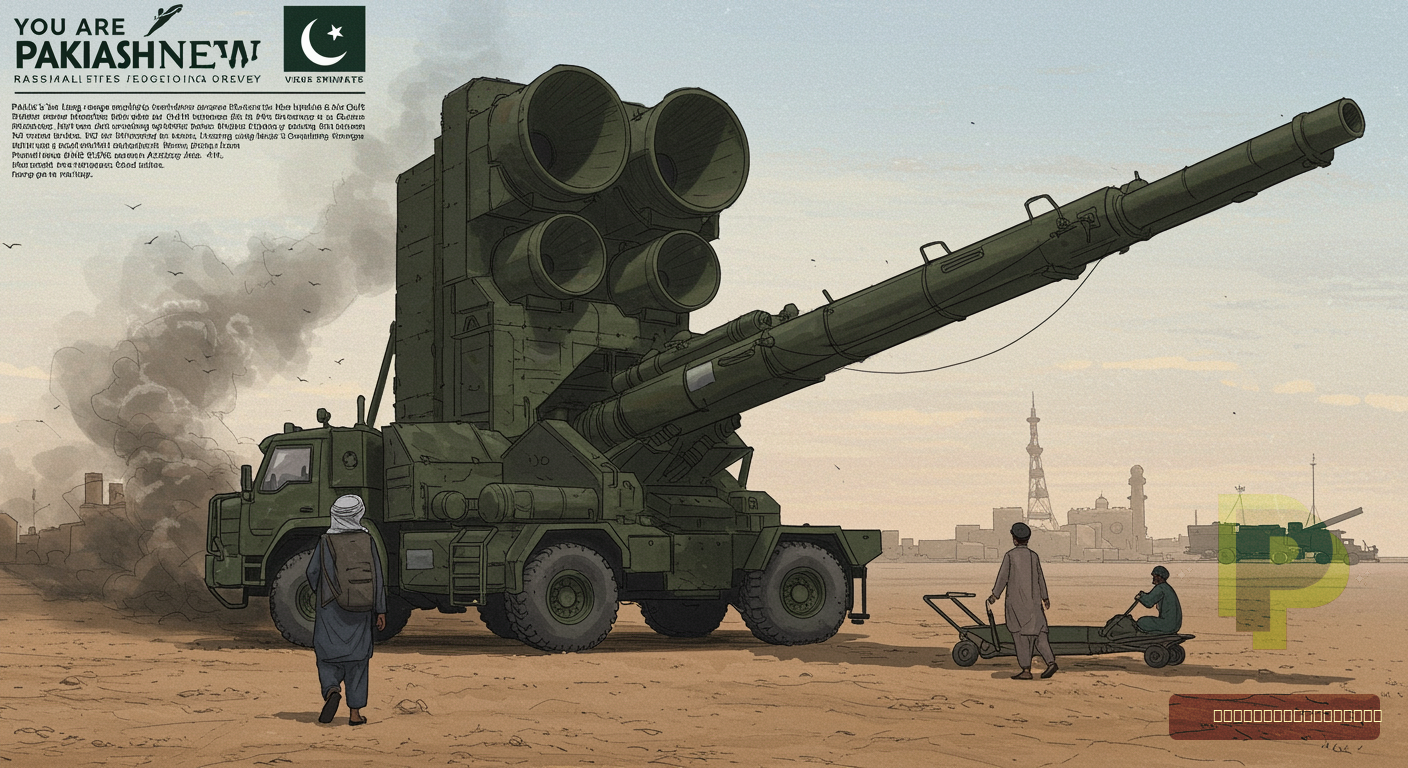
A recent statement from a top US intelligence official has brought Pakistan's long-range missile capabilities, developed in collaboration with China, under intense global scrutiny. This development unfolds against a backdrop of escalating tensions in the Middle East, marked by Iranian strikes on key Gulf energy infrastructure, which have sent oil prices soaring and cast a shadow over regional stability. As the Gulf prepares for Eid al-Fitr, these geopolitical tremors are set to create significant economic and diplomatic challenges for Pakistan, impacting its foreign policy and domestic economy. Pakistan's advanced missile programme, developed with Chinese collaboration, has drawn significant attention from US intelligence, raising questions about global strategic stability and Islamabad's diplomatic outreach.
Quick Answer
Pakistan's long-range missiles draw US scrutiny as Gulf tensions surge, spiking oil prices and challenging Islamabad's diplomacy. Eid approaches.
- What is the significance of the US intelligence chief's statement regarding Pakistan's missile programme? The statement from the US intelligence chief is significant because it publicly acknowledges Pakistan's development of long-range, nuclear-capable missiles with potential reach to the United States, developed in collaboration with China. This assessment fundamentally alters the perception of Pakistan's strategic capabilities on the global stage, potentially leading to increased scrutiny and calls for diplomatic engagement on nuclear non-proliferation and regional deterrence. It also highlights the evolving nature of the strategic partnership between Pakistan and China in the defence sector.
- How will escalating tensions in the Gulf and rising oil prices impact Pakistan's economy? Escalating tensions in the Gulf, particularly due to strikes on energy sites, directly lead to increased global oil prices. For Pakistan, a net importer of petroleum, this means a significantly higher import bill, which can strain foreign exchange reserves and exacerbate the current account deficit. Such price hikes are also a major driver of domestic inflation, impacting the cost of living for ordinary citizens and increasing operational costs for industries. Pakistan's petroleum import bill typically accounts for over 20% of its total imports, making it highly vulnerable to these market fluctuations.
- What diplomatic challenges does Pakistan face given these recent developments? Pakistan faces a dual diplomatic challenge. Firstly, the US intelligence chief's statement necessitates careful navigation of its relationship with the United States, balancing strategic autonomy with international expectations regarding nuclear security. Secondly, the escalating Gulf crisis requires Islamabad to maintain a delicate diplomatic balance between its strong allies in the GCC and Iran, while also ensuring the safety and economic well-being of its large diaspora in the region. Pakistan's ability to advocate for de-escalation and protect its economic interests, including vital remittance inflows exceeding $30 billion annually, will be a critical test of its foreign policy.
- A US intelligence chief has stated that Pakistan, in collaboration with China, is developing nuclear missiles capable of reaching the United States.
- Iran has launched strikes on several Gulf energy sites, including a major gas hub in Qatar, leading to significant fires and immediate spikes in global oil prices.
- Former US President Donald Trump is reportedly advising against further retaliatory attacks on Iranian energy infrastructure following an Israeli strike on a gas field.
- Gulf Cooperation Council (GCC) nations, including the UAE, Saudi Arabia, Qatar, Bahrain, and Kuwait, have announced the official date for Eid al-Fitr.
- The escalating regional tensions and rising oil prices pose substantial economic and strategic challenges for Pakistan, particularly concerning its energy security and diplomatic balancing act.
The convergence of these high-stakes events on March 19, 2026, presents a complex tableau for policymakers in Islamabad and across the Gulf, demanding careful navigation through a rapidly shifting global landscape. The implications span national security, economic stability, and regional diplomacy, affecting millions of citizens and businesses.
As PakishNews previously reported, Pakistan's Evolving Defence Capabilities Draw Global Scrutiny, But What Are the….
Pakistan's Strategic Advancement and Global Scrutiny
Pakistan's defence capabilities have taken centre stage following a significant disclosure from a senior US intelligence official. According to reports by NDTV and Hindustan Times, the US intelligence chief indicated that Pakistan, in partnership with China, is actively developing advanced nuclear-capable ballistic missiles with ranges sufficient to potentially target the United States. This statement, made publicly, underscores a perceived shift in the global strategic balance and highlights the increasing sophistication of Pakistan's military-industrial complex.
This development is not an isolated event but rather a continuation of Pakistan's long-standing strategic defence cooperation with China. Over several decades, Beijing has been a crucial partner in Islamabad's defence modernisation efforts, providing technology, expertise, and support for various military programmes. The assertion by the US intelligence chief suggests that this collaboration has now reached a critical threshold, enabling Pakistan to project power further than previously acknowledged by Washington. This revelation places Pakistan at the forefront of global strategic discussions, particularly concerning nuclear non-proliferation and the dynamics of deterrence in a multipolar world. The implications for US-Pakistan relations are profound, potentially leading to increased diplomatic engagement and a reassessment of strategic partnerships in South Asia.
Escalating Tensions in the Gulf and Energy Market Volatility
Simultaneously, the Middle East is grappling with a dramatic escalation of hostilities. Iran has launched a series of strikes targeting critical energy infrastructure across the Gulf, triggering widespread alarm and immediate economic repercussions. CNN reported live updates confirming Iranian strikes on multiple Gulf energy sites, including a major gas hub in Qatar, where significant fires erupted. These attacks represent a dangerous new phase in regional conflict, threatening the stability of global energy supplies.
The immediate aftermath of these strikes saw a sharp spike in international oil prices, as confirmed by The New York Times. The disruption to energy production and transit routes in the Gulf, a vital artery for global oil and gas, has sent shockwaves through commodity markets. For energy-importing nations like Pakistan, this translates directly into higher import bills, increased inflationary pressures, and potential strains on foreign exchange reserves. Amidst this turmoil, there are reports that former US President Donald Trump is advising against further attacks on Iran's energy sites following an earlier Israeli strike on a gas field, as reported by The Guardian. This reported stance indicates a potential push for de-escalation from a highly influential international figure, though the region remains on edge.
Adding a contrasting note of regional unity and tradition, the Gulf Cooperation Council (GCC) countries — the UAE, Saudi Arabia, Qatar, Bahrain, and Kuwait — have officially announced the date for Eid al-Fitr, as reported by Al Watan. This declaration provides a moment of cultural and religious significance for millions across the region, including the substantial Pakistani diaspora residing and working in these nations, even as geopolitical tensions simmer.
Economic and Diplomatic Repercussions for Pakistan
The confluence of Pakistan's enhanced strategic capabilities and the volatile situation in the Gulf presents a complex set of challenges and opportunities for Islamabad. Why does this matter for Pakistan? The rise in global oil prices directly impacts Pakistan's already fragile economy. According to the State Bank of Pakistan's latest economic indicators for February 2026, the country's import bill for petroleum products constituted approximately 25% of its total imports. A sustained increase in crude oil prices, potentially reaching above $100 per barrel if tensions escalate further, could add billions of dollars to this bill annually, exacerbating current account deficits and fuelling domestic inflation, which stood at 23.1% year-on-year in January 2026. This economic pressure could hinder ongoing efforts towards fiscal consolidation and structural reforms, making it harder to secure crucial foreign investment and manage debt repayments, including those to institutions like the International Monetary Fund (IMF).
From a diplomatic perspective, the US intelligence chief's statement on Pakistan's missile capabilities places Islamabad in a sensitive position. As a nuclear power and a non-NATO ally, Pakistan has historically balanced its relationships with the United States and China. The new assessment from Washington could lead to renewed calls for transparency and arms control discussions, potentially complicating Pakistan's strategic autonomy. Meanwhile, the crisis in the Gulf demands a careful diplomatic response from Pakistan, which maintains strong ties with both Iran and the GCC nations. The safety and economic well-being of over 4 million Pakistani expatriates in the Gulf, who contribute significantly to Pakistan's remittance inflows—exceeding $30 billion annually—are paramount. Any instability could disrupt these vital financial lifelines, impacting countless families back home. Read more on Pakistan's economic outlook at PakishNews.
Expert Analysis: Navigating a Shifting Global Order
"The US intelligence assessment on Pakistan's missile programme, whether intended as a warning or a factual observation, undeniably reshapes the strategic calculus for Washington regarding Islamabad," stated Dr. Aisha Khan, a senior defence analyst at the Institute of Strategic Studies, Islamabad. "It underscores Pakistan's evolving role in regional and global security architecture and will necessitate a recalibration of diplomatic engagement from all major powers involved. Islamabad must now navigate these enhanced capabilities with even greater strategic communication and transparency to avoid misperceptions."
Furthermore, the escalating Gulf crisis adds another layer of complexity. Mr. Tariq Mansoor, an energy market specialist based in Karachi, told PakishNews, "The immediate surge in oil prices is a significant concern for Pakistan. Our economy is highly susceptible to global energy shocks. The government will need to explore immediate measures, such as diversifying energy sources or implementing fuel conservation programmes, to mitigate the inflationary impact on ordinary citizens and industries. A sustained period of high oil prices could derail economic recovery efforts."
A senior diplomat, speaking on condition of anonymity due to the sensitivity of ongoing regional developments, highlighted the delicate balance Pakistan must maintain. "The stability of the Gulf is intrinsically linked to Pakistan's economic and security interests. While we advocate for de-escalation, the immediate priority is to ensure the safety of our diaspora and safeguard our energy supply chains. This requires robust bilateral and multilateral diplomacy with all stakeholders, including Iran, the GCC states, and international partners like China and the United States." Explore more on Middle East security dynamics at PakishNews.
Anticipating Future Geopolitical Shifts
Looking ahead, the immediate future will likely see sustained diplomatic efforts to de-escalate tensions in the Gulf. The reported stance of former President Trump, while not official US policy, could signal a broader international desire to prevent a full-blown regional conflict that would have catastrophic global economic consequences. For Pakistan, the next few months will be crucial for demonstrating responsible stewardship of its advanced defence capabilities while simultaneously pursuing economic stability amidst global volatility. The government's ability to manage its relationships with both Eastern and Western powers will be tested, especially as it seeks to maintain its position as a responsible nuclear state.
Stakeholders, including policymakers, business leaders, and informed citizens, should closely monitor several key indicators. These include the trajectory of global oil prices, which will directly influence Pakistan's economic health; the nature of diplomatic engagements between the US, China, and Pakistan regarding strategic capabilities; and the efforts towards de-escalation in the Middle East. The interplay of these factors will ultimately determine the regional security landscape and Pakistan's standing within it. Learn more about Pakistan's defence strategy at PakishNews.
Related: More Pakistan News | Geopolitics
Related Coverage
- Pakistan's Evolving Defence Capabilities Draw Global Scrutiny, But What Are the Immediate Regional…
- Pakistan's Evolving Strategic Capabilities Draw US Scrutiny, but how will escalating Gulf tensions…
- Middle East Tensions Escalate with Gulf Strikes, but how will Pakistan navigate rising oil prices…
Archive Discovery
Frequently Asked Questions
What is the significance of the US intelligence chief's statement regarding Pakistan's missile programme?
The statement from the US intelligence chief is significant because it publicly acknowledges Pakistan's development of long-range, nuclear-capable missiles with potential reach to the United States, developed in collaboration with China. This assessment fundamentally alters the perception of Pakistan's strategic capabilities on the global stage, potentially leading to increased scrutiny and calls for diplomatic engagement on nuclear non-proliferation and regional deterrence. It also highlights the evolving nature of the strategic partnership between Pakistan and China in the defence sector.
How will escalating tensions in the Gulf and rising oil prices impact Pakistan's economy?
Escalating tensions in the Gulf, particularly due to strikes on energy sites, directly lead to increased global oil prices. For Pakistan, a net importer of petroleum, this means a significantly higher import bill, which can strain foreign exchange reserves and exacerbate the current account deficit. Such price hikes are also a major driver of domestic inflation, impacting the cost of living for ordinary citizens and increasing operational costs for industries. Pakistan's petroleum import bill typically accounts for over 20% of its total imports, making it highly vulnerable to these market fluctuations.
What diplomatic challenges does Pakistan face given these recent developments?
Pakistan faces a dual diplomatic challenge. Firstly, the US intelligence chief's statement necessitates careful navigation of its relationship with the United States, balancing strategic autonomy with international expectations regarding nuclear security. Secondly, the escalating Gulf crisis requires Islamabad to maintain a delicate diplomatic balance between its strong allies in the GCC and Iran, while also ensuring the safety and economic well-being of its large diaspora in the region. Pakistan's ability to advocate for de-escalation and protect its economic interests, including vital remittance inflows exceeding $30 billion annually, will be a critical test of its foreign policy.